Cover Junior ADU Conversion: The Fort Worth Owner’s Guide
We stock and install Cover-compatible junior ADU conversion components in Fort Worth, with most replacement jobs running between $900 and $2,600 installed depending on which module has failed and whether we’re matching the original Cover spec or swapping in a quality aftermarket equivalent. We carry the common failure points on our trucks, which means most Fort Worth homeowners get their Cover unit back to full function the same day we arrive.
The way most owners find us is simple: the junior ADU stops holding temperature, the mechanical systems inside start throwing errors, or the conversion hardware that ties the Cover module to your utility connections starts showing visible wear. Sometimes it’s a slow decline you notice over a few weeks. Sometimes it’s a sudden stop. Either way, you’re looking for someone who actually knows Cover’s build spec and won’t treat your unit like a generic shed.
Key takeaways:
- We match Cover’s original spec or recommend a proven aftermarket equivalent when it makes sense
- Installed pricing for most junior ADU conversions in Fort Worth runs $900 – $2,600
- We’re an independent service provider, not affiliated with Cover
- Every replacement comes with our 365-Day Done Right Promise in writing
Which Cover Models This Applies To
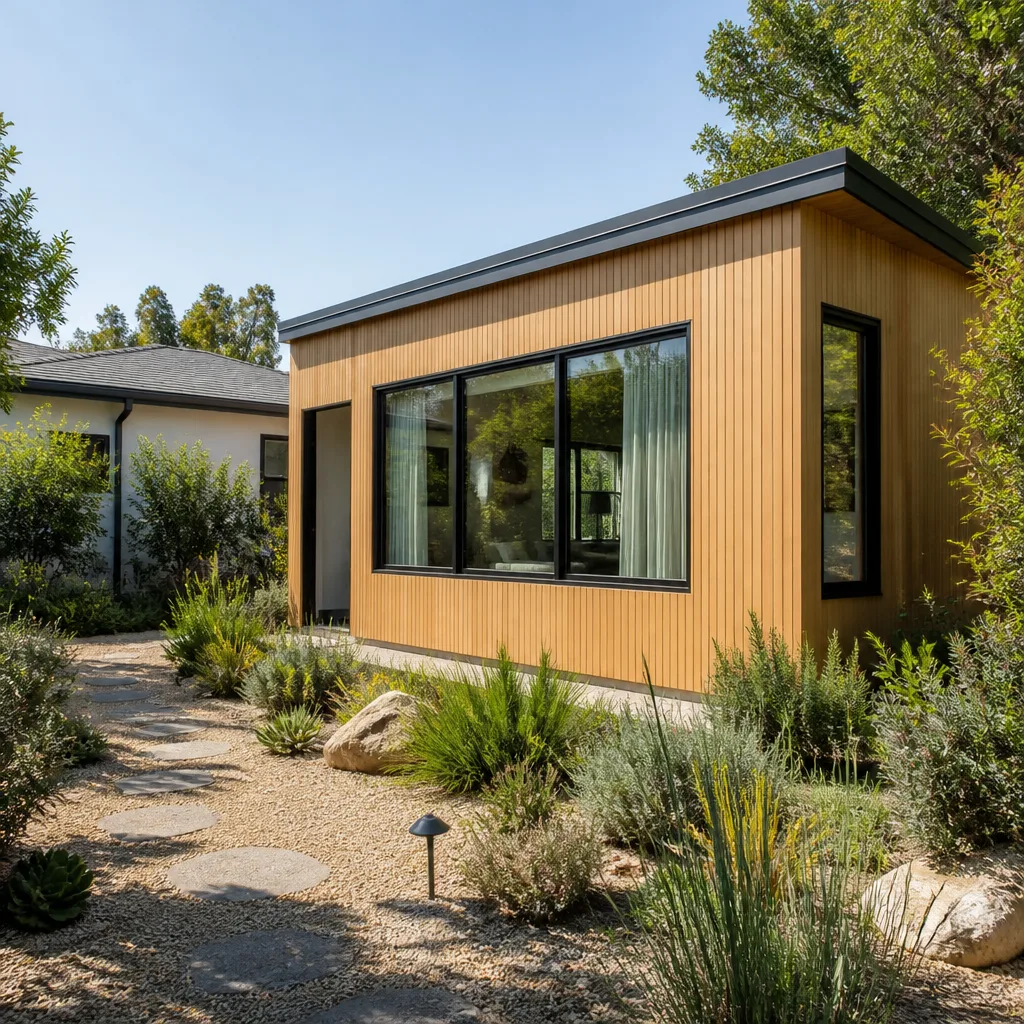
Cover builds their junior ADU line with modular steel framing and prefabricated wall, roof, and mechanical panels that ship to the site and get assembled on a foundation. The juniors (under 400 square feet) use a lighter structural profile than Cover’s full-size units, which matters when you’re swapping conversion hardware: the connector brackets, threshold seals, and utility tie-in components are sized for the junior’s narrower wall cavities and lower roofline. If you’ve got a Cover junior with the original build plate still mounted (check inside the utility closet door), you’ll see a model designation starting with “C-” followed by the year and a unit number. Bring us that plate photo when you call and we’ll know exactly which generation of conversion components you need before we roll the truck.
Here’s the gotcha most Fort Worth owners don’t expect: Cover’s early-run juniors (pre-2019) used a different utility chase layout than the current production models. The part numbers don’t cross-reference cleanly. We keep a compatibility chart in the truck and we’ll verify measurements on site before quoting anything. On the OEM versus aftermarket question: for most conversion hardware (thresholds, seals, exterior trim transitions, utility boots), we recommend a marine-grade aftermarket option that outlasts the original in Texas weather. For anything structural or tied to the module’s engineering load path, we source Cover-spec OEM parts. We also support conversions for Abodu and Dvele units if you own one of those instead.
Signs Your Cover Junior ADU Conversion Is Failing
- Utility disconnect errors on the interior panel. This usually means the quick-connect fittings between the module and your main service are corroding or losing contact. Fort Worth’s humidity swings accelerate this on unsealed connections.
- Visible gap opening at the threshold or roofline seam. Cover juniors sit on a sill plate that can settle independently of your foundation over the first two to three years. A widening gap means the conversion flashing is working loose, and water follows gaps.
- Small leaks at the wall-to-roof transition after heavy rain. The conversion sealant Cover uses has a real-world lifespan of about seven to nine years in North Texas. When it starts to chalk and crack, wind-driven rain finds the seam.
- Door or window binding when the module expands and contracts. The steel frame moves more than most owners expect. If the conversion brackets aren’t allowing for thermal movement, the openings start to bind.
- Musty smell inside the unit that won’t clear. That’s not a cleaning issue. It’s moisture getting past a failed seal and into the wall cavity or floor assembly. By the time you smell it, the water has been working for a while.
Replacement Cost & What’s Included
In Fort Worth, a junior ADU conversion component replacement on a Cover unit typically runs $900 to $2,600 installed. The low end covers single seal or utility boot replacements. The upper end covers multi-point failures: re-flashing a roofline seam, replacing a threshold assembly, and re-securing utility tie-ins on a settled unit.
Here’s what drives the range:
- Which components failed: one seal is cheap; a full threshold rebuild is not
- Access conditions: units tucked against fences or with tight side yard clearance take more labor
- OEM versus aftermarket parts: structural OEM parts cost more than marine-grade seal equivalents
- Discovered damage: if water got into the floor assembly, that’s a separate scope we document and quote before touching it
Every replacement is priced in writing before we start. The line items include parts, labor, and any disposal. You’ll see the full number and it won’t change unless we find something structural you need to know about, in which case you approve the change before it happens. The work is covered by our 365-Day Done Right Promise: if it isn’t right within a full calendar year, we make it right at no charge. That’s the Threshold Standard, printed on your quote.
DIY or Call Us?
An owner can safely do a few things: visually inspect the threshold seal, check the utility closet for error codes, take photos of the build plate, and look for obvious gaps at the roof seam from the ground. That’s useful. Send us the photos and we’ll give you honest guidance on whether you even need a service call.
What we don’t recommend doing yourself is any work involving the module’s structural connections, utility tie-ins, or roof-level flashing. The electrical and gas connections on a Cover junior run through those utility chases, and the conversion hardware sits close to live service lines. A homeowner on a ladder trying to re-flash a roofline seam on a steel-frame module is not where anyone wants to learn a lesson. We’ve also seen DIY attempts void the coverage on the module itself, which no savings is worth. If you’re in Fort Worth and the issue is beyond a visual check, call us at (682) 255-2399. Miles Hartwell will make sure you understand exactly what you’re looking at before any dollar is quoted.
FAQs
Plan on seven to nine years for sealant-based components and threshold assemblies in North Texas, where heat, humidity swings, and heavy spring rains work seals harder than most climates. Structural brackets and utility hardware should last the life of the unit if properly maintained. Call (682) 255-2399 and we’ll assess what’s still serviceable versus what needs replacing in your specific unit.
Some can. Seal re-bedding and small bracket adjustments are repair work we do regularly at a lower cost than full replacement. But when a seal has chalked through or a bracket shows metal fatigue, patching buys you months, not years. We’ll show you the failed part and give you a straight recommendation either way. Estimates are free.
Most single-point replacements on a Cover junior are same-day jobs. A multi-point repair involving the roof seam and threshold might run a second day if we need to let sealants cure under specific temperatures. We’ll give you a clear timeline in writing before work starts.
Yes. We carry the common failure items for Cover juniors: threshold seals, utility boots, conversion brackets, and exterior transition flashing, plus the marine-grade aftermarket equivalents we prefer for seal work. If you need an OEM structural part, we order it and typically have it in hand within three to five business days. Call (682) 255-2399 with your build plate photo and we’ll tell you same day what’s on the truck and what needs ordering.
If the number we give you on day one doesn’t hold up by permit approval, that’s on us – not you.
Written by Miles Hartwell, Owner, Sutton ADU Fort Worth at Sutton ADU Fort Worth, serving Fort Worth and nearby areas.