Dvele Site Prep & Utilities: The Fort Worth Owner’s Guide
If your Dvele home is ready for site work in Fort Worth, we stock and install the full range of Dvele-compatible site prep and utilities: foundation pads, trenching, water and sewer laterals, electrical service runs, and grading. Most site prep packages for a Dvele in Tarrant County run $28,000 to $65,000 depending on lot conditions, utility distances, and soil type, and we typically have crews available to start within two weeks from permit approval. The way most Dvele owners discover a site prep issue is not glamorous: a failed perc test on the lot, a city inspector flagging an undersized sewer lateral, or a utility company stubbing the power line 40 feet farther than the plan assumed. All three are fixable. All three are better handled before the Dvele module truck shows up.
Sutton ADU Fort Worth is an independent service provider. We are not affiliated with Dvele. We work on their homes because the product is well-built, but the site under it is still Texas dirt, Texas clay, and Texas utility easements, and that part is on us.
Which Dvele Models This Applies To
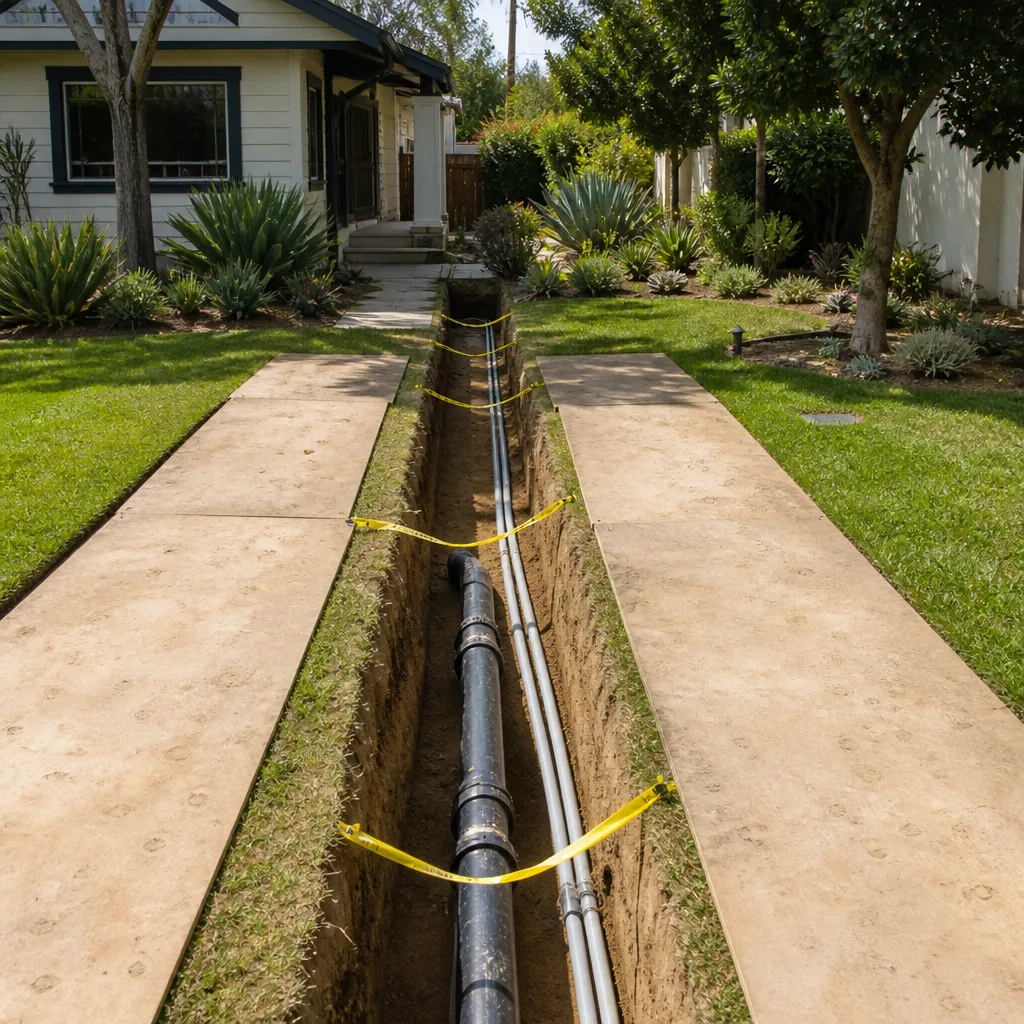
Every Dvele model that lands in Fort Worth goes through the same site prep sequence, so this applies whether you’re placing a single-module studio in the Ryan Place neighborhood or a multi-module family home off Camp Bowie Boulevard. The site work, not the home, drives the cost and timeline.
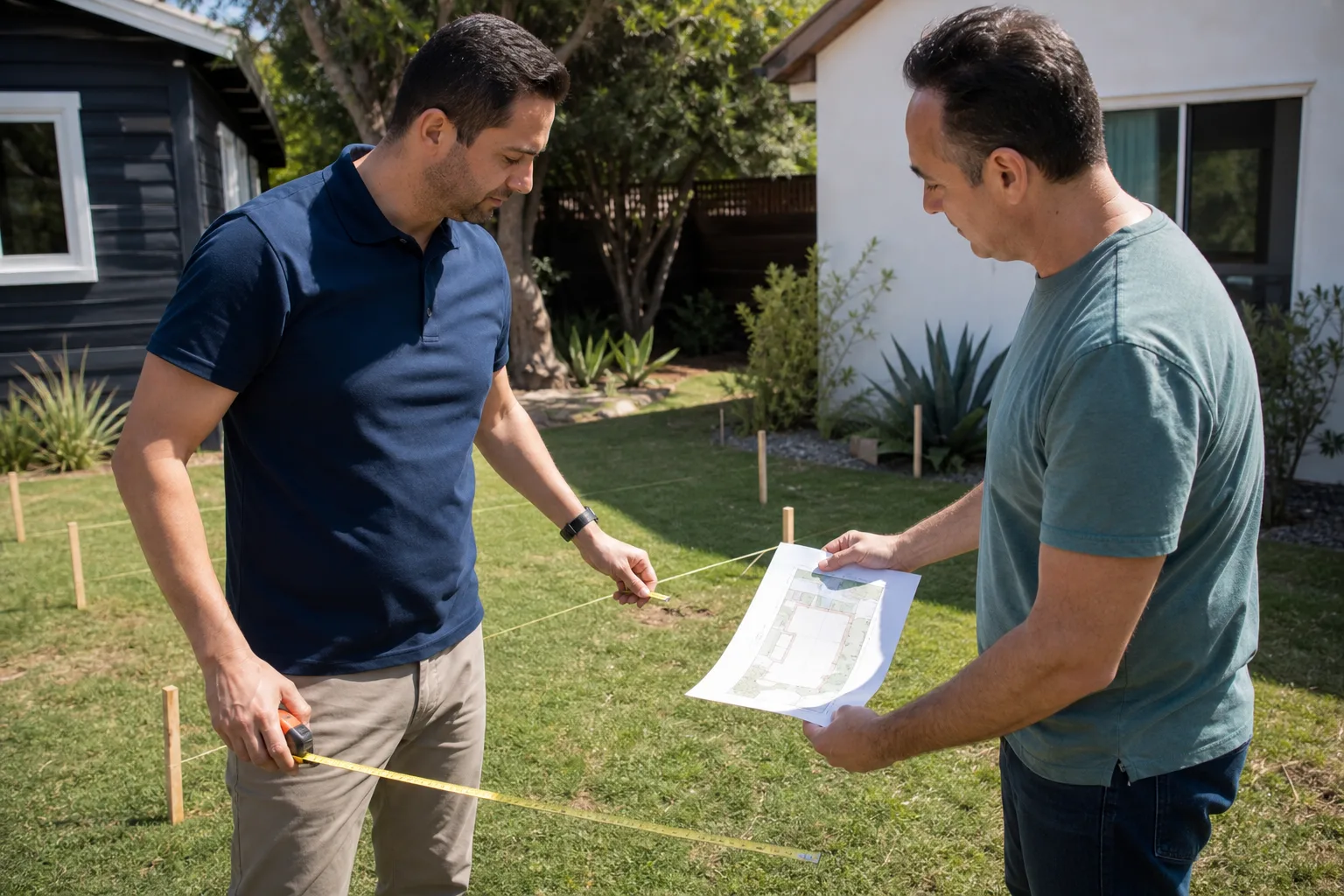
How to know what your lot needs: Dvele provides a site specification sheet with each purchase. It’ll list the required pad dimensions, minimum utility service sizes, and setback assumptions. Keep that sheet handy. When it says a 200-amp service, that’s the panel you need underground, and the city of Fort Worth will want to see a load calculation before they’ll sign off on the trench.
One compatibility gotcha we see often: the Dvele spec sheet assumes a relatively flat, open lot. Fort Worth lots in older neighborhoods near TCU rarely are. If your pad needs a retaining wall, a pier-and-beam foundation instead of slab, or a longer sewer run because the city main sits on the far side of the property, that’s all above the base site prep price. We detail every one of those line items in writing before the first shovel goes in the ground.
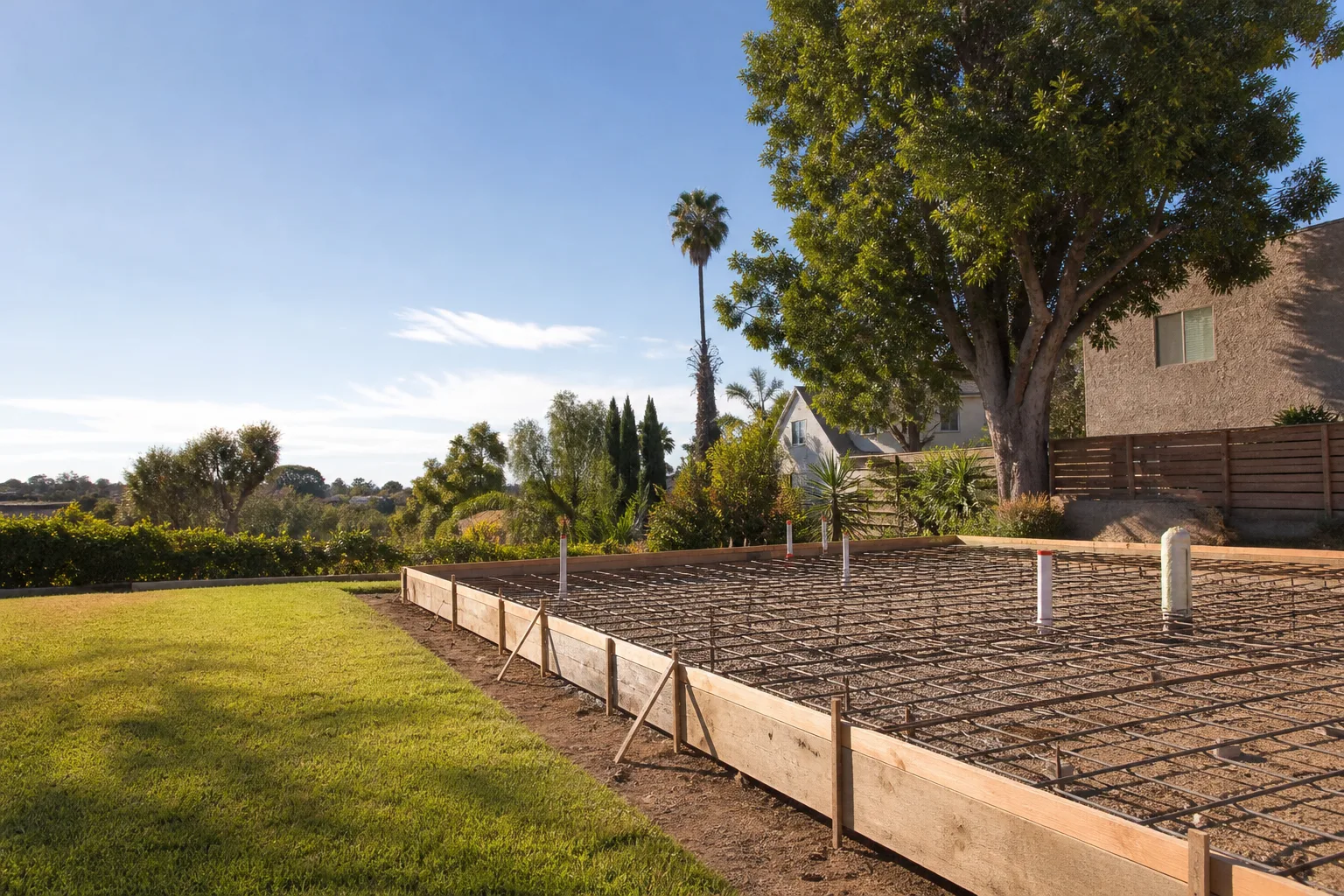
On OEM vs. aftermarket: for site prep there’s no such thing as a Dvele-branded sewer line. What matters is that the materials meet or exceed the specification sheet. We use Schedule 40 PVC for sewer laterals as standard, and in Fort Worth’s expansive clay soils, we recommend a compacted select fill base under the pad rather than native soil, which swells and shrinks enough to crack a slab over a decade.
Signs Your Dvele Site Prep & Utilities Is Failing
- Sewer gas smell near the lot edge. That usually means a cracked or separated lateral. Fort Worth’s clay soil moves seasonally, and older Schedule 30 or thin-wall pipe will pull apart at joints. The fix is usually a targeted spot repair, not a full re-trench.
- Standing water that lingers more than 48 hours after rain. This points to a grading or drainage problem. Dvele pads need positive drainage away from the structure, and if the pad was compacted over native soil without a proper base, water pools. Standing water near a foundation is never cosmetic.
- Voltage drop or flickering inside the home. This typically traces back to an undersized or corroded service entry. If your Dvele was placed with a service lateral that met minimum code but not the home’s actual load, you’ll notice it when the heat pump and dryer run at the same time. A Fort Worth electrician should evaluate the trench depth and conductor gauge.
- Driveway or walkway settling near utility trenches. Trenches that weren’t mechanically compacted in lifts will sink over time. You’ll see a shallow depression tracing the exact path from the meter to the home. This is the most common complaint we hear on homes that were prepped quickly.
- A water bill you can’t explain. A leaking water lateral between the city meter and your foundation uses water you pay for but never see on the surface. Since the line runs underground, the first sign is often the bill going up $40 or $60 a month with no change in household use.
Replacement Cost & What’s Included
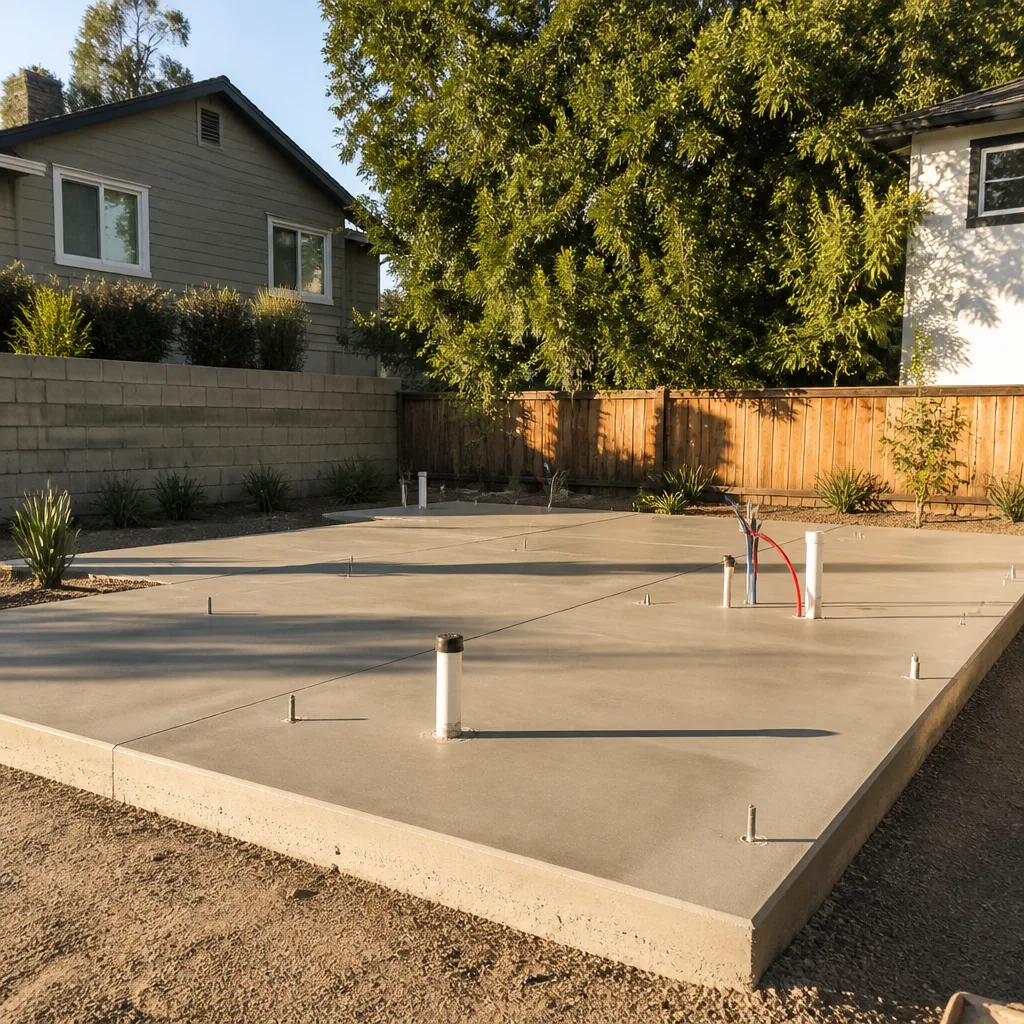
Site prep is not a single part with a single price, so let’s be honest about real Fort Worth numbers. A full site prep package on a clean, flat lot with all utilities stubbed at the property line runs $28,000 to $45,000. A complicated lot, one with retaining walls, a long sewer run, or a pad that needs structural fill, runs $45,000 to $65,000 and up. That’s before the Dvele home itself.
Every quote includes the line-item breakdown, so you’ll see the pad cost, trenching cost, utility lateral cost, grading, and permit fees as separate numbers. That’s the Sutton way. If a change order is needed because the city inspector wants a deeper trench, you’ll know the number before we dig.
And the work is covered by the 365-Day Done Right Promise. If any element of the site prep fails within a full calendar year, we return and make it right at no charge. That includes a free second visit, no haggling.
DIY or Call Us?
You can absolutely call 811 yourself and get utility lines marked before any digging happens on your property. It’s free, it’s the law in Texas, and you should do it even if you’re only planting a tree. You can also walk your lot after a hard rain and photograph where water pools. That’s useful information for any contractor you talk to.
What you should not do is trench a sewer lateral, backfill a foundation pad, or run a 200-amp underground service line yourself. The trench for a water line in Fort Worth needs to be below the frost line, around 12 to 18 inches, but a sewer lateral often runs deeper and needs proper bedding material. Getting any of this wrong means a re-dig, a failed inspection, or worse, and none of that is cheaper than doing it right the first time. Miles Hartwell has walked enough of these lots to know the difference between a weekend project and a problem you’ll live with for years. If you’re unsure, call (682) 255-2399 and we’ll tell you straight.
Frequently Asked Questions
In Fort Worth’s soil, a properly compacted pad with a select fill base and a Schedule 40 sewer lateral should last 50 years or more. The failure points are almost always shortcuts: native soil under the pad, thin-wall pipe, or trenches that weren’t mechanically compacted. Those fail within 3 to 10 years. Call (682) 255-2399 if you’re looking at a property where the site prep was done years ago and you’re unsure what’s underground.
It depends on the failure. A single separated joint or small crack can often be spot-repaired by digging a targeted hole and sleeving the damaged section. A pipe that’s crushed, bellied, or cracked along its length needs full replacement. We’ll camera the line first and show you what we’re seeing before we quote a fix. Estimates are free.
A straightforward package on a clean lot takes 2 to 4 weeks, including the city’s inspection windows. A complicated lot with retaining walls, structural fill, or long utility runs can take 6 to 10 weeks. The biggest variable in Fort Worth is permit review time, not the physical work. Call (682) 255-2399 and we’ll give you a realistic timeline for your specific lot.
We keep Schedule 40 PVC, conduit, select fill, and backfill material on hand for most standard jobs. Specialty items like retaining wall block or structural fill are ordered per job. If you need to know whether we have what your Dvele specification sheet requires, call and ask. A live person answers, and we’ll tell you yes or no in one conversation.
If the number we give you on day one doesn’t hold up by permit approval, that’s on us, not you.
Written by Miles Hartwell, Owner, Sutton ADU Fort Worth at Sutton ADU Fort Worth, serving Fort Worth and nearby areas.