James Hardie New Detached ADU: The Fort Worth Owner’s Guide
We stock and install James Hardie-compatible siding, trim, and weather barrier components for new detached ADUs across Fort Worth, with most full exterior cladding packages running $14,000 – $28,000 installed depending on the square footage, profile, and whether you’re matching an existing Hardie product or starting fresh. A failed section or mismatched patch on a nearly new ADU is usually how owners find us – a corner trim board pulling away after a hailstorm, siding swelling at the bottom edge, or color fading unevenly because someone used a non-Hardie touch-up product. James Hardie cladding is genuinely tough stuff in North Texas heat, but it’s only as good as the flashing and installation behind it, and that’s where shortcuts show up first on Fort Worth lots.
Which James Hardie Models This Applies To
This page covers the HardiePlank lap siding, HardiePanel vertical siding, HardieTrim boards, and HardieSoffit products most commonly specified on detached ADUs in Fort Worth. On the identification side: every HardiePlank board has the product name printed on the back, and the board thickness is a fast tell – standard lap siding is 5/16 inch thick, while the heavier Artisan line runs 7/16 inch and is less common on ADUs because it costs more. One gotcha we see often near TCU-adjacent neighborhoods: an ADU built five or ten years ago with HardiePlank Select Cedarmill has a different texture than the current HardiePlank Smooth, and you can’t sand one to match the other – the fiber cement texture is milled in, not applied. If you’re repairing rather than recladding, the safest move is matching both the profile and the original color code, which is stamped on the box end label or can be pulled from James Hardie’s ColorPlus records if the original installer registered the project. Most ADU owners we talk to in Fort Worth choose OEM Hardie replacement material when it’s still in production, simply because the ColorPlus finish warranty stays intact on new stock. Sutton ADU Fort Worth is an independent contractor, not affiliated with James Hardie, so we buy direct from approved suppliers and recommend aftermarket touch-up and caulk products only when they’re proven compatible with fiber cement – not vinyl siding products that happen to be on sale.
Signs Your James Hardie New Detached ADU Is Failing
- Swelling or buckling at the bottom 6 inches of siding. This is almost always a clearance problem – Hardie siding needs at least a 2-inch gap above hard surfaces like concrete walkways or patios, and Fort Worth’s heavy spring rains wick moisture up any board that sits too close to grade.
- Nail heads popping through the face of the board. Fiber cement doesn’t hide a stripped or overdriven nail the way wood does. If you can see nail heads pushing out, the board was likely face-nailed too hard or installed over an uneven wall plane, and the board will crack eventually.
- Cracks running from the corners of window and door openings. Hardie is brittle compared to vinyl or wood. A crack radiating from a corner usually means the panel wasn’t installed with the required 1/8-inch gap at trim intersections, so the board had no room to move during Fort Worth’s freeze-thaw cycles.
- Caulk separation or gaps between boards and trim. The expansion gap at butt joints and trim is supposed to be caulked, not sealed tight. When caulk pulls off in long strips, water is getting behind the cladding and the fasteners are sitting in moisture.
- Faded or chalky color on one wall only. If three walls hold color and the west-facing wall looks ten years older, the original installer may have blended factory-painted ColorPlus boards with unprimed boards and painted on site. Uniform ColorPlus finish handles Texas UV better than any field-applied paint, but it can’t be matched perfectly after the fact.
Replacement Cost & What’s Included
A full James Hardie exterior package for a typical 400 – 800 square foot detached ADU in Fort Worth runs $14,000 – $28,000 installed, with smaller partial replacements – say, one wall of siding, new trim boards, and flashing repair – landing between $3,500 and $9,000. What drives the spread: the Hardie profile you choose (Smooth and Cedarmill are comparable; Artisan adds roughly 40 percent in material cost), whether you’re matching an existing paint color or starting with primed boards, the condition of the sheathing and house wrap underneath, and whether the ADU’s walls need to be brought up to current City of Fort Worth setback or facade standards. Our written price includes tear-off of failed material, disposal, new weather barrier where needed, Hardie fasteners and flashing, the boards and trim themselves, and labor. You lock that number before we start – the 365-Day Done Right Promise covers defects in workmanship for one full calendar year from project completion, and if any element fails inside that window, we return and fix it at no cost. As the owner here, I’ve watched too many Fort Worth homeowners get a verbal ballpark in March and a change order in July. My rule is simple: if the number we give you on day one doesn’t hold up by permit approval, that’s on us – not you.
DIY or Call Us?
There are things you can safely check without us: look at your bottom-edge clearances, check for visible nail pops, and feel along butt joints for caulk that’s failed. What you shouldn’t do is attempt a full Hardie board replacement yourself. Fiber cement sheets are heavy and brittle, and cutting them produces silica dust that requires a proper respirator and dust control – not a standard dust mask. We also regularly see homeowners nail Hardie with the wrong fasteners or set them too deep, which voids the material warranty and starts the exact failure cycle we’d be fixing a year later. If the job is more than re-caulking a joint, call (682) 255-2399 and we’ll do a walkthrough. The estimate is free, and you’ll know exactly who is coming to your property before the truck rolls up.
FAQs
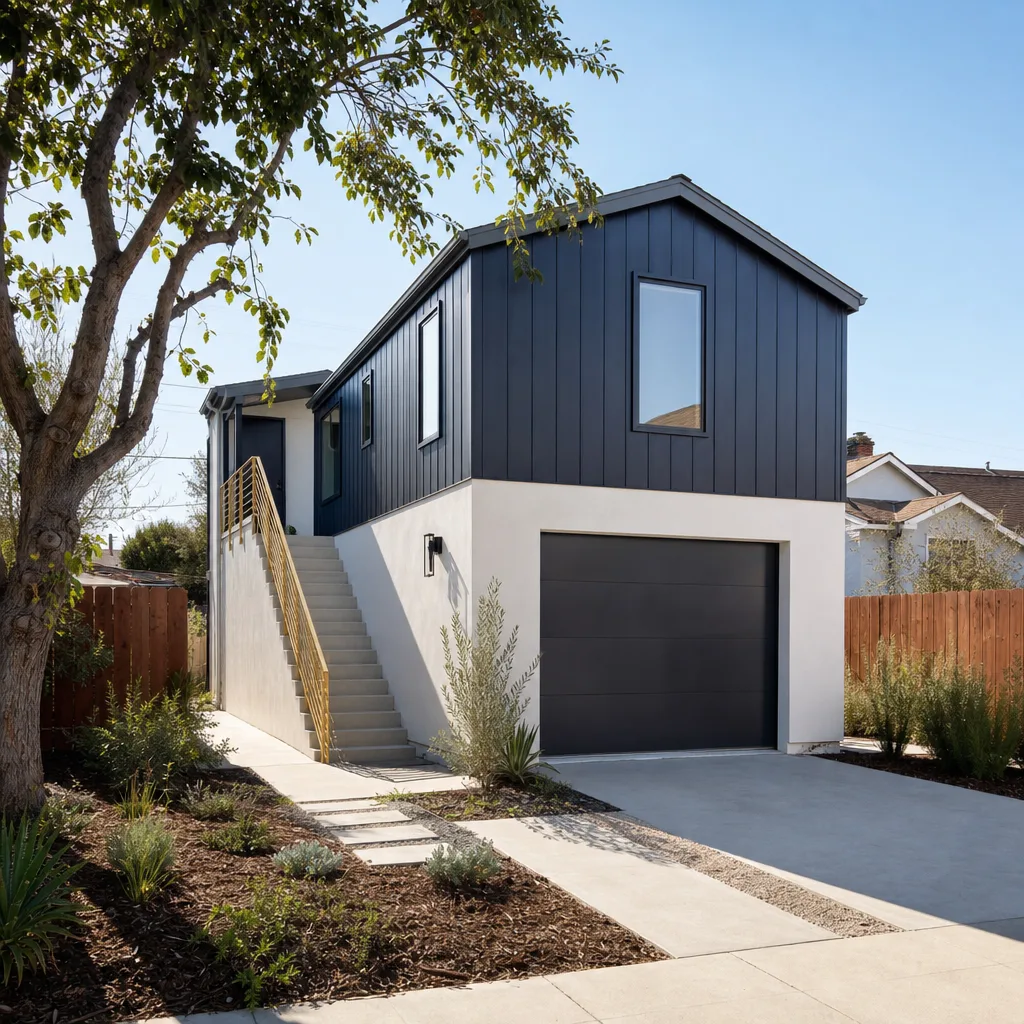
James Hardie siding and trim carries a 30-year limited non-prorated warranty on the material, and the ColorPlus finish is covered against peeling and chipping for 15 years – but the real-world lifespan in Fort Worth depends heavily on installation. With correct clearances, proper flashing, and the right fasteners, you should get 30 to 50 years out of the boards. If it fails in under 10, it’s almost always an installation issue, not a product defect. Call (682) 255-2399 for a free condition assessment – we’ll tell you honestly whether you need a fix or a full reclad.
Isolated board replacements and trim swaps are absolutely possible if the rest of the wall is sound and the original product is still available. The challenge is color matching – factory-baked ColorPlus finish fades slightly over time, so a newer board may look off against older neighbors on the same wall. We can tell you whether a board-level repair will look acceptable or whether a full wall replacement is the better visual and structural call. Call (682) 255-2399 and we’ll give you the honest answer before you spend a dollar.
A partial repair – one wall, new trim, flashing work – is typically a two to three day job. A full reclad of a 600-square-foot detached ADU usually runs five to seven working days depending on weather. We won’t quote you a compressed timeline to win the job and then string the project out. Call (682) 255-2399 for a schedule that reflects what we’ll actually do, not what sounds good on a phone call.
We keep the most common HardiePlank profiles, trim boards, and Soffit panels in stock or available same-week through our Fort Worth suppliers, and we order specialty profiles and colors as needed. You don’t need to source anything yourself – we handle procurement, verify the product is genuine, and warranty the installation. Call (682) 255-2399 and we’ll confirm what’s available for your specific ADU before the first visit.
Written by Miles Hartwell, Owner, Sutton ADU Fort Worth at Sutton ADU Fort Worth, serving Fort Worth and nearby areas.