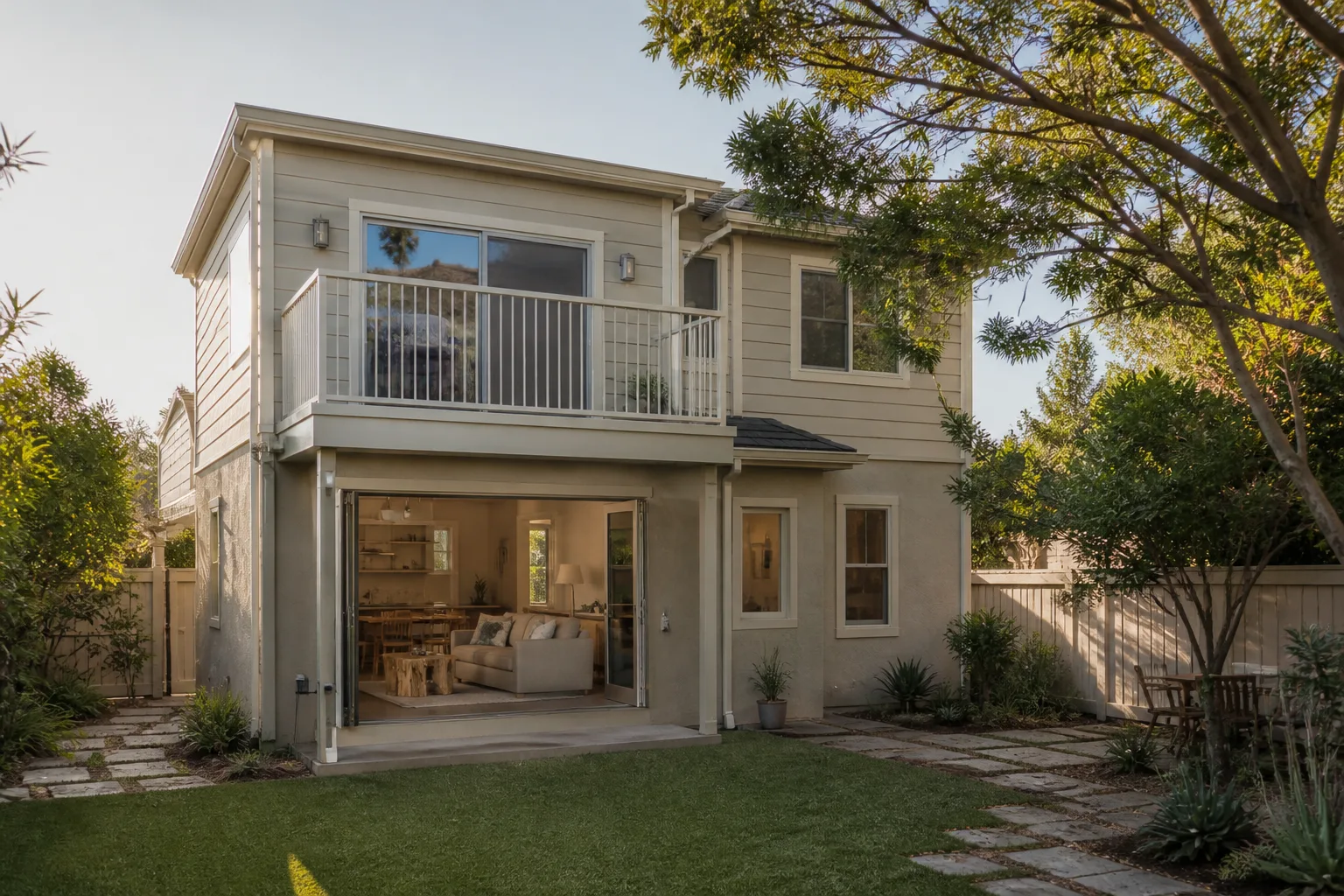
A free site visit, a check of what your lot allows and a written, line-item price.
Get your free estimateHow Much Does Garage Conversion ADU Cost in Fort Worth?
A garage conversion ADU in Fort Worth typically costs between $95,000 and $165,000 for a finished one-bedroom unit of roughly 400 to 600 square feet. Most homeowners converting a standard two-car garage into a livable accessory dwelling unit spend around $120,000 to $140,000, including plumbing, electrical, HVAC, insulation, drywall, flooring, and a small kitchen and bath. The final number depends heavily on whether you’re doing a simple interior conversion, adding square footage, or working with a detached structure that needs foundation reinforcement.
Before we get into the full breakdown, you may want to see how a garage conversion compares to other ADU types. Our Garage Conversion ADU in Fort Worth page walks through the process step by step, including what’s required from the city and what a realistic timeline looks like.
Key takeaways on garage conversion ADU cost in Fort Worth:
- Full garage conversion ADUs in Fort Worth run $95,000 to $165,000 for a finished unit
- Expect to pay $180 to $320 per square foot depending on finish level and structural work
- Attached garage conversions cost 15 to 20 percent less than detached garage conversions
- Permits, utility connections, and structural upgrades typically add $8,000 to $25,000 to the base build
- A basic studio conversion without a full kitchen can run as low as $75,000; a high-end two-bedroom with premium finishes can exceed $200,000
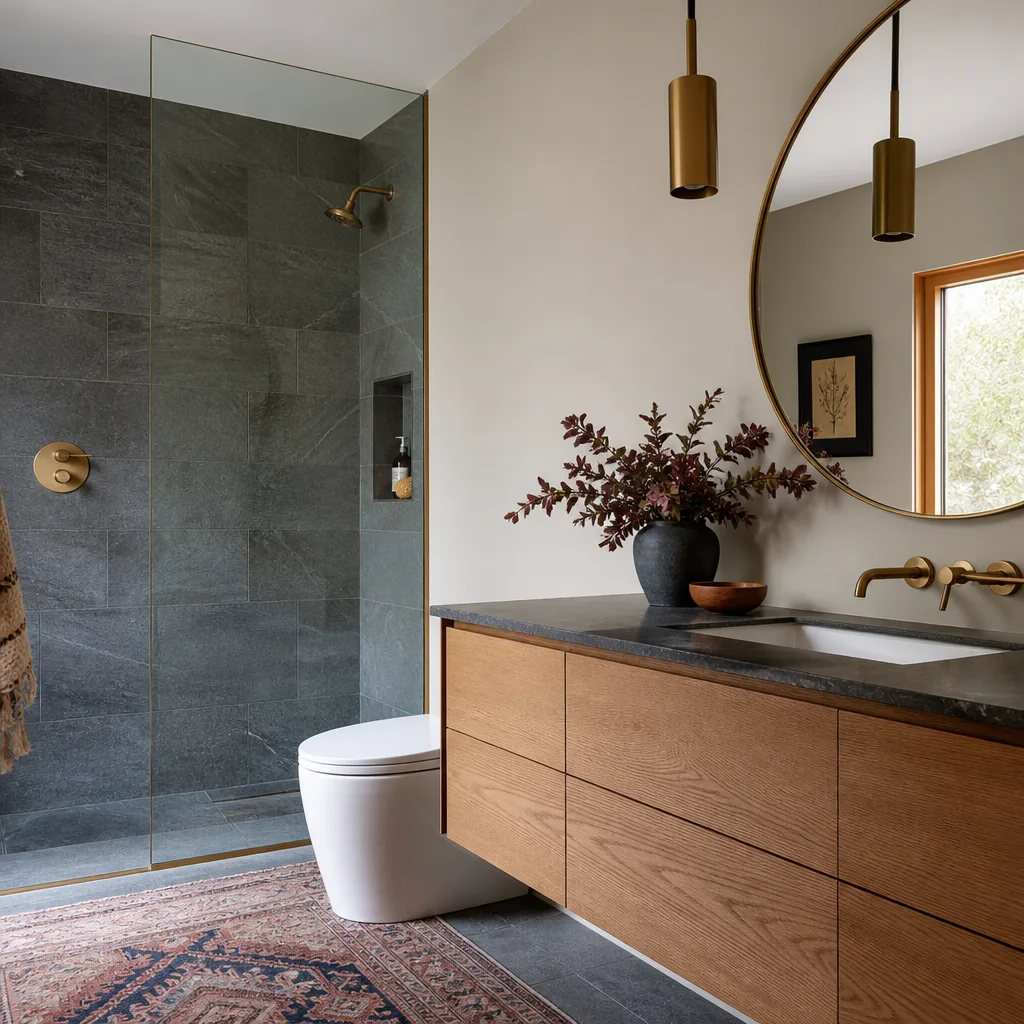
Garage Conversion ADU Cost Breakdown (2026)
Here are the real line items we see on Fort Worth garage conversion jobs. These numbers reflect actual bids from 2025 and early 2026 for work inside the city limits, including neighborhoods like Arlington Heights, Fairmount, Wedgwood, North Side, and Ryan Place.
| Cost Component | Typical Range (Fort Worth, 2026) | What It Includes |
|---|---|---|
| Design and architectural drawings | $4,000 – $12,000 | Plans, structural review, city submittal paperwork |
| City permits and fees | $2,500 – $7,000 | Building permit, plumbing, electrical, mechanical, impact fees |
| Demolition and site prep | $2,000 – $6,500 | Removing garage door, clearing interior, haul-off |
| Slab and foundation work | $3,000 – $18,000 | Crack repair, leveling, moisture barrier, cutting for plumbing |
| Framing and structural upgrades | $6,000 – $25,000 | Wall reframing, window/door openings, roof tie-ins, engineering |
| Insulation and drywall | $5,000 – $12,000 | Closed-cell or batt insulation, drywall, taping, texture |
| Plumbing rough-in and fixtures | $10,000 – $28,000 | Water lines, drain lines, water heater, bathroom and kitchen fixtures |
| Electrical rough-in and fixtures | $7,000 – $18,000 | New subpanel or service upgrade, wiring, outlets, lighting, smoke detectors |
| HVAC (mini-split or ducted) | $5,500 – $14,000 | Mini-split system or tie-in to existing HVAC, ventilation |
| Flooring | $3,500 – $9,000 | LVP, tile, or engineered hardwood, including underlayment |
| Kitchen | $12,000 – $35,000 | Cabinets, countertops, sink, cooktop or range, refrigerator hookup |
| Bathroom | $9,000 – $22,000 | Shower or tub, toilet, vanity, tile, exhaust fan |
| Doors and windows | $3,000 – $10,000 | Replacing garage door with wall and window, new entry door, egress windows |
| Exterior finish work | $2,500 – $12,000 | Siding, paint, trim, matching roof line, James Hardie cladding if specified |
That table covers the direct construction work. Fort Worth homeowners should also budget for two things many contractors bury or leave off the initial bid:
- Soil and drainage work: Fort Worth sits on expansive clay soil, and older garage slabs in neighborhoods like Como, Stop Six, and Polytechnic were poured thin, often 3 to 4 inches, with no rebar. If your slab has shifted or cracked, expect an additional $4,000 to $15,000 for structural fill, pier work, or a slab overlay.
- Utility tap fees: If your garage was never plumbed and you need a new sewer lateral or water tap from the street, the City of Fort Worth Water Department and your plumber’s trenching add another $3,000 to $12,000 depending on how far the garage sits from the main line.
What moves the number most? Three things. First, whether the garage is attached or detached. A detached garage conversion means trenching separate utility lines, adding more insulation on all four exposed walls, and sometimes addressing a roof that was never designed to house people. That can add 20 percent to the total. Second, the kitchen. A full kitchen with a range, vent hood, and stone counters can double the cost of a kitchenette with a two-burner cooktop and a small sink. Third, whether you need a service upgrade on your electrical panel. Fort Worth homes built before 1990 often have 100-amp panels, and a garage ADU with a mini-split, kitchen appliances, and a laundry hookup will usually require a 200-amp service upgrade at $3,500 to $6,000.
What Affects Garage Conversion ADU Pricing in Fort Worth
- Attached versus detached garage. An attached garage shares at least one wall and usually a roofline with the main house, cutting exterior finish costs and simplifying utility runs. A detached garage conversion in Fort Worth means four exposed walls, a standalone address (in most cases), and longer trench runs for water, sewer, and electrical.
- Foundation condition. Fort Worth’s clay soil expands and contracts with moisture, and garages built before 1980 frequently sit on slabs poured without post-tension cables or sufficient depth. If your slab has settled more than an inch or shows diagonal cracking, expect foundation repair or a structural engineer’s stamped letter before the city will approve the conversion.
- Plumbing access. If your garage sits 30 feet from the nearest sewer cleanout at the back of the house, the trenching cost is modest. If it’s 80 feet away or the sewer line runs under a driveway, you’ll pay for concrete cutting, deeper excavation, and possibly a grinder pump. We’ve watched a plumbing budget go from $8,000 to $24,000 on a single Fairmount garage because the sewer line ran beneath a 40-foot driveway slab.
- City of Fort Worth ADU regulations. Fort Worth allows one ADU per single-family residential lot, with a maximum floor area of 1,200 square feet or the size of the primary dwelling, whichever is smaller. There’s a setback requirement (the required gap between your new structure and the property line) of 5 feet for detached ADUs on most residential lots, plus parking requirements unless you qualify for an exemption near transit or within certain overlay districts. Compliance work for nonconforming garages, like those built to the property line in older neighborhoods, can add $5,000 to $20,000 in design and variance fees.
- Finish level. A builder-grade studio with vinyl plank flooring, stock cabinets, a fiberglass shower, and a mini-split runs at the low end of the range. The same square footage with custom cabinetry, quartz or butcher block counters, tile shower with a glass enclosure, upgraded lighting, and hardwood or tile floors lands at $260 to $320 per square foot.
- Ceiling height and roof structure. Fort Worth code requires habitable rooms to have at least 7 feet of ceiling clearance for most of the floor area. Many older garages have 8-foot ceilings under a flat or shallow-pitched roof, which is fine. But if you want vaulted ceilings or need to raise a roofline to meet code, framing and re-roofing costs jump quickly. Same story if the garage roof is part of the main house roof on a hip design and you’re cutting into it.
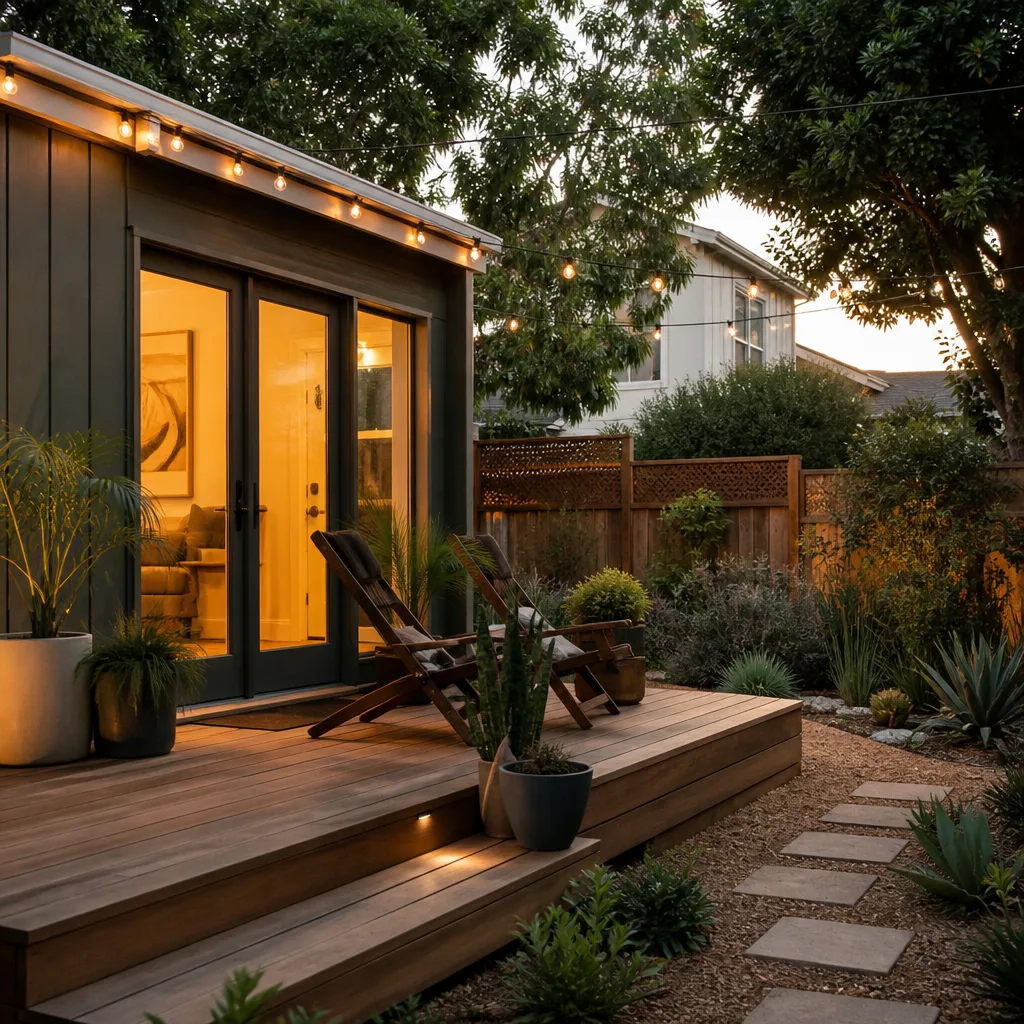
How to Save on Garage Conversion ADU
You don’t have to spend $165,000 to get a solid, rentable unit. Here’s where Fort Worth homeowners find savings without cutting corners that come back to bite them later.
- Keep the footprint as-is. Adding square footage to a garage means foundation work, new roofline planning, and permit review that can add 20 to 30 percent to the budget. Work within the existing footprint and use the space well.
- Choose a kitchenette over a full kitchen. A compact kitchen with a two-burner induction cooktop, a small sink, a microwave-convection combo, and a compact refrigerator can run $8,000 to $14,000 less than a full range-and-vent-hood kitchen. For many renters and in-laws, that’s plenty.
- Use a mini-split instead of extending ductwork. Ductless mini-splits are the standard for Fort Worth garage ADUs because they’re efficient, don’t require duct runs, and qualify for the same unit efficiency the city looks for. Extending your central HVAC into a garage requires duct design, dampers, and often a larger condenser.
- Leave the existing garage door opening intact structurally, but frame it in. Removing the garage door and framing the opening with a window and wall is standard. What’s cheaper than adding a new window opening elsewhere is using the existing opening for a large fixed window and a standard entry door beside it. No new header, no new structural engineering.
- Stage your finishes. Build the shell, plumbing, electrical, and drywall now. Install builder-grade flooring and a basic bath. Upgrade counters, lighting, and hardware later when cash flow allows. This keeps the contract number honest and manageable.
- Get a written, line-item price before you sign anything. The biggest savings on any Fort Worth ADU is avoiding change orders you didn’t approve. Every project we take on gets a written price before work starts, and we itemize it so you can see exactly what the foundation repair costs versus the kitchen cabinets. If a line item doesn’t match reality, you’ll see it before we start swinging hammers.
If you want a straight number for your specific garage, call (682) 255-2399 and ask for a free estimate. We’ll look at your garage, your slab, your panel, and your sewer access, then hand you a written price. No ranges. No “we’ll see.” A number you can take to the bank.
One more thing worth knowing: we’re part of the Threshold Group family of home-service companies, which means every crew member who shows up at your door has been background-checked and identity-verified. You’ll get their name and photo before they arrive. If you’ve got kids at home or you’re often the only adult on the property, that’s not a small detail, it’s the whole reason our standards exist.
How Long Does a Garage Conversion ADU Take in Fort Worth?
Plan on 4 to 7 months from the first design meeting to the final walkthrough. The construction phase itself usually runs 10 to 14 weeks once permits are approved, but Fort Worth’s permitting process for ADUs currently takes 6 to 10 weeks for plan review, and older homes in historic districts like Fairmount or near the Stockyards can stretch that to 14 weeks or more if a Certificate of Appropriateness is required. If you’re hoping to have the unit ready for a spring rental or an aging parent moving in, start the process 6 months out.
During that time you’ll hit these milestones: design and drawings (3 to 5 weeks), permit submittal and review (6 to 10 weeks), construction (10 to 14 weeks), and final inspection plus certificate of occupancy (1 to 2 weeks). Weather in Fort Worth rarely delays interior work, but slab work or trenching in a wet spring can add days.
What Does a Fort Worth Garage Conversion ADU Actually Add to Home Value?
In the 2026 Fort Worth market, a finished garage conversion ADU adds roughly $110,000 to $180,000 to resale value, depending on the neighborhood, the unit’s quality, and whether it’s classified as a conforming ADU with proper permits. That sounds like it offsets the build cost, and in many cases it does, but the bigger financial story is rental income. A one-bedroom garage ADU in Fort Worth near TCU, the Medical District, or downtown rents for $1,100 to $1,600 per month in 2026. Even at the low end, that’s $13,000 a year in gross income against a $120,000 build.
There’s a caution here, though: an unpermitted conversion won’t appraise as living space and can become a liability at sale. The City of Fort Worth has been enforcing ADU permit compliance more actively since 2023, and buyers are increasingly asking for permit records before closing. The cheapest garage conversion is not the one with no permits. It’s the one that’s built once, correctly, with paperwork in hand.
FAQs – Garage Conversion ADU Cost
How much does it cost to convert a 2-car garage into an ADU in Fort Worth?
A 2-car garage conversion to a finished 1-bedroom ADU in Fort Worth typically costs $105,000 to $150,000, all in, as of 2026. That assumes a 400 to 500 square foot footprint, standard finishes, one bathroom, a kitchenette or small kitchen, and no major foundation repair. If your garage is detached and needs significant plumbing trenching, expect the high end. Call (682) 255-2399 for an exact quote, free of charge.
Is a garage conversion cheaper than building a detached ADU in Fort Worth?
Yes. A garage conversion in Fort Worth usually runs $180 to $240 per square foot, while a new detached ADU from the ground up typically runs $280 to $380 per square foot. On a 500 square foot unit, that’s a difference of $95,000 to $125,000 versus $140,000 to $190,000. The savings come from reusing an existing foundation, walls, and roof. However, not every garage is a good candidate, if the slab is too thin or the roofline too low, a new build can actually be the more cost-effective route. We’ll tell you straight which one makes sense for your lot.
Do I need a permit to convert my garage into an ADU in Fort Worth?
Yes. The City of Fort Worth requires building, electrical, plumbing, and mechanical permits for any garage conversion into habitable space, and the unit must meet all current residential building codes, including egress windows in sleeping areas and proper ceiling heights. Permit fees typically run $2,500 to $7,000. Skipping permits saves money today and creates a costly problem at resale. We handle all permitting as part of our written price.
Can I convert my garage into an ADU for rental income in Fort Worth?
Yes, Fort Worth allows garage conversion ADUs to be used as rental units, and a one-bedroom unit typically rents for $1,100 to $1,600 per month in 2026 depending on location and finishes. The unit must have a separate entrance, a kitchen or kitchenette, and a bathroom to qualify as a legal rental. That rental range means a $130,000 conversion can produce gross income of $13,000 to $19,000 annually.
What is the cheapest type of ADU to build in Fort Worth?
A garage conversion is the cheapest type of ADU in Fort Worth, with budget builds starting around $75,000 for a studio without a full kitchen. That compares to $120,000 or more for a small prefab ADU and $110,000 for a Tuff Shed-style conversion with foundation work. The reason is simple: you’re reusing an existing structure instead of building one. If your garage has a solid slab, functioning electrical service, and reasonable plumbing access, it’s usually the lowest-cost path to an ADU.
Can Sutton ADU Fort Worth give me a fixed price before starting work?
Yes. Every garage conversion we take on comes with a written price before any work begins, and that price is what you pay. No surprise invoices, no scope creep passed silently to the bill. Our 365-Day Done Right Promise covers defects in workmanship for one full calendar year from project completion, and if something isn’t right, we come back and make it right, at no charge. Call (682) 255-2399 to schedule a free estimate and we’ll provide a written number for your exact garage.
Written by Miles Hartwell, Owner at Sutton ADU Fort Worth, serving Fort Worth homeowners since 2006. Pricing reflects the Fort Worth market as of 2026. Sutton ADU Fort Worth offers free estimates – call (682) 255-2399.
What Our Customers Say
"Good quality build. One delay on cabinets, but they gave a realistic new date and kept to it."
- Gordon B."Backyard ADU for my mother. The project manager showed ID and walked me through the permit steps, the foundation plan, and the schedule. Moved her in on time."
- Margaret C."Garage conversion into a studio. They framed the insulation, added a mini split, and matched the siding. Inspectors passed everything on the first visit."
- Andrew K.