HOA & Zoning Compliance in Fort Worth, TX
HOA and zoning compliance in Fort Worth means confirming your planned ADU, garage conversion, or room addition meets three layers of rules before you spend a dollar on construction: city zoning ordinances, neighborhood HOA covenants (if your property has one), and state-level building codes. In practical terms, most Fort Worth homeowners come to us because they’ve already bought plans or picked a prefab unit and need to know whether their lot, their setback, and their association will actually allow it. That’s the work we do before the first tool is lifted.
Sutton ADU Fort Worth handles the full compliance review as part of our ADU Design & Permitting process, so you don’t have to decode a 40-page zoning ordinance or email your HOA board yourself. Our owner, Miles Hartwell, founded the company in 2006, and we’ve sat through enough Fort Worth planning meetings to know exactly which questions the city will ask, which ones the HOA will ask, and which ones can quietly kill a project if they’re answered wrong. You can reach us directly at (682) 255-2399 with a copy of your survey or plat, and we’ll give you a straight answer on whether your project is buildable as-is, buildable with changes, or not worth pursuing.

Key Takeaways
- Fort Worth zoning rules differ by district: single-family zones, historic districts, and planned developments all carry different ADU requirements.
- Sutton ADU Fort Worth reviews your lot against both city zoning and HOA covenants before you commit to a design, which saves you from paying for plans that can’t be approved.
- Every compliance review comes with a written price before work begins and is covered by the 365-Day Done Right Promise.
- We work with prefab and modular ADU brands, including Dvele and Boxabl, and know which units fit Fort Worth’s lot-coverage and height rules.
- Call (682) 255-2399 for a free compliance consultation and we’ll tell you exactly what your property can support.
When You Need HOA & Zoning Compliance
You may not realize you have a compliance issue until you’re already deep into planning. These are the situations where Fort Worth homeowners call us:
- Your HOA sent you a violation or inquiry letter. In neighborhoods like those around Tanglewood or Arlington Heights, some HOAs have preemptively written to homeowners about detached structures, even before any permits were pulled.
- You bought a prefab ADU and just learned the city wants site-specific drawings. Companies like Boxabl and Dvele sell units that are code-compliant at the factory, but Fort Worth still requires local permitting review, including setbacks and utility tie-ins.
- Your lot is nonconforming. Many older Fort Worth lots, particularly in neighborhoods built before the 1950s, are narrower or shallower than current zoning allows, which means a new detached unit may trigger a variance request.
- You’re in a historic district. Fairmount, Ryan Place, and parts of the Near Southside have overlay rules that restrict exterior design, rooflines, and placement, and those rules apply even to ADUs.
- Your HOA covenant restricts accessory structures. Some Fort Worth HOAs limit detached structures to a specific square footage, placement zone, or even forbid them entirely, and you’ll need a written ruling from the board before the city will issue a permit.
- You’re converting a garage and the zoning code changed since the house was built. In some Fort Worth zones, converting a garage into living space can run into parking recapture rules or impervious coverage limits that didn’t exist when the house went up.
If any of these sounds like your situation, you’re not late yet. Fort Worth’s planning department processes ADU and addition applications year-round, and most compliance issues can be identified, addressed, and resolved before you’ve paid for final construction drawings. Call us at (682) 255-2399 and we’ll walk through your property details with you.
Our HOA & Zoning Compliance Process
We use a structured, step-by-step process so nothing gets missed, because a missed zoning condition is the most expensive mistake an ADU project can make. Here’s how we handle compliance for Fort Worth properties:
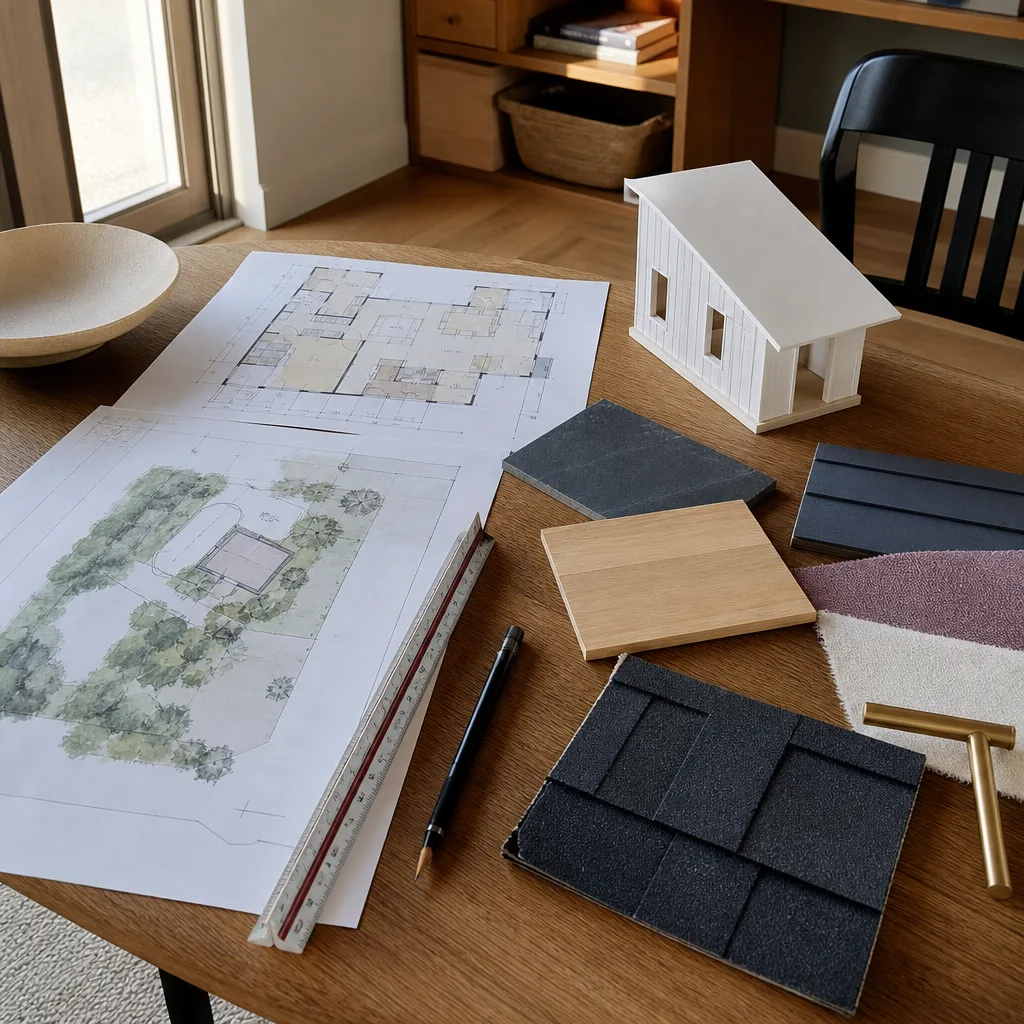
- Document review. We start with your survey, plat, deed restrictions, and HOA covenants (if applicable). If you don’t have your survey, we can pull the recorded plat from Tarrant County records.
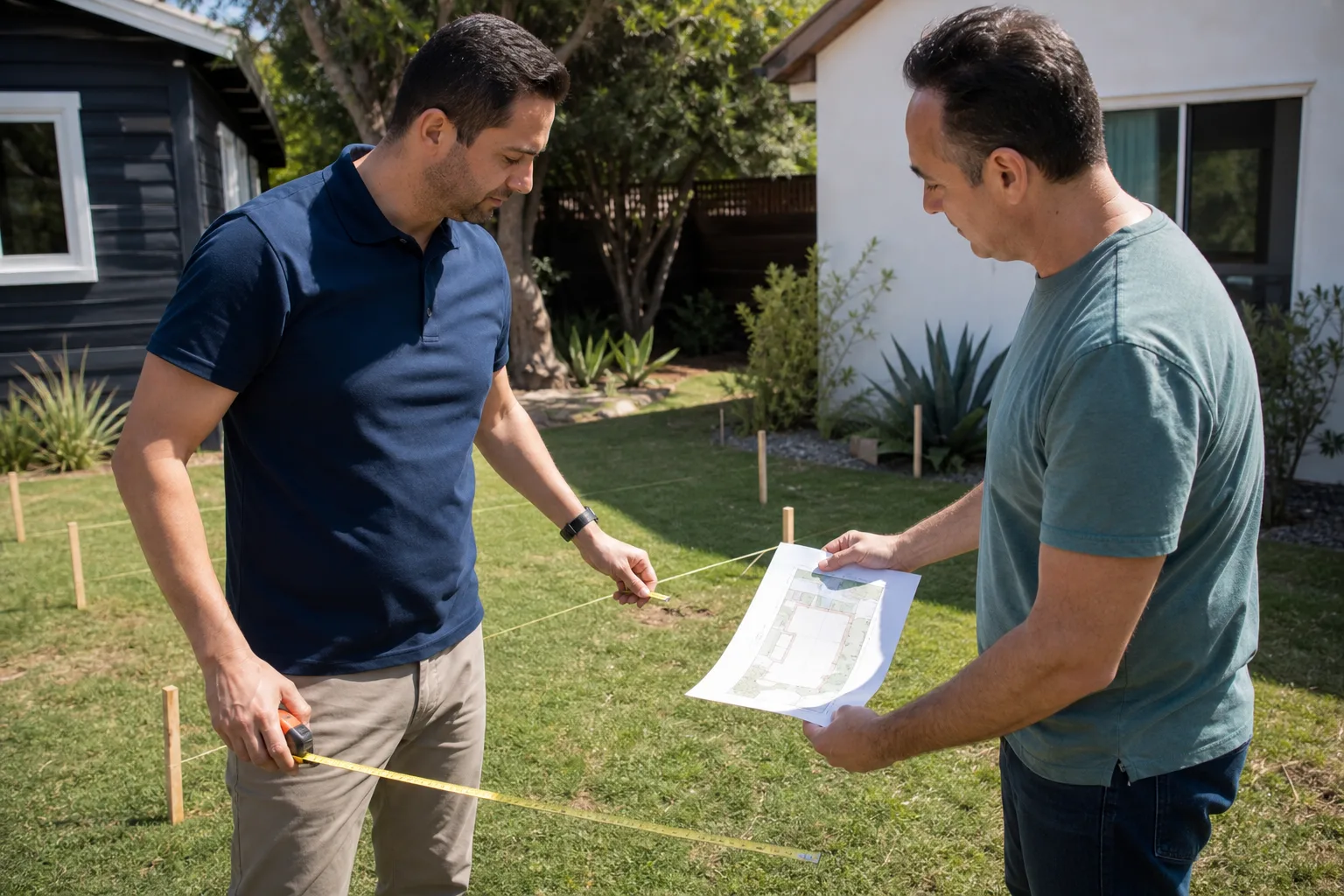
- Zone confirmation. We verify your property’s current zoning district through Fort Worth’s official zoning map, then cross-check the specific ADU or addition rules for that district, including setback minimums (the required gap between your new structure and the property line), lot coverage caps, height limits, and parking requirements.
- HOA covenant screening. If your property sits in an HOA, we read the actual recorded covenants and any amendments, then flag every provision that could touch your planned structure. Some HOAs have architectural review boards with their own application process, and we prepare that submission for you.
- Buildability assessment. We compile everything into a plain-language written report that tells you whether your project is buildable as planned, buildable with changes (and what those changes cost), or blocked by a rule that would require a variance or board appeal.
- Permit preparation. For approved projects, we prepare the site plan, elevation drawings, and compliance letters the city will ask for, then submit your permit application and track it through Fort Worth’s review queue.
- Approval management. We respond to city and HOA comments, schedule inspections if needed, and keep the whole process moving until you have a stamped permit and written HOA approval in hand.
You’ll always receive a written price before this work starts. That’s part of the Threshold Standard: no surprise invoices, no scope creep passed silently to the bill. If an element of our work fails within a year, the 365-Day Done Right Promise means we make it right, and a second visit is free.
HOA & Zoning Compliance Pricing in Fort Worth
Most compliance reviews in Fort Worth run between $450 and $1,800, depending on the complexity of your property and whether an HOA is involved. Here’s a breakdown of what drives the price:
| Component | Typical Range | Notes |
|---|---|---|
| Zoning and buildability review (no HOA) | $450 – $650 | Flat fee for a written assessment of your lot against current Fort Worth zoning. |
| Zoning and buildability review (with HOA) | $700 – $950 | Includes full covenant screening and a written compliance memo. |
| HOA architectural review application | $300 – $500 | We prepare drawings, narratives, and submission packets for your HOA board. |
| Variance application support | $800 – $1,800 | Required for nonconforming lots or when a setback or height rule needs a city waiver. |
| Full permitting package (site plan, elevations, submission) | $1,200 – $2,500 | Complete permit-ready drawings and submission for your ADU or addition. |
Two things push costs up. First, historic districts: Fairmount and Ryan Place homes often require additional documentation, and a Certificate of Appropriateness can add a review layer that most suburban lots don’t have. Second, nonconforming lots: if your property was platted before current setbacks were adopted, you may need a variance, and variance hearings take time and paperwork. The good news is that most standard Fort Worth single-family lots with no HOA can be reviewed within a week and for under $700.
If you’re on the fence about whether to pay for a compliance review or just start building, the review is the cheaper option by a factor of ten. Permits pulled after the fact, stop-work orders, and HOA enforcement actions in Fort Worth can cost thousands and delay your project by months. Call (682) 255-2399 for a free estimate, and we’ll give you a written price before any compliance work begins.
Zoning Considerations Specific to Fort Worth
Fort Worth’s zoning code is different from Dallas, Arlington, or any other nearby city, and assuming the rules are the same is a fast way to lose time and money. Here’s what we see most often in our work:
Setbacks vary by zone, not by neighborhood. A standard single-family lot in Fort Worth’s “A” or “B” zoned areas typically requires a 5-foot side setback and a 20-foot rear setback for detached structures, but the exact number depends on your specific zone designation. We confirm this from the official map, not from memory.
Lot coverage caps matter for ADUs. Fort Worth limits the total footprint of all buildings on your lot, including the primary house and your proposed ADU, to a percentage of the lot’s total area, usually 40 – 50% depending on your zone. On smaller lots, this is what kills projects more often than any other rule.
Historic overlay districts are their own layer. If your home sits in a local historic district, the Fort Worth Historic and Cultural Landmarks Commission reviews exterior changes, and that review can occur even if the city’s base zoning would allow the structure. ADUs in these districts sometimes require design modifications to match the character of the main house.
Impervious cover rules affect garage conversions. Converting a garage doesn’t add a building footprint, but it can change how your lot drains, and Fort Worth’s drainage rules look at total impervious surface, including driveways and patios.
This is where our familiarity with prefab and modular brands pays off. Dvele and Boxabl units, for instance, have different height profiles and footprint dimensions, and we’ve seen projects where one brand fits a lot within the zoning envelope while another triggers a variance. We can tell you which direction to go before you buy anything. For an overview of how compliance fits into the broader process, see our ADU Design & Permitting in Fort Worth page.
HOA Realities in Fort Worth
Fort Worth has a patchwork of HOAs, from small single-street associations to large planned communities with multi-page architectural guidelines. If your property has an HOA, here’s what you should know before you begin:
HOA rules are a contract, not a suggestion. Unlike zoning, which is public law and can be challenged through variance or appeal, HOA covenants are private agreements. If your covenants prohibit detached structures, no city permit will overturn them, and the board can levy fines or place a lien on your property for noncompliance.
Some Fort Worth HOAs allow ADUs with conditions. We’ve worked in communities around Basswood, Summerfields, and Eagle Mountain where the HOA permits a detached ADU only if it’s behind the primary structure, under a specific roof height, and built with materials matching the main house. The conditions are demanding but workable.
Architectural review boards move slowly. HOA review boards in Fort Worth often meet monthly, and missing a submission deadline can add 30 – 60 days to your timeline. We prepare submission packets early and track meeting dates so your project doesn’t stall.
Written HOA approval is non-negotiable. The city of Fort Worth will not issue a building permit for a detached ADU if your HOA has a recorded architectural review requirement, unless you provide written approval from the board. A verbal “we’re fine with it” from a neighbor on the board doesn’t count.
Our compliance review reads your actual recorded covenants, not a summary, so you’ll know exactly what your HOA can and cannot enforce. You can reach us at (682) 255-2399 to get started.
How Much Does HOA & Zoning Compliance Cost in Fort Worth?
Compliance review work in Fort Worth generally costs between $450 and $1,800, with most simple single-family-lot reviews landing under $700 and variance-level work pushing toward the top of that range. The price depends on three things: whether you have an HOA (covenant screening adds review time), whether your lot is conforming or nonconforming to current zoning, and whether your project requires a variance or historic-district review.
We don’t quote compliance work hourly, because hourly billing punishes you for a complicated lot that isn’t your fault. Instead, after we look at your survey and zoning information, we give you a flat written price for the specific scope: review only, review plus HOA application, or full permitting package. That price doesn’t change unless the scope changes, and you approve any change in writing first. The estimate is free, and there’s no obligation. Call (682) 255-2399 for an exact quote on your property.
Can You Fix a Zoning or HOA Compliance Problem After Construction Starts?
Yes, in most Fort Worth cases a compliance problem discovered after construction starts can be corrected, but it costs significantly more than catching it before, and in some situations the work must be demolished or removed. If you started without a permit, the city will issue a stop-work order, you’ll pay penalty fees, and you may need to submit “as-built” drawings that show exactly what was built and where, which can trigger a variance hearing if the built structure violates setbacks.
If your HOA files a covenant violation, the remediation is typically faster but can involve removing a structure that doesn’t meet architectural guidelines, and the HOA’s enforcement costs may be charged back to you. The practical answer is to stop work immediately, call us at (682) 255-2399, and let us assess the situation. We’ve helped Fort Worth homeowners resolve late-stage compliance issues, but our strong preference, and the best use of your money, is a review before anything is built. Every compliance review from Sutton ADU Fort Worth includes a written price and the 365-Day Done Right Promise.
Can You Come to My Fort Worth Property Today?
Yes, in most cases we can schedule a property visit within 24 to 48 hours, and for urgent compliance situations, such as a stop-work order or an HOA violation letter with a short response deadline, we’ll prioritize same-day or next-day visits. We’re a local Fort Worth team, not a remote call center, so your property is actually within our service area, not several counties away.
When we visit, you’ll know who’s coming before they arrive. Every Sutton ADU Fort Worth technician is background-checked and identity-verified under the Threshold Standard, and we send you their name and photo ahead of the appointment. They arrive in a marked uniform and show a photo ID badge at your door, every time. If you’re home alone, or you have kids at the house, you’ll never have to wonder who’s walking up your driveway. Call (682) 255-2399 to schedule your property visit and free compliance assessment.
Do I Need a Permit for a Prefab ADU in Fort Worth?
Yes, every prefab or modular ADU in Fort Worth requires a city building permit, regardless of whether the unit was factory-built or delivered to your site. The fact that a company like Dvele, Boxabl, or Mighty Buildings manufactured the unit to modular construction standards doesn’t override local permitting requirements; Fort Worth planning still reviews the site plan, setbacks, utility connections, and foundation design for every detached unit.
The good news is that a factory-built unit often sails through the permit review faster because the structural engineering is already stamped and the product is code-compliant at the manufacturing level. What you still need locally is the site work: foundation or pad design, utility stubs, drainage, and the compliance review we described above. We can tell you which prefab brands fit your lot within Fort Worth’s zoning envelope, and we’ll prepare the complete permit package so the city sees exactly what it needs to see the first time. For a broader look at the design and permitting process, see our ADU Design & Permitting in Fort Worth page.
FAQs – HOA & Zoning Compliance
What’s the difference between HOA rules and zoning rules in Fort Worth?
Zoning rules are public laws passed by the City of Fort Worth that regulate where and what you can build on your property, and they apply to every property in the city. HOA rules are private contract terms you agreed to when you bought your home, they apply only to properties in that association, and a violation can trigger fines or a lien even if the city would happily issue a permit.
How long does HOA and zoning compliance review take in Fort Worth?
A standard compliance review on a conforming Fort Worth lot with no HOA takes about 5 to 7 business days from the time we receive your survey and property information. If an HOA is involved, add a week for covenant screening and application preparation. If your project needs a variance or historic-district review, expect 4 to 8 weeks depending on hearing schedules. Call (682) 255-2399 and we’ll give you a realistic timeline for your specific property.
Is it cheaper to skip the compliance review and fix problems later?
No, it is not cheaper, and in some Fort Worth cases it is dramatically more expensive. A compliance review costs as little as $450, while a stop-work order, demolition of nonconforming work, or HOA enforcement action can run into thousands of dollars and delay your project by months. The review is the cheapest insurance you can buy on an ADU project.
Can you help if my HOA says no ADUs are allowed at all?
Yes, in several ways. We can read your actual covenants to confirm whether the prohibition is as absolute as the board claims, because some covenants allow detached structures under conditions the board didn’t mention. If the prohibition is real, we can advise you on requesting a covenant amendment through the HOA’s formal process, which some Fort Worth boards have approved when a homeowner presents a compliant, neighbor-friendly plan. We’ll also tell you honestly if the fight isn’t worth the cost. Call (682) 255-2399 for a straight answer.
Why Fort Worth Homeowners Choose Sutton ADU Fort Worth for Compliance Work
Compliance work isn’t glamorous, but it’s the foundation every successful ADU or addition rests on. Here’s what we bring to it:
We’re local, and we’ve been at this since 2006. Miles Hartwell founded Sutton ADU Fort Worth as part of the Threshold Group family of home-service companies, and we’ve spent nearly two decades navigating Tarrant County’s permitting landscape. We know which Fort Worth reviewers are reasonable, which HOA boards respond to well-prepared submissions, and which battles are worth fighting.
Every technician who walks your property is verified. That’s the Threshold Standard, and it means every field employee is background-checked, identity-verified, uniformed, and photo-badged. We send you their name and photo before they arrive. For homeowners who are often home alone, parents with young kids, or older homeowners, that standard matters.
You’ll get a written price before any work starts. No hourly billing, no vague estimates, no surprise invoices. The price we give you is the price you pay, and if the scope changes, you approve the change in writing before any additional work happens.
The 365-Day Done Right Promise covers our completed work. If any element of our compliance or permitting work isn’t right within one full calendar year from project completion, we make it right. That’s a written promise stamped on every project, not a verbal assurance, and a second visit is free.
We know the prefab and modular brands. When your project involves a Dvele, Boxabl, Mighty Buildings, or similar unit, we can tell you early in the process whether that specific unit fits your lot under Fort Worth zoning. That one insight can save you from buying a unit that triggers a variance you didn’t need.
Sutton is an old English name for a south farm, and adding a second home to your lot is exactly that kind of settled, rooted decision. We treat it with the care it deserves. If you’re ready to find out whether your ADU or addition can be built on your Fort Worth property, call us at (682) 255-2399. We’ll review your survey, give you a straight answer, and provide a free estimate for the compliance work you actually need.
Written by Miles Hartwell, Owner at Sutton ADU Fort Worth, serving Fort Worth.