Last updated October 15, 2026
ADU Cost Breakdown: The Fort Worth Homeowner’s Reference for 2026
Here’s a number that should stop you cold: the $150,000 “national average” ADU cost you’ll find in most articles includes California coastal permit fees that run five times what Fort Worth charges. It bundles Bay Area labor rates with Northeast material markups and calls it useful. It isn’t. A Fort Worth homeowner budgeting around that blended figure is planning for the wrong city, wrong codes, and wrong labor market. This guide-along with our Complete Guide to ADU in Fort Worth-breaks down what an ADU actually costs in Fort Worth in 2026, line by line, using local subcontractor rates, the city’s real permit fee schedule, and material prices as they stand right now. By the end, you’ll know precisely what to expect and exactly how to spot a contractor quote that’s hiding something.
Quick Answer
A detached ADU in Fort Worth in 2026 typically costs between $190,000 and $320,000 for a 400 to 800 square foot new build, excluding site work. Garage conversions run $90,000 to $160,000 depending on the condition of the existing structure. Attached additions land around $150,000 to $240,000 for comparable square footage. Permit fees for a detached ADU in Fort Worth will add roughly $3,500 to $6,500, and a realistic timeline from permit application to final inspection is 8 to 14 months.
Table of Contents
- Line-Item Cost Ranges for a Detached ADU in Fort Worth: 2026
- What Fort Worth Actually Charges for ADU Permits
- Where Fort Worth ADU Budgets Actually Break (And How to Contract Against It)
- Garage Conversion vs. Detached ADU vs. Attached Addition: Honest Cost Comparison
- How to Evaluate a Contractor’s Quote Against These Benchmarks
- Prefab and Modular ADUs: What the Brand Names Actually Cost in Fort Worth
- Who Shows Up at Your Door: Why Crew Vetting Changes the Real Cost
- Common Mistakes to Avoid
- When to Call a Professional
- Frequently Asked Questions
- The Bottom Line
Line-Item Cost Ranges for a Detached ADU in Fort Worth: 2026
Every ADU budget breaks into roughly eleven categories. Here’s what Fort Worth subcontractors actually charged in 2026, compiled across the build types we’ve priced in the metro area this year. These are real ranges, not national blends. Your specific lot, soil report, and design choices will move you within these bands.
Foundation (Slab vs. Pier-and-Beam)
Most Fort Worth ADUs go on a slab-on-grade foundation because the region’s clay-heavy soils expand and contract with moisture. A properly engineered slab for a 400 to 800 square foot ADU runs $8 to $14 per square foot, which is $3,200 to $11,200 total. Pier-and-beam, which some homeowners in older neighborhoods like Fairmount and Ryan Place choose to match existing structures, runs $12 to $18 per square foot and becomes necessary if your lot has notable slope or drainage constraints. Soil testing adds $500 to $1,200 and should never be skipped: North Texas blackland clay can shift enough to crack an unengineered slab within three years.
Framing (Lumber and Labor)
Framing labor in Fort Worth in 2026 runs $9 to $14 per square foot, with material adding $7 to $11 more. A 600 square foot detached ADU will typically see $5,400 to $8,400 in labor and $4,200 to $6,600 in lumber, engineered beams, and hardware. Douglas fir and southern yellow pine remain the dominant framing species; steel framing, which a few homeowners explore for termite resistance, adds 25 to 35% to the framing budget and requires specialized crews that are harder to schedule in Tarrant County.
Roofing
Most ADUs in Fort Worth go with architectural asphalt shingles, which handle hail reasonably well and run $5 to $8 per square foot installed. A 600 square foot ADU with a 6:12 pitch roof means roughly $3,000 to $4,800 in roofing. Standing seam metal, increasingly popular in the Arlington Heights and Mistletoe Heights neighborhoods for its hail resistance, runs $12 to $17 per square foot. If you’re building within a historic district, check design guidelines before choosing a roof profile; some Fort Worth historic overlays restrict materials and pitch.
Electrical
A detached ADU electrical package typically includes the service connection from the main dwelling, a subpanel, branch wiring, lighting, and a handful of dedicated circuits. In Fort Worth, a full electrical rough-in and finish for a 600 square foot ADU runs $6,000 to $11,000 depending on panel capacity and trench distance from the existing meter. If your main dwelling panel is maxed out, expect to add $3,000 to $6,000 for a panel upgrade or separate service drop. Solar-ready wiring and EV charger circuit are the two most common electrical add-ons we see requested in 2026, each adding $800 to $2,000.
Plumbing
Plumbing cost depends heavily on how far the new ADU sits from existing water and sewer lines and whether the utility tap requires a new connection. Bathroom-only plumbing in a detached ADU runs $8,000 to $14,000 in Fort Worth; a full kitchen adds $4,000 to $7,000 more. If your ADU location requires a separate sewer tap or water meter (common when the structure is more than 100 feet from the main or sits on a separately addressed lot), the city’s tap fees and trenching can add $5,000 to $15,000. This line item is the single most underestimated cost in the entire build.
HVAC
Fort Worth summers make this line item non-negotiable, and a wall-mounted mini-split is the default choice for ADUs because it avoids running ductwork. A high-efficiency mini-split with 1.5 to 2 tons of capacity runs $4,500 to $8,000 installed. If you prefer a traditional split system with ducting, budget $8,000 to $12,000. We recommend a system with a heat pump rather than an electric strip unit: it handles both extremes of the Fort Worth climate and roughly halves winter heating cost versus resistive heat.
Insulation and Drywall
Closed-cell spray foam insulation on exterior walls and underside of roof deck runs $2 to $3 per square foot of surface area. For a 600 square foot ADU, you’re looking at $2,400 to $3,600 for insulation that meets current Fort Worth energy code. Drywall, tape, float, and texture runs $2,000 to $4,000 for the same footprint. Combined, insulation and drywall should land between $4,400 and $7,600.
Flooring, Fixtures, and Finishes
Here’s where the range widens fastest. Builder-grade LVP flooring, stock cabinetry, standard appliances, and basic lighting fixtures for a 600 square foot ADU start around $18,000. Mid-tier finishes, like upgraded LVP, soft-close cabinets, quartz countertops, and a tankless water heater, push that to $28,000 to $40,000. High-end finishes, custom millwork, and designer fixtures easily clear $60,000. In our experience, most Fort Worth homeowners land comfortably in the mid-tier.
Low / Mid / High Tier Summary for a 600 Sq Ft Detached ADU
- Low tier (builder-grade finishes, standard systems): $190,000 to $230,000
- Mid tier (upgraded finishes, high-efficiency mini-split, mid-range appliances): $240,000 to $290,000
- High tier (custom cabinetry, standing seam roof, premium appliances, designer fixtures): $300,000 to $380,000
These numbers exclude design fees, soil testing, and permit fees, which we address below. They also assume flat lot conditions and utility connections within 50 feet of existing taps.
If you’re comparing these figures to a Fort Worth ADU builder’s quote and the quote is 30% below the low tier, something is being left out. We’ll dig into that in the quote evaluation section.
What Fort Worth Actually Charges for ADU Permits
Fort Worth’s permit fees are refreshingly reasonable compared to coastal markets, but they’re still a real line item and one that honest builders include in their detailed quotes rather than burying in a “contingency” line. Here’s the 2026 fee structure for a typical detached ADU.
Plan Review and Building Permit
The building permit itself, including plan review, runs $1,200 to $2,500 for a detached ADU depending on valuation. Fort Worth uses a construction valuation table to calculate the base fee. A $250,000 ADU will typically see a building permit around $1,800. Plan review is usually folded into this figure but confirm with your contractor. If you’re converting an existing garage, the building permit drops to $800 to $1,500 because the foundation and structure already exist.
Trade Permits
- Electrical permit: $350 to $700
- Plumbing permit: $400 to $800
- Mechanical/HVAC permit: $250 to $500
These are pulled separately by the licensed trade subcontractor. Some combined-service approvals exist, but Fort Worth still issues separate trade permits for most ADU work.
Inspection Fees
Foundation inspection, framing inspection, insulation inspection, and final inspection each carry a fee of $150 to $300. Most ADU projects have between 6 and 10 inspections across all phases. Expect $1,000 to $2,500 in total inspection fees.
Impact and Development Fees
Fort Worth assesses a water impact fee and sewer impact fee on new dwelling units. For a detached ADU on the same lot as the primary residence, these typically run $1,500 to $3,500 combined. This is where the garage conversion holds a real advantage: since the main dwelling’s taps already serve the parcel and no new unit is being added (the garage was already on the assessment), impact fees are often waived or reduced.
Total Permit Budget
A reasonable total permit budget for a detached ADU in Fort Worth in 2026 is $3,500 to $6,500, including plan review, building permit, trade permits, inspections, and impact fees. For garage conversions, plan on $1,800 to $3,500. Your contractor should itemize this in the written estimate. If it’s not there, ask why.
Where Fort Worth ADU Budgets Actually Break (And How to Contract Against It)
Most ADU cost overruns in Fort Worth aren’t caused by bad luck. They’re caused by predictable conditions that a contractor either failed to flag or chose not to flag because a lower initial quote is easier to sell. Here’s what we see across the metro, and how a homeowner-armed with our ADU Warning Signs: A Fort Worth Homeowner’s Reference Guide-can push back before signing.
1. Soil Conditions and Foundation Overruns
North Texas blackland clay is expansive. It swells with spring rain and shrinks through summer drought. A soil test ($500 to $1,200) tells the structural engineer what you’re building on. In neighborhoods like Wedgwood and Wedgwood East, we regularly see soils requiring deeper footings, post-tension slabs, or drilled piers, and that can add $8,000 to $20,000 to the foundation line item. A contractor who quotes foundation work before seeing a soil report is guessing, and you’ll pay for the guess later as a change order.
How to contract against it: Require the soil test and a foundation design as a condition of the final written price. If the quote says “foundation allowance” or “to be determined after excavation,” push for a fixed price once the soil report lands.
2. Utility Connection Distance
As noted above, trenching for water, sewer, and electrical from the main dwelling to the ADU location drives cost. A detached ADU sited 20 feet from the main taps is a $3,000 trenching job. The same ADU placed 120 feet away at the back of a deep lot becomes a $12,000 to $18,000 interconnection project, plus the possibility of a separate sewer tap. Every 10 feet of additional distance adds between $800 and $1,500 in trenching and conduit, depending on soil and obstructions.
How to contract against it: Have the contractor mark the proposed ADU location on a site plan and specify the trench distance in the written estimate. If the final siting moves more than a few feet, the price should move with it and you should see exactly how much before the change happens.
3. Change Orders After Permitting
This is the quiet killer. A homeowner changes the window size during framing, swaps a standard tub for a walk-in shower at rough-in, or upgrades flooring during the finish phase. Each change generates a change order, and change orders carry premium pricing because the sequencing is disrupted. Cumulatively, mid-project changes on a Fort Worth ADU typically add 8 to 15% to the final cost. Some of that is normal homeowner prerogative. Some of it hides in contractor habits: a low initial quote that quietly “clarifies” scope after permit issuance.
How to contract against it: Define the scope in writing before the permit is pulled. Every fixture, every finish level, every window and door schedule. If a change is genuinely yours, expect to pay a fair premium and a signed change order. If a change appears without your sign-off, refuse it. A written, fixed price with a “no change orders without signed written change order” clause is the strongest tool you have.
4. Foundation-to-Framing Delays
Time is money on any build. In Fort Worth, the most common delay point is between slab pour and framing, usually caused by a subcontractor scheduling gap. A six-week delay on a $250,000 project at current carrying costs (assuming a construction loan or lost rent) burns $2,000 to $4,000. That loss seldom appears on any invoice, but it’s real.
How to contract against it: Ask the builder for a written schedule with milestone dates before you sign. It won’t be a guarantee, but a contractor who can’t produce a schedule (or won’t) has already told you something about how your build will be managed.
Garage Conversion vs. Detached ADU vs. Attached Addition: Honest Cost Comparison
Fort Worth homeowners typically choose one of three paths to add livable square footage: convert an existing garage, build a new detached structure, or add on to the existing home. Each has a different cost structure, timeline, and set of trade-offs. Here’s the honest comparison.
Garage Conversion
Cost range: $90,000 to $160,000
A garage conversion homes in on existing structure: foundation, walls, and roof are already there. The money goes into insulation, flooring, drywall, electrical, plumbing (if adding a bath or kitchenette), and replacing the garage door with a wall and windows. The main risk is hidden condition: a 1970s slab without a moisture barrier, or framing that never met any code because it was never intended to house people. In Fort Worth’s older neighborhoods like Riverside and Oakhurst, we routinely find garage slabs poured directly on clay without rebar, which means the “cheap” conversion becomes a foundation retrofit.
The honest pro: Lowest initial cost at $90,000 to $160,000, and no new foundation, roof structure, or exterior walls to build.
The honest con: You lose your actual garage, which in Texas is not trivial. Hail season, summer heat, and the reality of storing vehicles and lawn equipment all reassert themselves. Some homeowners in Fort Worth end up building a carport or storage shed afterward, which erodes the savings.
Detached New-Build ADU
Cost range: $190,000 to $320,000
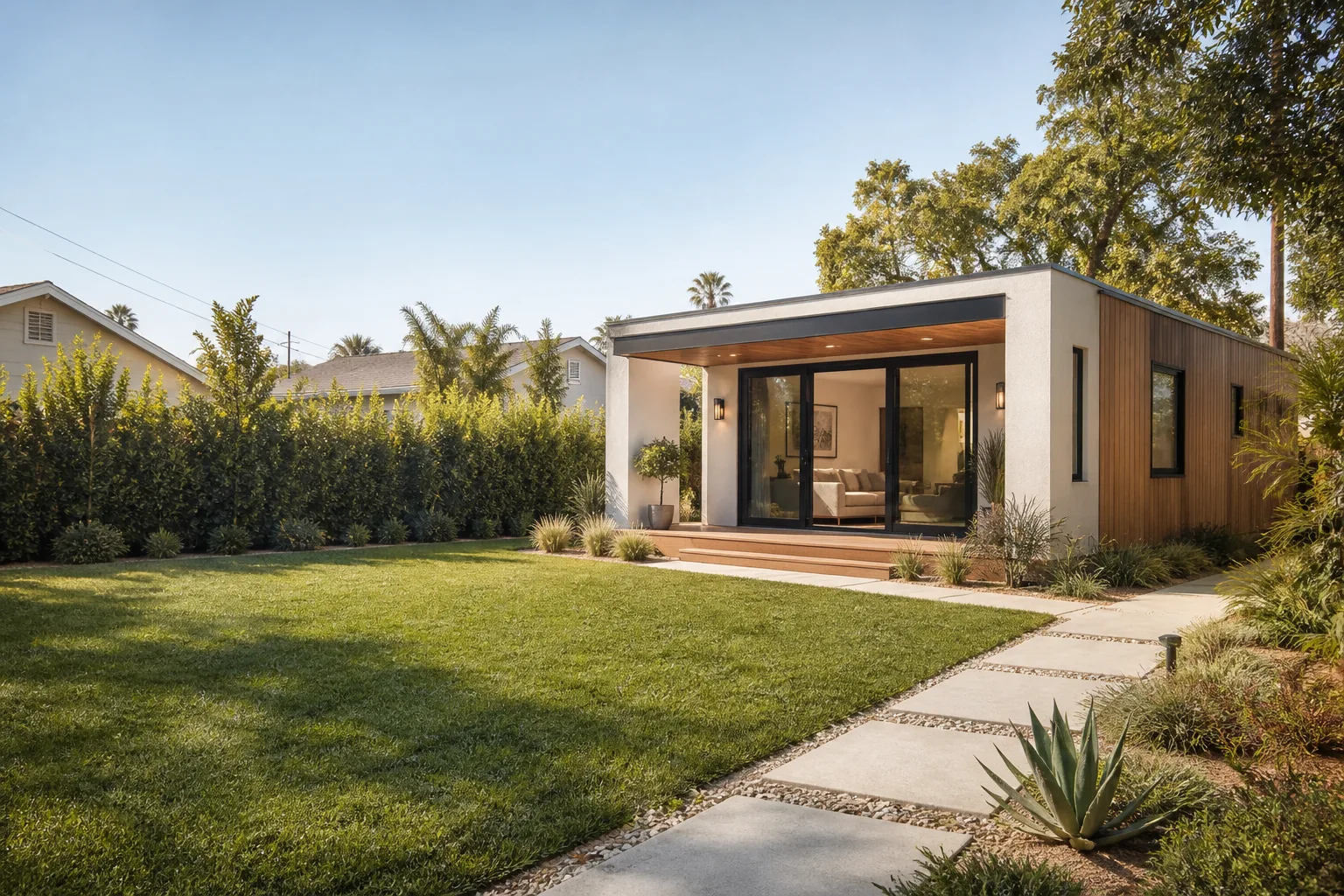
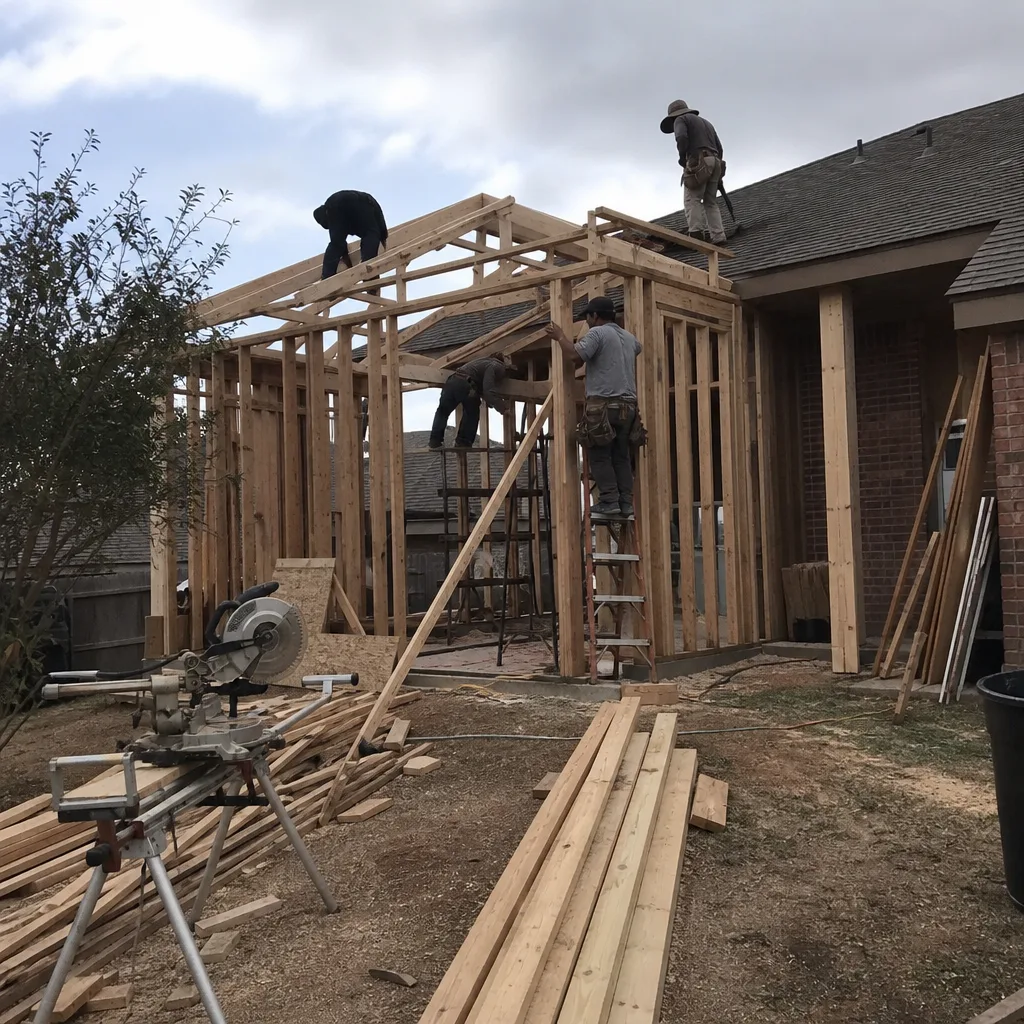
A detached ADU gives you a completely independent dwelling: separate entrance, separate utilities, separate address potential. Privacy for a multi-generational household, rental income without sharing walls, or a true home office. The costs are the line items we broke down earlier. Timeline runs 8 to 14 months from permit application to final inspection, depending on site conditions and material lead times.
The honest pro: Complete separation, highest long-term value as a rental or guest house, and no compromise with the existing home’s structure or systems.
The honest con: The highest total outlay, and it consumes yard space that may matter to you.
Attached Addition (Mother-in-Law Suite or Master Addition)
Cost range: $150,000 to $240,000 for comparable square footage
An attached addition shares two or three walls with the existing home, which eliminates the need for separate utility runs and often simplifies the roofline. If you’re adding a primary bedroom suite or a mother-in-law wing, this is frequently the most cost-effective path to new living space. A Fort Worth room addition contractor works within the existing envelope, tying into the current HVAC system where capacity allows.
The honest pro: Cost per square foot runs 20 to 30% below a detached ADU because of shared walls and systems.
The honest con: You lose the firewall separation and privacy that a detached structure provides. A multi-generational family may discover that “shared wall” means “shared noise” in ways that matter day to day.
If you’re weighing these options and want someone who builds all three, a home addition contractor in Fort Worth can walk the site with you and give honest numbers for each path before you commit. That conversation costs nothing and may prevent a $30,000 mistake.
How to Evaluate a Contractor’s Quote Against These Benchmarks
A quote that’s 30% below these ranges isn’t a bargain. It’s a structured omission. Here’s what a suspiciously low Fort Worth ADU quote usually means, and what it costs you later.
The Low-Ball Quote Decoder
- No soil test or engineering referenced: The foundation number is a placeholder, and the first change order will be $8,000 to $20,000 once the soil report comes back.
- “Allowance” instead of fixed numbers for fixtures and finishes: An allowance is a blank check written to the contractor’s discretion. A $5,000 “fixture allowance” means you’ll choose $2,000 of fixtures and the contractor keeps the rest, or you’ll choose what you actually want and the change order covers the difference.
- No line item for permits and impact fees: That’s $3,500 to $6,500 that will show up after you’ve emotionally committed and the excavator is on site.
- Utility connection “to be determined”: The trenching number doesn’t exist yet. You’re buying an unknown.
- No written schedule: The builder hasn’t thought through the job sequence, which means they haven’t thought through your carrying costs either.
- One-page quote with a lump-sum total and no breakdown: The breakdown is where accountability lives. No breakdown, no accountability.
What a Fair Quote Looks Like
- A line-item breakdown matching the categories we listed in the cost section, with dollar figures, not percentages.
- A written schedule with milestones: permit submission, foundation, framing, mechanical rough-in, drywall, finish, final inspection.
- Permit fees itemized separately as pass-through costs.
- Clear statement of what’s included in “finishes” with product-specific descriptions (“LVP flooring, mid-tier, $4.50/sq ft installed”) rather than generic categories.
- A written change order procedure that requires your signature before any scope or price change.
- A written warranty covering workmanship for a defined period, not a verbal “we’ll take care of you.”
This is the threshold between a quote and a commitment. At Sutton ADU Fort Worth, our written price is delivered before any work starts, and every line item is spelled out. If you receive a quote from another builder and it’s missing the elements above, ask for them. If you’re told they’re not available until after you sign, that’s your answer. For more guides & resources on planning your project, explore our blog.
Prefab and Modular ADUs: What the Brand Names Actually Cost in Fort Worth
Prefab has transformed the ADU conversation nationwide, and Fort Worth homeowners now have access to several recognized product lines. But the brand list alone doesn’t tell you what you’ll spend, and the real costs often surprise people.
The Brands and What They Really Cost
Abodu produces a refined, small-footprint ADU typically delivered as a 340 or 500 square foot unit. The unit cost starts around $190,000 to $230,000, with site work, utilities, and permits in Fort Worth adding $60,000 to $90,000 on top. Total all-in cost typically lands between $260,000 and $320,000.
Cover builds panelized ADUs at a higher finish level, with openings, fixtures, and millwork specified to a refined standard. Unit pricing starts around $250,000 to $300,000 for a 400 to 600 square foot unit, and Fort Worth site work adds $60,000 to $100,000. Total all-in cost: $310,000 to $400,000.
Dvele produces a high-performance, precision-fabricated home with integrated systems and higher insulation values. A Dvele unit typically starts at $300,000 to $380,000 before site work, putting an all-in Fort Worth build at $360,000 to $480,000. That’s a real number and for some homeowners, the energy performance and build quality justify it. But it’s not a value play.
The honest framing: Prefab is not cheaper than stick-built in Fort Worth. Its real advantage is timeline predictability and finish consistency: the unit arrives 80% complete, and the variables happen on your lot, not in a factory. If you value speed to occupancy and a known product, prefab makes sense. If you’re optimizing for cost per square foot, stick-built with a competent Fort Worth contractor beats prefab on price nearly every time.
Where Prefab Costs Hide
- Crane and set fee: $8,000 to $20,000 depending on access and unit size. Tight Fort Worth lots with low power lines or tree canopies can push this higher.
- Foundation work: Prefab units require a precisely level foundation to within 1/4 inch tolerance. That precision slab costs more than a standard slab.
- Site coordination: Someone has to manage utilities, permits, and inspections around the factory schedule. That management is a real line item, whether a builder charges for it or buries it in “project management.”
We work with Abodu, Cover, and Dvele units, and the guidance we give Fort Worth homeowners is consistent: compare the all-in number against the stick-built number for your specific lot. The brand name matters less than the total you’ll actually spend and the warranty standing behind it.
Who Shows Up at Your Door: Why Crew Vetting Changes the Real Cost
Cost is more than a dollar figure. A homeowner opening their property to a construction crew for three months is making a security decision, not just a financial one. This is the part of the ADU equation that rarely appears in cost guides, and it’s the one that matters most to the people living through the build.
Most addition contractors hand you a vague estimate and an unfamiliar crew. The crew shows up on a Monday morning and you have no idea who these people are. That’s not a minor inconvenience for a parent home alone with young children, or an older homeowner who’s cautious about who enters the property. It’s a vulnerability built into the standard construction model.
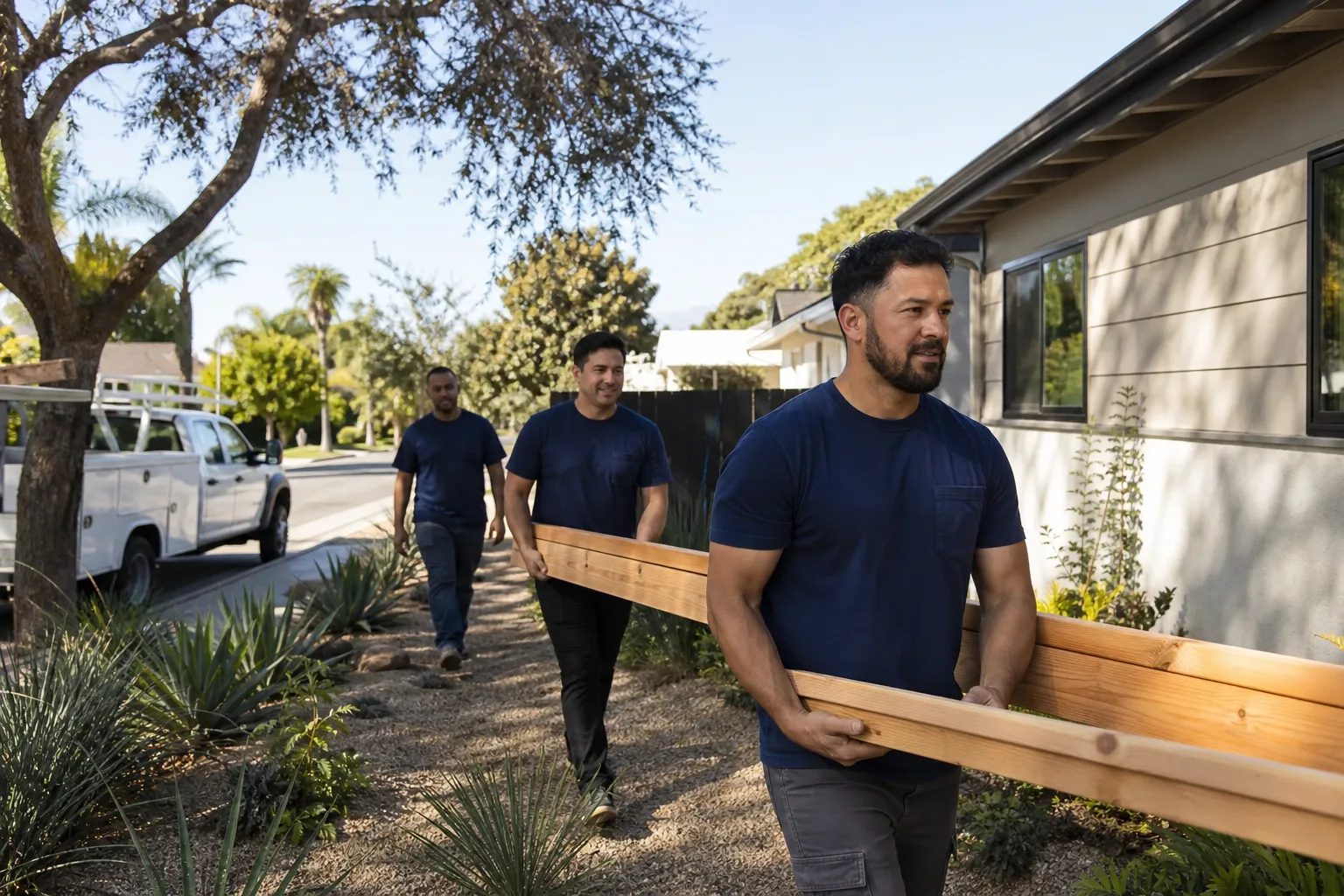
The Threshold Standard exists to remove that vulnerability. Every Sutton technician is background-checked and identity-verified. Their name and photo are sent to you before the visit. They arrive in a marked uniform, and they show a photo ID badge at the door, every time. You know exactly who is on your property before they step onto it.
Sutton is an old English name for a south farm, and adding a second home to your lot is exactly that kind of settled, rooted decision. It’s not a transaction. It’s the slow, deliberate work of building something that will outlast you. The crew who does that work should be people you can name.
We built the 365-Day Done Right Promise for the same reason. It’s a written guarantee, stamped on every project, covering defects in workmanship for one full calendar year from project completion. If the work isn’t right within that year, we make it right. No haggling, no fee, no second-guessing. If any element fails, we’ll complete a second visit at no charge to you. That’s the entire promise, and it’s written down.
Common Mistakes to Avoid
- Budgeting from a national average. The $150,000 figure floating around the internet ignores every variable that makes Fort Worth unique, from clay soil to impact fees. Use the local ranges in this guide instead.
- Skipping the soil test to save $800. In Fort Worth’s expansive clay, that $800 test is the cheapest foundation insurance you’ll ever buy. The alternative is a $15,000 slab repair in year three.
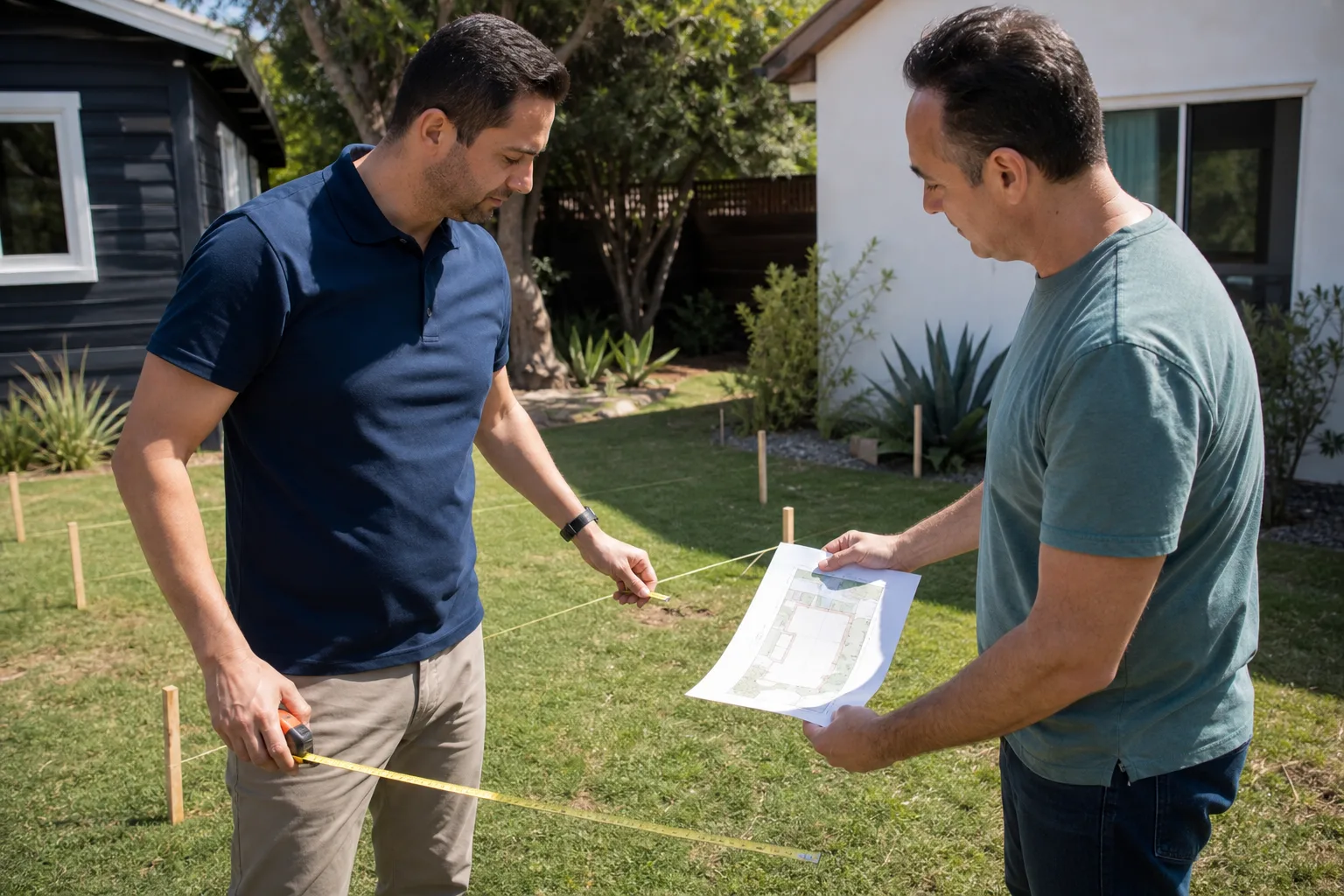
- Choosing the ADU site before thinking through utilities. Every additional 10 feet of trench distance adds $800 to $1,500. Run a string line from the main tap to the proposed ADU corner before falling in love with the spot.
- Not asking for a line-item breakdown. A credible builder provides dollar-figure line items. If you’re handed a lump sum with two or three categories, you’re being handed a place to hide surprises.
- Ignoring the written warranty until after you sign. The warranty is the product. If workmanship coverage isn’t written and specific, it doesn’t exist. Verbal reassurances are not warranties.
- Choosing the lowest quote without decoding what’s missing. A Fort Worth ADU quote 30% below the local low tier isn’t a find. It’s a structured omission that becomes your change orders later.
- Treating garage conversion savings as free money. You give up real storage and vehicle protection in a hail-prone city. Factor the cost of a carport or shed into the “savings” honestly.
When to Call a Professional
Some decisions need a professional on site, not another article. If your lot has visible slope or drainage challenges, call a contractor before sketching anything. If your main panel is older than 15 years or you’re not sure whether your sewer line runs through the proposed ADU footprint, a site walk will answer what no website can. If you’ve received a quote that’s dramatically lower than the ranges in this guide and want a second set of eyes, that conversation is worth the hour. Sutton ADU Fort Worth offers free estimates in Fort Worth. Call (682) 255-2399 and a live person will answer. We don’t do voicemail trees.
Frequently Asked Questions
A detached ADU in Fort Worth typically costs $190,000 to $320,000 for a 400 to 800 square foot new build, excluding design fees and soil testing. The final number depends on finishes, site conditions, and utility trench distances. Call (682) 255-2399 for a written line-item estimate for your specific lot.
Plan review, building permits, trade permits, inspection fees, and impact fees for a detached ADU in Fort Worth total $3,500 to $6,500. Garage conversions run $1,800 to $3,500 because they don’t trigger the same impact assessments.
A garage conversion is absolutely cheaper up front at $90,000 to $160,000 versus $190,000 to $320,000 for a detached new build. But you lose your garage, which has real consequences in Fort Worth’s hail and heat, and hidden foundation problems can erode the savings.
Only if the quote wasn’t actually a fixed price. A written price with line-item detail, a stated change order procedure requiring your signature, and a completed soil test before the foundation number is set should not change. If the quote says “allowance,” “to be determined,” or “foundation allowance,” expect change orders. Ask for a fixed written price. Get it in writing before work begins.
Not always. If the ADU sits within roughly 100 feet of the existing main line and the new fixture load is modest, it can typically tie into the existing sewer lateral. If the site is further away or on a separately metered parcel, a separate tap may be required, adding $5,000 to $15,000. A site walk will determine which applies to your lot.
A detached ADU typically takes 8 to 14 months from permit application to final inspection. Prefab and modular units can sometimes compress construction to 6 to 10 months, but site work, utilities, and inspections still follow the same Fort Worth permitting timeline.
Yes. We have experience with Abodu, Cover, and Dvele units, among other product lines, and we’ll give you an honest all-in comparison of prefab versus stick-built cost for your specific Fort Worth lot. The recommendation is based on your budget, site constraints, and timeline, not on which product we’d rather sell.
The Bottom Line
Your ADU in Fort Worth is a $190,000 to $320,000 build for a detached unit, a $90,000 to $160,000 garage conversion, or a $150,000 to $240,000 attached addition. The number that matters is the written one: line-item detail, permit fees broken out, soil conditions addressed, utility distances priced, a change order procedure that protects you, and a warranty that’s written down. Before you sign anything, know exactly who is coming to your property and what happens if the work isn’t right. That’s not a luxury. It’s the bare minimum of what a construction contract should give you. Call (682) 255-2399 for a free, written estimate and a straight answer about your lot.
Written by Miles Hartwell, Owner at Sutton ADU Fort Worth, serving Fort Worth since 2006.