Last updated October 15, 2026
ADU Permits, Codes & Inspections in TX: What You Need to Know
Here’s a number most homeowners don’t see coming: in Fort Worth, roughly one in four ADU permit applications gets bounced back at least once for missing documentation, incorrect site plans, or overlooked zoning overlays. What that means in practical terms is lost weeks, restart fees, and a construction timeline that pads itself by a month or more before a single footing gets poured. Texas passed House Bill 2789 in 2023 to encourage ADU construction statewide, but Fort Worth’s local development code still holds the actual authority over whether your ADU gets approved, how it must be built, and when it can legally be occupied. This guide walks through the real Fort Worth and Tarrant County process: the permit sequence, the local setback and height rules, the inspection stages, and the utility connections that trip people up. We’re ADU builders in Fort Worth, and we’ve watched too many smart homeowners learn these rules the expensive way.
Quick Answer
The Complete Guide to ADU in Fort Worth breaks down why permits require a multi-step sequence through the Development Services Department: a pre-application conference first, then a site plan review, building permit submittal, and separate trade permits for electrical, plumbing, and mechanical work. A detached ADU under 800 square feet in a single-family residential zone must meet local setback, lot-coverage, and height limits that are stricter than the state’s baseline, and you will need a certificate of occupancy before anyone legally lives there. Plan on the full permit-to-occupancy timeline running 4 to 8 months, with permitting fees for a typical 600-square-foot detached ADU starting around $3,000 to $6,500 depending on site conditions.
Table of Contents
- The Fort Worth Permit Sequence: What Happens in What Order
- Fort Worth Zoning, Setbacks, Height, and Lot Coverage: The Numbers That Matter
- Mandatory Inspection Stages and What a Failed Inspection Actually Costs You
- Water, Sewer, and Electric: How Utilities Connect for a Detached ADU in Fort Worth
- Certificate of Occupancy for an ADU: Why Skipping It Creates a Title Problem
- What Fort Worth ADU Permits Cost and How Long the Process Takes
- Common Mistakes to Avoid
- When to Call a Professional
- Frequently Asked Questions
The Fort Worth Permit Sequence: What Happens in What Order
Fort Worth’s Development Services Department processes ADU permits in a specific order, and skipping a step doesn’t save time, it creates a rejection. Here’s the exact sequence we follow on every detached ADU we build in Fort Worth:
- Pre-application conference. This is a meeting, either in person at Development Services or virtual, where a city planner reviews your lot’s zoning district, overlay restrictions, and proposed ADU placement. In Fort Worth, this conference is optional but strongly advised for ADUs. It typically costs $150 to $300 and saves homeowners from submitting a full plan that gets rejected on a zoning issue that would have surfaced in the conference.
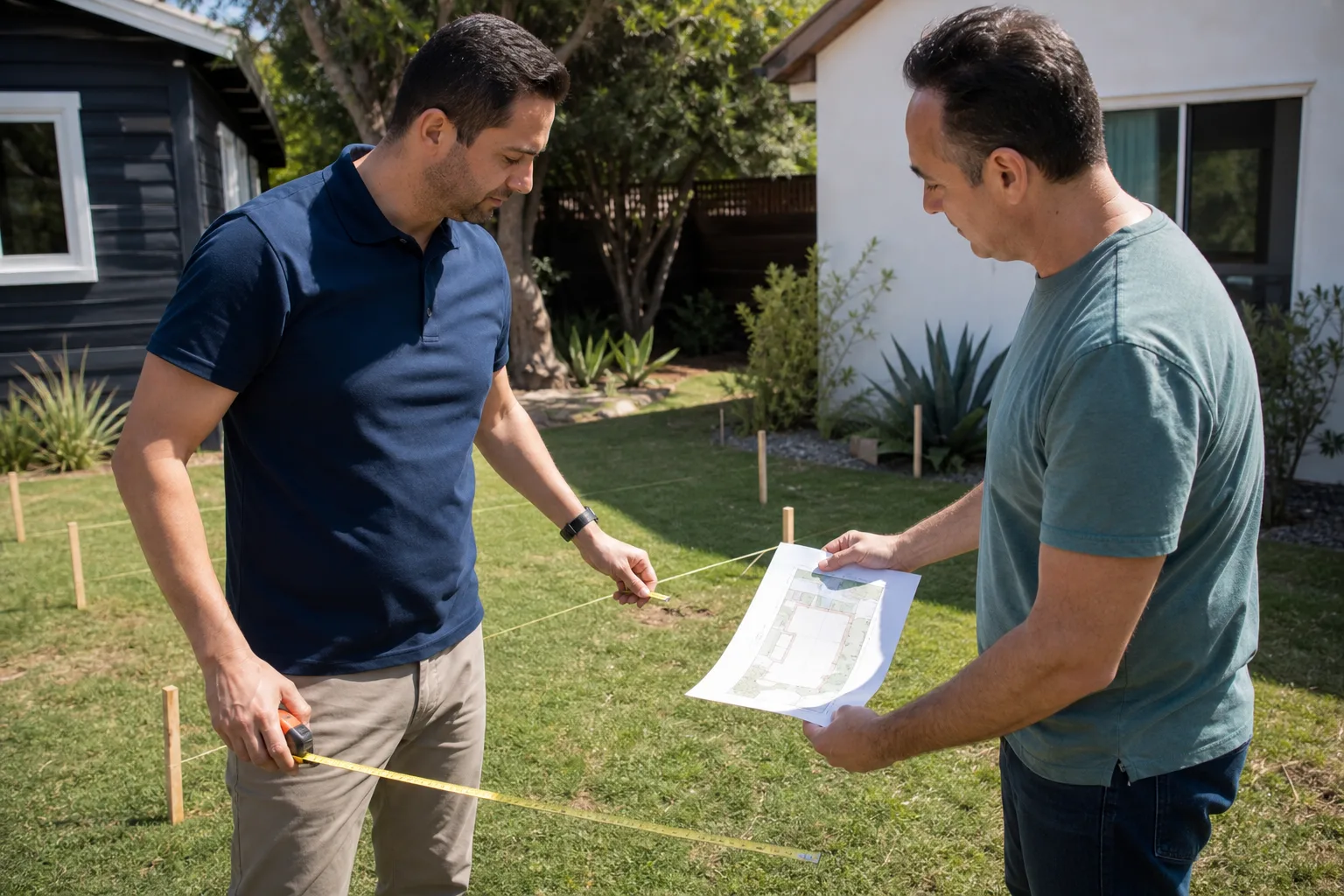
- Zoning verification and site plan review. The city confirms your lot’s zoning classification, lot dimensions, and any historic district overlays. Your site plan must show the ADU footprint, setbacks from all property lines, existing structures, impervious surface calculations, and driveways or access paths. Fort Worth is specific about site plan formatting. We’ve seen site plans rejected for missing a north arrow, so the details matter.
- Building permit application. This is the main permit. You submit architectural drawings, engineer-stamped foundation plans for detached ADUs, energy compliance documentation, and the site plan that passed step two. Fort Worth follows the 2021 International Residential Code with local amendments, so your plans must reference the correct code cycle.
- Trade permit applications. After the building permit is issued, or sometimes concurrently, you or your licensed trades file separate permits for electrical, plumbing, and mechanical work. In Fort Worth, these are pulled by the licensed electrician, plumber, and HVAC contractor doing the work, and each requires its own inspection sequence.
- Plan review and comments. A city plan reviewer examines your submittal and issues written comments. First review turnaround in Fort Worth typically runs 2 to 4 weeks for an ADU. If comments require revisions, each resubmittal restarts that clock, which is why accuracy on the first submittal is the single biggest time saver in the whole process.
- Permit issuance and construction start. Once all comments are cleared and fees are paid, Development Services issues the permit. You must post it visibly on the job site. Construction cannot legally begin before this moment.
Everything we’ve described here is the Fort Worth process specifically, not the generic Texas process. Cities like Austin have streamlined ADU permitting into an expedited review track. Fort Worth does not have an ADU-specific fast track as of this writing, so the sequence above applies to every detached ADU, garage conversion, and room addition we build as a home addition contractor in Fort Worth.
Fort Worth Zoning, Setbacks, Height, and Lot Coverage: The Numbers That Matter
State-level ADU legislation in Texas sets a floor, but Fort Worth’s zoning ordinance sets the actual rules on your property. Here are the Fort Worth-specific numbers that govern most single-family residential zones, which we see enforced consistently across neighborhoods like Arlington Heights, Mistletoe Heights, Wedgwood, and the TCU area:
What Fort Worth Requires That the State Doesn’t
Texas’s 2023 ADU law prohibited cities from banning ADUs outright in single-family zones and capped some regulatory burdens. But Fort Worth’s definitions and dimensional standards still control what you can actually build. A setback (the required gap between your new structure and the property line) in a typical Fort Worth single-family residential zone runs 5 feet for side yards and 10 to 20 feet for rear yards on detached ADUs. Lot coverage, meaning the percentage of your lot covered by structures, is generally capped at 40% to 50% in most Fort Worth single-family districts when you add the ADU footprint to the primary home and other impervious surfaces. Height for a detached ADU is usually limited to one story, around 18 to 25 feet depending on the specific district.
Overlays and Historic Districts
If your lot sits in a Fort Worth historic district or a neighborhood conservation overlay, every one of those numbers can shift. Historic districts like Fairmount add design review requirements for exterior materials, window proportions, and roof pitch. Neighborhood conservation overlays add their own dimensional rules. You cannot learn this from a statewide guide, because the overlay map is fragmented and changes when City Council adopts new districts. For local warning signs to watch for, see our ADU Warning Signs: A Fort Worth Homeowner’s Reference Guide. The pre-application conference is the moment where an overlay issue gets caught before it costs you a rejected submittal.
What These Numbers Mean in Practice
On a standard 6,000-square-foot Fort Worth lot with a 1,800-square-foot primary home and a driveway, you can typically accommodate a 500 to 700-square-foot detached ADU before hitting lot-coverage limits. Smaller lots in older neighborhoods may top out at 400 square feet for an ADU without a variance. Understanding these constraints before you pick an ADU floor plan saves you from falling in love with a design the city won’t approve. We’ve helped homeowners work through this exact math with several prefab product lines, including Abodu and Dvele, because their standard modules fit different lot envelopes in different ways. For help deciding your approach, read our DIY vs Professional ADU: The Fort Worth Homeowner’s Decision Guide.
Mandatory Inspection Stages and What a Failed Inspection Actually Costs You
Fort Worth requires a defined sequence of inspections on an ADU, and each one must pass before the next phase of construction can legally proceed. Here’s the order the city expects, and what happens when an inspection goes sideways:
The Four Inspection Stages You Cannot Skip
- Foundation inspection. After excavation and forms are set but before concrete is poured, the city inspector checks footing depth, reinforcement placement, and the engineer-stamped details from your submitted foundation plan. In Fort Worth’s expansive clay soils, especially common in neighborhoods south of I-20, pier depth and reinforcement are scrutinized closely. A failed foundation inspection typically costs one to two weeks of schedule and requires the corrections be made before the pour.
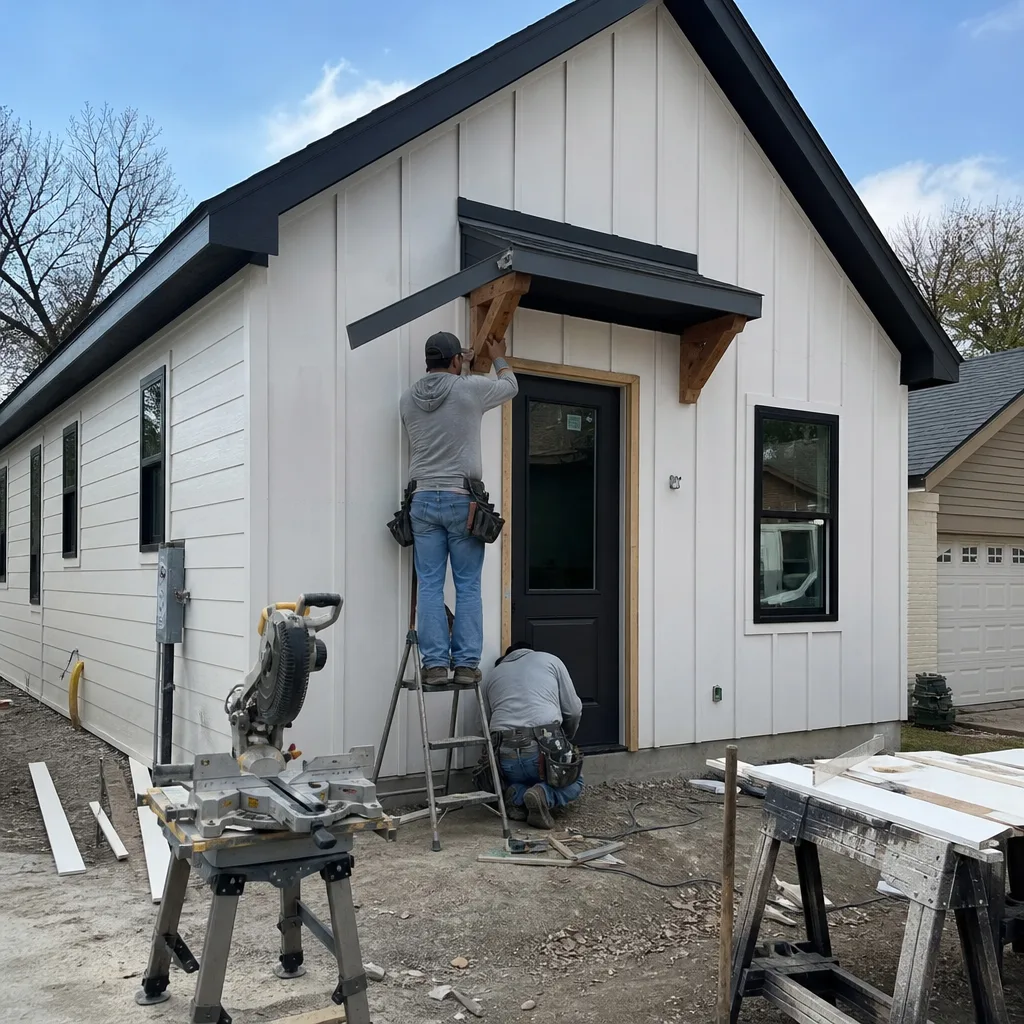
- Framing inspection. Once the walls, roof structure, and structural connections are complete but before insulation and drywall are installed, the inspector verifies framing members, shear walls, nailing patterns, and any engineer-required hold-downs. This is the inspection that gets failed most often in our experience, usually on missing hurricane ties or incorrect anchor bolt spacing.
- MEP rough-in inspection. Mechanical, electrical, and plumbing inspections happen before the walls are closed. The electrical inspector verifies wiring and panel connections, the plumbing inspector tests the waste and supply lines, and the mechanical inspector checks the HVAC rough-in. Each trade inspection is separate in Fort Worth, so you’ll have three inspectors involved during this phase.
- Final inspection and certificate of occupancy. After all finishes are complete and utilities are connected, the building inspector does a final walk-through. When it passes, the city issues the certificate of occupancy. No one legally occupies the ADU before this document exists.
A failed inspection in Fort Worth triggers a correction notice, a reinspection fee, and a scheduling wait for the inspector’s next available slot, which in busy construction seasons can push 2 to 3 weeks per failed stage. Multiple failures compound the timeline. This is where our 365-Day Done Right Promise matters: the workmanship standard that governs our builds is designed so that when an inspector walks the job, the corrections are already handled, not discovered for the first time.
Water, Sewer, and Electric: How Utilities Connect for a Detached ADU in Fort Worth
Utility connections for a detached ADU in Fort Worth involve the city’s Water Department, the sanitary sewer division, and Oncor for electric service. Here’s how each one actually works:
Water Service
Fort Worth allows a detached ADU to connect to the primary home’s existing water line with a submeter, or to receive its own dedicated meter with a separate tap from the city main. A dedicated meter requires a separate tap fee, which runs $2,500 to $6,000 depending on the location of the main relative to your lot, and a city-approved plumbing plan. Most homeowners choose the submeter route because it’s significantly less expensive, but a dedicated meter matters if you plan to rent the ADU separately and want tenants billed independently.
Sewer Service
Detached ADUs in Fort Worth almost always connect to the existing sewer lateral from the primary home, with a branch line installed and inspected as part of the plumbing permit. If the existing lateral is old clay pipe, which we see regularly in Fort Worth neighborhoods built before 1960, the city may require a lateral replacement before the ADU connection is approved. Lateral replacements on a typical Fort Worth lot run $4,000 to $10,000, and this cost can surprise homeowners who planned around only the ADU structure itself.
Electric Service
Most Fort Worth ADUs under 800 square feet draw power as a subpanel from the primary home’s existing service, provided the main panel has the capacity. Oncor sets the rules for what capacity can support an ADU, and if your main service is 100 amps or less, expect to upgrade to 200 amps before the ADU can be energized. A main service upgrade runs $3,000 to $6,000 in Fort Worth. This is the kind of pre-construction discovery that your room addition contractor in Fort Worth should surface early, not after the ADU framing is complete.
Certificate of Occupancy for an ADU: Why Skipping It Creates a Title Problem
A certificate of occupancy in Fort Worth is the city’s official record that a structure met code at the time it was built and is legal for its intended use. For an ADU, the certificate says “secondary dwelling unit.” For a primary residence, it says “single-family residence.” Skipping the certificate creates a quiet but expensive problem: when you sell the property, the title search and the home inspection will flag the unpermitted square footage, and the buyer’s lender can refuse financing on a property with an unpermitted dwelling unit. The seller then faces one of three bad options: demolish the ADU, retrofit it to current code and pull the permit after the fact (which costs 1.5 to 3 times the original permit cost), or sell the home as-is at a discount that eats the ADU’s entire value. We’ve seen all three happen in Fort Worth.
The certificate also matters for renters. Fort Worth code enforcement responds to complaints about unpermitted dwelling units, and if a tenant occupies an ADU without a certificate, the city can issue a notice requiring the unit to be vacated within 30 days. An ADU built without permits is not a rental asset, it’s a liability. Building it right the first time, through the permit sequence above, is the only path to an ADU that adds real value to the property.
What Fort Worth ADU Permits Cost and How Long the Process Takes
Permit costs for an ADU in Fort Worth are calculated from the project’s construction value, not the size, so they scale with your build budget. Here’s a realistic range for a typical 600-square-foot detached ADU with a construction budget of $180,000 to $280,000:
- Pre-application conference: $150 to $300
- Building permit fee: $2,000 to $4,000, based on construction value
- Trade permits (electrical, plumbing, mechanical): $300 to $800 total
- Zoning and site plan review fees: $200 to $500
- Water and sewer connection or tap fees: $500 to $6,000 depending on submeter vs. dedicated meter and lateral condition
- Total permit and city fee range: $3,000 to $6,500 for most ADUs under 800 square feet
Timeline from first submittal to issued permit in Fort Worth typically runs 6 to 12 weeks for an ADU that avoids major plan-review comments. Add the inspection sequence above, and a full build from permit start to certificate of occupancy usually spans 4 to 8 months for a detached ADU. This is the realistic Fort Worth timeline. Any builder who quotes a 2-month start-to-finish schedule for a permitted detached ADU in Fort Worth is either skipping permits or planning to surprise you with an unpermitted build, which is a problem that lands on your title, not theirs.
When we build as Sutton ADU Fort Worth home specialists, we price all permitting into the written estimate before any work starts. You see the permit line items, the inspection schedule, and the certificate of occupancy plan before you sign anything. There are no surprise invoices mid-build, because the Threshold Standard applies to the whole project from the first site visit to the final inspection.
Common Mistakes to Avoid
- Skipping the pre-application conference. In Fort Worth, this affordable step catches zoning overlays, lot-coverage conflicts, and historic district requirements before they become a rejected submittal. Saving $200 here can cost you a month of resubmittal time.
- Building before the permit is issued. Fort Worth code enforcement issues stop-work orders and fines for unpermitted construction, and in the worst cases, the city orders the structure demolished. You cannot un-build an ADU.
- Assuming state law overrides Fort Worth zoning. Texas legislation set a baseline, but your specific lot’s setbacks, height limits, and lot coverage come from the city’s ordinance, not from Austin. Fort Worth rules govern Fort Worth property.
- Not checking the sewer lateral before the build. Older Fort Worth neighborhoods with original clay pipe may require a lateral replacement the city will mandate before approving the ADU connection. This is a $4,000 to $10,000 discovery that belongs in the pre-construction budget.
- Occupying the ADU without a certificate of occupancy. The city can force eviction of the unit and the title problem follows you to closing. Renters and buyers both deserve, and lenders both require, a permitted ADU.
- Choosing an ADU floor plan without checking lot-coverage math. A design that fits on paper may push your lot past its permitted coverage limit once you add the driveway and walkways. This is a front-end planning failure that gets caught at site plan review, costing weeks.
- Paying a contractor before permit approval. The permit is the first deliverable. If a builder asks for full payment before the permit is in your hands and posted on the job site, walk away.
When to Call a Professional
If your Fort Worth lot sits in a historic district, a neighborhood conservation overlay, or has an existing structure within 10 feet of the proposed ADU footprint, you should have a builder who knows the local ordinance involved before you spend a dollar on plans. If your sewer lateral is original to a pre-1960 home, or your electric panel is 100 amps or less, those are pre-construction discoveries that change the budget and belong in your written estimate. And if you’ve received a code enforcement notice or a stop-work order, do not try to resolve it alone. The city’s process moves faster and more favorably when a builder who understands Fort Worth’s Development Services Department handles the correction. Sutton ADU Fort Worth offers free estimates in Fort Worth. Call (682) 255-2399 to schedule yours.
Frequently Asked Questions
Expect $3,000 to $6,500 in total city fees for a typical detached ADU under 800 square feet, including the building permit, trade permits, and water and sewer connection fees. The exact amount depends on your construction value, lot location, and whether you choose a submeter or a dedicated water meter. Call (682) 255-2399 for an exact quote, because estimates are free, and our written price includes every permit line item.
Plan on 6 to 12 weeks from first submittal to issued permit if your plans pass review without major comments. Each revision cycle adds 2 to 4 weeks, so accuracy on the first submittal is the difference between a spring groundbreaking and a fall one.
Yes, but you’ll need design review approval, which means your exterior materials, roof form, and window proportions must match the district’s guidelines. Fairmount and other Fort Worth historic districts enforce this strictly, so factor design review time into your schedule.
No, a submeter from the primary home is allowed and is the lower-cost path for most homeowners. A separate dedicated water meter is permitted and adds $2,500 to $6,000 in tap fees, which only makes sense if you plan to rent the ADU to a tenant who pays their own utility bills.
The unpermitted ADU gets flagged during the buyer’s inspection and title review, the lender usually refuses financing, and you’ll face either demolition, an expensive after-the-fact permit at 1.5 to 3 times the original cost, or a sale price that gives away the ADU’s full value. The certificate of occupancy is not optional.
Not with a written price locked before any work begins. Our estimates state the full scope including permits, inspections, and utility connections, and the 365-Day Done Right Promise covers workmanship for a full calendar year from project completion. Call (682) 255-2399 to see what a fixed price looks like on your ADU.
The Bottom Line

Fort Worth’s ADU rules are local, specific, and enforced. The state gave you permission to build an ADU in principle; the city controls the actual permit on your lot, and skipping the city’s process can end in a demolition order you’ll pay for twice. The permit sequence, the setback and coverage limits, the inspection stages, and the certificate of occupancy are the four corners of Fort Worth ADU law, and every one of them is learnable before you spend a dollar on plans. The fastest path to a permitted ADU in Fort Worth is a builder who knows this ordinance and writes it all into a fixed price before the first shovel hits the ground. Explore more guides & resources to keep your project on track.
Written by Miles Hartwell, Owner at Sutton ADU Fort Worth, serving Fort Worth since 2006.