Last updated October 15, 2026
DIY vs Professional ADU: The Fort Worth Homeowner’s Decision Guide
Texas law lets you build your own ADU without a contractor’s license, which sounds like the green light for a $40,000 savings story. What nobody tells you until it’s too late: the same owner-builder statute requires you to disclose that unlicensed construction when you sell for five years, and your homeowner’s insurance carrier can deny a claim if unpermitted work contributed to the loss. This guide walks through the actual legal framework, the real cost comparisons, and the phases where your sweat equity makes sense versus the ones where a Fort Worth crew earns every dollar. For more guides & resources on ADU planning, explore our blog.
Quick Answer
For most Fort Worth homeowners, a hybrid approach wins: act as your own general contractor on finishes (paint, flooring, trim, landscaping) while hiring licensed professionals for foundation, framing, electrical, plumbing, and HVAC. Pure DIY on a detached ADU typically saves 18-25% off total project cost but adds 400-600 hours of owner labor, triggers a five-year resale disclosure obligation, and shifts permit-compliance risk entirely onto you.
Table of Contents
- What Texas Owner-Builder Law Actually Allows (and Requires)
- The Fort Worth Permit Reality Nobody Budgets For
- The True Cost Comparison: DIY Labor Hours vs Professional Labor in Fort Worth
- How Unpermitted ADU Work Affects Insurance and Property Title
- Phases Where DIY Is Genuinely Smart
- Phases Where Errors Become Expensive or Dangerous
- The Hybrid Approach: Owner as General Contractor
- Where Prefab and Modular ADUs Change the DIY Math
- Common Mistakes to Avoid
- When to Call a Professional
- Frequently Asked Questions
- The Bottom Line
What Texas Owner-Builder Law Actually Allows (and Requires)
Texas Property Code Section 27.001 and the Texas Occupations Code carve out a specific exemption: a homeowner can build or improve a structure on their own property without holding a general contractor license. This applies to ADUs in Fort Worth the same as it applies to a primary residence. You do not need a GC license to pull the permit, manage subcontractors, or perform the work yourself.
But the law extracts a price for that freedom. The owner-builder exemption carries three obligations most guides never mention:
- The owner-builder affidavit. When you pull a building permit as an owner-builder in Fort Worth, you sign a legal document certifying that you are constructing the ADU for your own use, not for sale or lease. Lying on this form constitutes a misdemeanor under Texas law.
- The five-year resale disclosure rule. If you sell the property within five years of completing owner-builder work, you must disclose to the buyer that unlicensed construction was performed. This disclosure sits in the seller’s disclosure notice and gives buyers a documented reason to negotiate the price down or walk away.
- Licensed trades are still required. The owner-builder exemption applies to the general contractor role only. Electrical, plumbing, and HVAC work in Fort Worth must be performed by state-licensed tradespeople. You cannot pull an electrical permit as an owner-builder unless you personally hold a Texas electrical license.
What this means in plain terms: you can legally frame walls, hang drywall, run baseboard, and paint. You cannot legally wire the panel, run the sewer line, or install the mini-split without a licensed contractor. The DIY ADU in Fort Worth is not one decision. It’s about twenty decisions layered on top of each other.
We have walked Fort Worth homeowners through this exact discovery process more times than we can count. The ones who end up calling ADU Builders in Fort Worth usually start by asking a simple question: “What can I actually do myself without creating a legal problem down the road?”
The Fort Worth Permit Reality Nobody Budgets For
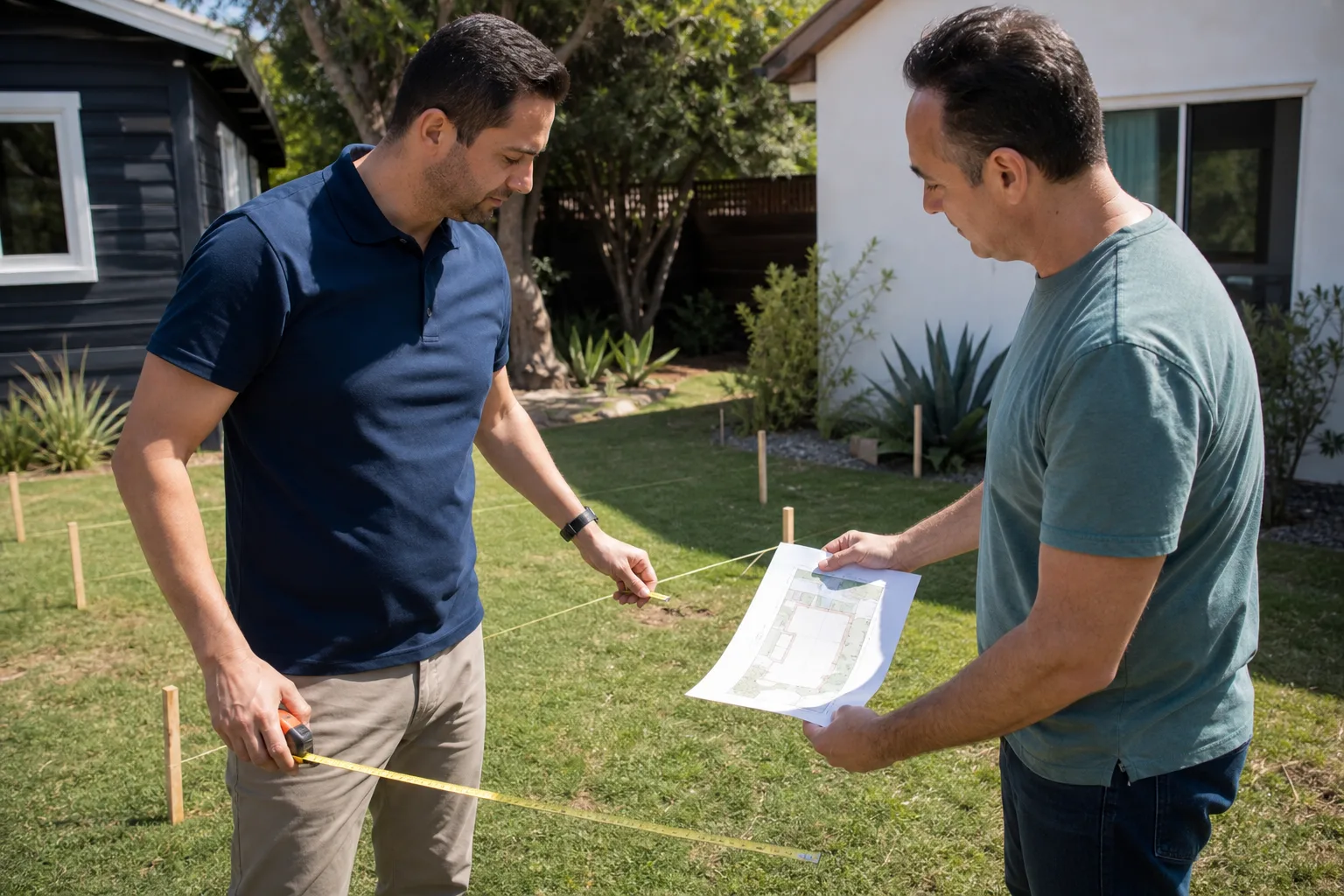
Fort Worth’s Development Services Department processes ADU permits through the same residential building permit pathway as any accessory structure over 200 square feet. Current city code treats detached ADUs as accessory dwelling units with specific setback requirements: typically 5 feet from the side and rear property lines for a single-story structure, though corner lots and platted subdivisions in neighborhoods like Ryan Place or Mistletoe Heights often carry additional overlays that reduce buildable area.
A setback, for anyone new to construction vocabulary, is the required gap between your new structure and the property line. Fort Worth enforces this measure directly. Your survey from 1998 does not override the current code. If the survey is out of date, you’ll need a new one before the permit application moves.
The permit process itself follows a predictable sequence:
- Site plan review. You submit a scaled drawing showing the ADU footprint, setbacks, and existing structures. Fort Worth reviewers check zoning compliance here, and this is where most first-timer applications stall.
- Construction document review. Foundation plan, framing plan, electrical layout, plumbing layout, and energy compliance documentation all need to be submitted. A professional engineer’s stamp is required for foundation plans on most Fort Worth soil conditions.
- Plan review fees. Based on valuation of the work, not a flat rate. A $200,000 ADU commonly carries $1,500 to $3,000 in total plan review and permit fees across the building, electrical, plumbing, and mechanical permits.
- Inspections. Fort Worth requires inspections at each phase: footing, slab, framing, rough electrical, rough plumbing, insulation, and final. Missing an inspection means opening up finished work. There is no waiver for owner-builders.
The engineering requirement catches people by surprise. Fort Worth sits on expansive clay soil. Most of the city, from Wedgwood up through the Alliance corridor, has soil that swells when wet and shrinks when dry. A foundation engineer has to design for that movement, and that’s a professional service with a professional fee. DIY does not extend to soil mechanics.
For anyone comparing the paperwork burden to the savings, we recommend reading through our Home Addition Contractor in Fort Worth page. It explains how a managed build handles permits as part of the written price rather than as a surprise line item.
The True Cost Comparison: DIY Labor Hours vs Professional Labor in Fort Worth
Let’s put honest numbers on the table. A detached 600-square-foot one-bedroom ADU in Fort Worth currently runs $190,000 to $320,000 when professionally built, depending on finish level and site conditions. That’s a wide range, and it’s real: prefab units from companies like Abodu or Mighty Buildings land at the lower end when the site is flat and utilities are close, while custom stick-built units on tight lots or with foundation challenges push toward the top.
The labor portion of a professional build represents roughly 40-50% of the total. On a $250,000 project, that’s $100,000 to $125,000 in labor across all trades. This is the number a DIY build targets.
Here’s the labor-hours reality for a competent, tool-owning homeowner:
- Site prep and foundation forming: 60-80 hours
- Framing walls, roof, and interior partitions: 120-180 hours
- Roofing: 40-60 hours
- Siding and exterior trim: 50-70 hours
- Rough-in coordination (working alongside licensed subs): 30-40 hours of your time
- Insulation and drywall: 80-120 hours
- Tape, mud, and texture: 60-90 hours for a first-timer working walls and ceiling
- Flooring, trim, doors, paint: 80-120 hours
- Tile, fixtures, final plumbing/electrical trim-out: 40-60 hours
Total: 560 to 820 owner-labor hours for a complete DIY ADU with licensed subcontractors handling electrical, plumbing, and HVAC. At a realistic pace of 15 hours per week (evenings and weekends), that’s 37 to 55 weeks of continuous work. Most DIY ADUs in Fort Worth take 18 to 24 months from first shovel to final inspection.
Now compare that to what’s actually saved. The DIY approach eliminates the general contractor’s markup and management fee, typically 15-20% of hard costs, and the labor you perform yourself. Realistically, a homeowner doing finish work plus acting as their own GC saves $45,000 to $70,000 on a $250,000 ADU. That’s meaningful money. It is also less than half of what most online cost calculators suggest, because those calculators ignore the cost of tools, the cost of redoing first-time work that doesn’t pass inspection, and the cost of your own time.
For a Room Addition Contractor in Fort Worth, the labor-hours picture shifts. Attached additions involve weatherproofing the connection point between old and new construction, matching rooflines, and tying into existing systems. The DIY hours are similar, but the failure costs are higher because a leak at the connection point damages the existing home, not just the new square footage.
How Unpermitted ADU Work Affects Insurance and Property Title
This is the section most DIY guides skip entirely, and it’s the one that matters most if things go wrong.
Homeowner’s insurance policies in Texas contain a standard provision: the insurer agrees to cover losses caused by covered perils, not losses caused or worsened by unpermitted construction. If you build an ADU without permits and a fire starts in that unit five years later, the claims adjuster’s first question is whether the structure had a certificate of occupancy. If it didn’t, the claim can be denied outright. Even if the fire was caused by a faulty appliance, not your wiring, the unpermitted status gives the carrier grounds to deny coverage on the entire loss.
In our experience in Fort Worth, we’ve seen this play out after the 2021 winter storm Uri and subsequent severe weather events. Homeowners with unpermitted additions discovered at claim time that their policy limits didn’t include the unpermitted square footage, or that the claim was denied entirely pending an investigation. The denial letter cites the policy’s conformity clause and the Texas Insurance Code’s requirement that homeowners maintain permitted structures. You can fight the denial, and some people win. The fight takes 12 to 18 months and requires an attorney.
Property title is a separate concern. When you sell a home in Texas, you complete a Seller’s Disclosure Notice. One of the questions asks whether any improvements were made without required permits. The five-year owner-builder disclosure rule from Section 27.001 adds teeth: if you built the ADU yourself without a license and sell within five years, the disclosure is mandatory. A buyer who discovers undisclosed unpermitted work after closing has a cause of action against you for fraud and negligent misrepresentation. The liability window in Texas for real estate fraud is four years from discovery, not from sale.
None of this means DIY is impossible or wrong. It means the decision has to account for title and insurance consequences, not just material costs and labor hours. A homeowner who builds an ADU with permits, passes every Fort Worth inspection, and hires licensed trades for electrical and plumbing has none of these exposure points.
Phases Where DIY Is Genuinely Smart
Some parts of an ADU build reward sweat equity with low risk and real savings. These are the phases where we tell Fort Worth homeowners to go for it, even when we’re the ones managing the rest of the project.
- Painting. Interior painting on a 600-square-foot ADU runs $3,500 to $6,000 when contracted. Materials for a homeowner doing it themselves: $900 to $1,500 including quality rollers, brushes, tape, and paint from a Fort Worth supplier like Sherwin-Williams on Camp Bowie. Time required: 30-40 hours. This is the single best DIY return on labor.
- Flooring. Luxury vinyl plank and engineered hardwood click-lock systems install without special tools beyond a saw and a rubber mallet. Professional installation on 600 square feet costs $3,000 to $5,500. Materials run $1,800 to $3,500. Time required: 20-30 hours.
- Landscaping and exterior trim. Fort Worth’s climate means you’re planting in clay-heavy soil and choosing plants that survive both 105-degree summers and the occasional hard freeze. Doing this work yourself saves $4,000 to $8,000 depending on scope. No permit inspection touches landscaping, so failure is aesthetic rather than structural.
- Interior trim and doors. Pre-hung interior doors and MDF trim are forgiving materials. Cutting mistakes cost $30 to $80 per board, not $500. The learning curve is steep for the first two doors and flat after that.
- Bathroom and kitchen fixture trim-out. Once a licensed plumber has roughed in the lines and set the valves, attaching faucets, shower heads, and toilets is a homeowner job. If a fitting leaks, it’s a visible, contained problem, not a warranty issue.
These five phases together account for roughly $16,000 to $23,000 of professional labor. A homeowner completing all of them saves that amount with near-zero code-compliance risk, provided the pre-drywall inspections were passed by the licensed trades.
Phases Where Errors Become Expensive or Dangerous
The flip side is just as specific. Some work should not be attempted without a licensed professional, and the reasons have nothing to do with skill and everything to do with what happens when a mistake surfaces later.
- Foundation and slab work. Fort Worth’s expansive clay soils demand engineered foundations with proper steel reinforcement and post-tension or pier systems where soils warrant it. A foundation error does not show up immediately. It shows up as diagonal cracks through your drywall 18 months later, after the drought-wet-drought cycle of North Texas has done its work. Foundation repair on an ADU runs $15,000 to $40,000. The foundation is not the place to learn.
- Electrical panel and rough-in wiring. Texas law requires a licensed electrician for this work, full stop. Beyond the legal requirement, a wiring error inside a wall is invisible until it causes a fire, a failed inspection that requires opening drywall, or a flickering circuit that resists diagnosis. The cost of rewiring after drywall is up is triple the cost of doing it right the first time.
- Plumbing rough-in and sewer connections. Fort Worth requires licensed plumbers for all drainage and water supply work. Slope errors on drain lines cause slow drainage and sewage gas. Water supply errors cause leaks inside walls. Both fail inspection, and both are expensive to correct after finishes go up.
- HVAC design and installation. An undersized or oversized mini-split in a Fort Worth summer is either unable to hold 75 degrees in August or short-cycles and leaves humidity at 70 percent. The problem appears on the first 100-degree day, not at installation. Licensed HVAC contractors run Manual J load calculations before sizing equipment. This is an engineering calculation, not a guess.
- Roof flashing and waterproofing. The point where the ADU roof meets the walls, and any penetration for vents or flues, is where water finds its way in. A flashing error causes slow, invisible damage that can go unnoticed for years. By the time water stains appear on the ceiling, the sheathing and possibly framing need replacement.
These five phases are where the Threshold Standard at Sutton ADU Fort Worth home earns its keep. Every trade on our projects is licensed for exactly the scope they perform. No one is “figuring it out” on your lot.
The Hybrid Approach: Owner as General Contractor
The hybrid approach deserves its own section because it’s the answer most Fort Worth homeowners actually want. You act as the general contractor: you pull the permit, schedule the subcontractors, order materials, and perform the finish work yourself. Licensed professionals handle the licensed scopes.
What this saves compared to a full professional build:
- General contractor fee: 15-20% of hard costs, or $30,000 to $50,000 on a $250,000 ADU
- Finish labor you perform yourself: $16,000 to $23,000
- Total realistic savings: $46,000 to $73,000
What this costs you in return:
- Time: 10-15 hours per week for 8-12 months of construction, plus the finish-phase labor hours listed above
- Sequencing risk: Subcontractors schedule around their own workloads. If the electrician can’t come back for rough-in for three weeks, the drywall crew waits three weeks. Professional GCs hold schedules together with volume leverage and existing relationships
- Pricing risk: A homeowner buying materials at retail pays 10-20% more than a GC with contractor accounts at Fort Worth supply houses
- Warranty risk: When you’re the GC, you’re the warranty. No manufacturer of a failed product covers the labor to remove and replace it. You do that work, or you pay someone
The hybrid works best for homeowners who already know Fort Worth subcontractors or are willing to make 40 to 60 phone calls to find them. Referrals from neighbors in established areas like Fairmount, Arlington Heights, and TCU’s surrounding streets are the most reliable path. Subcontractors who work those neighborhoods know the soil, the inspectors, and the common issues on 1920s-era lots versus 1990s suburban plats.
If the scheduling and coordination load sounds like a second job, that’s because it is. The hybrid approach is genuinely viable. It’s also genuinely time-consuming. Both things are true.
Where Prefab and Modular ADUs Change the DIY Math
Prefab changes the DIY equation in a way that deserves direct attention. Companies like Abodu, Dvele, and Cover build ADUs in factories and deliver them to the site on trucks. The factory handles framing, electrical rough-in, plumbing rough-in, insulation, drywall, and exterior cladding. Your site work consists of foundation prep, utility trenching, and finish connections.
For a Fort Worth homeowner weighing DIY against professional construction, a prefab unit collapses the schedule and eliminates most of the high-risk phases. The factory-built modules arrive with their own inspections completed at the factory. The local permit process still applies to the foundation and the utility connections, but the building inspection scope shrinks dramatically.
Cost-wise, factory-built units from Abodu and similar manufacturers range from $190,000 to $280,000 for a turnkey one-bedroom ADU in Fort Worth including site work, permits, and installation. That’s comparable to a custom build at the lower end, but the schedule runs 4 to 7 months instead of 8 to 14. A homeowner who wants to DIY the finishes on a prefab unit can strip out $12,000 to $18,000 in paint, flooring, and trim labor, because the factory can ship the unit in a finishes-ready state.
We’ve worked with Abodu, Cover, Dvele, and Mighty Buildings product lines, and the common thread is this: the factory solves the parts of ADU construction where DIY risk concentrates. A homeowner who wants to be involved is better served finishing a prefab unit than framing a stick-built one, though ongoing Seasonal ADU Care for Fort Worth: Year-Round Homeowner’s Guide remains essential either way. The liability picture is cleaner, the inspection path is simpler, and the five-year owner-builder disclosure question becomes about the site work rather than the entire building envelope.
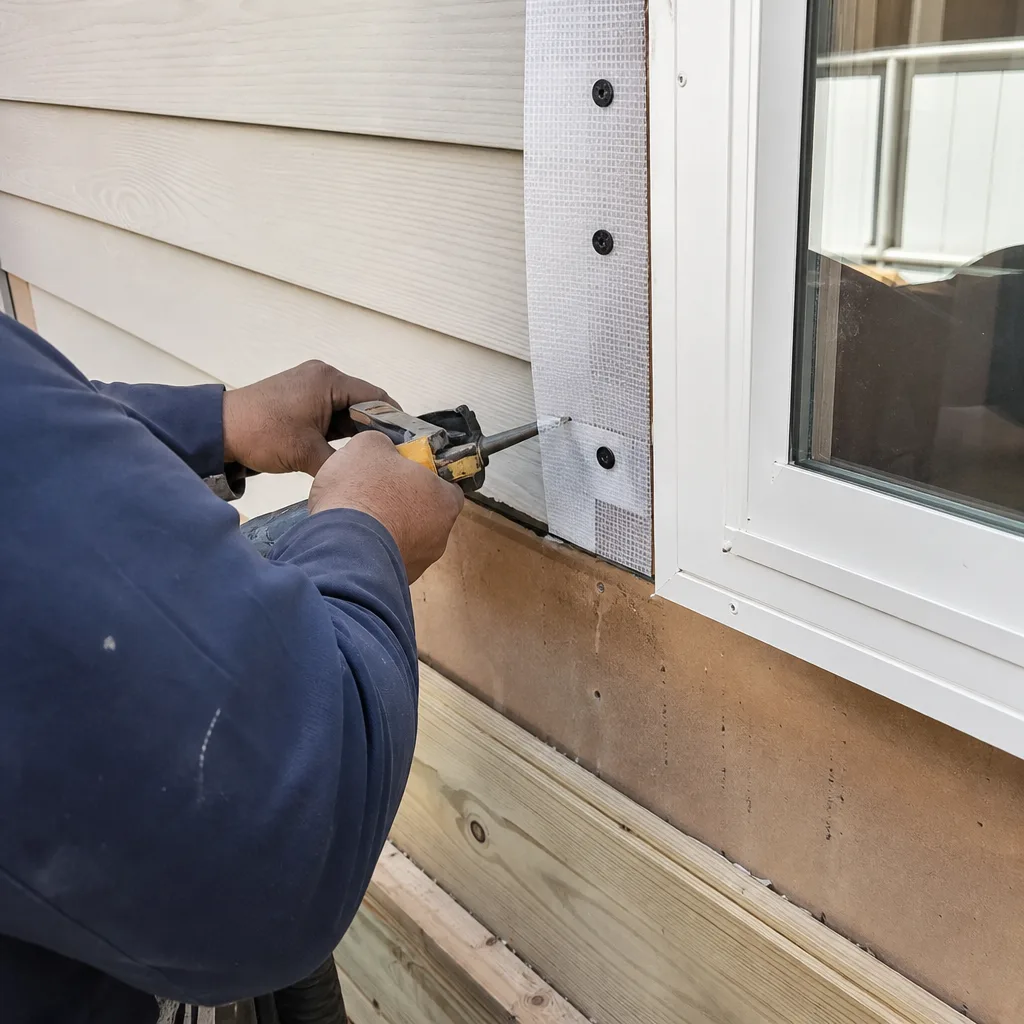
James Hardie fiber cement siding is worth a mention here, because many Fort Worth homeowners choose it for exterior durability against hail and sun exposure. It’s also a product that installs cleanly on both custom and prefab structures, and it’s one of the few exterior materials that handles North Texas temperature swings without warping. If you’re planning to DIY any exterior work, Hardie plank is more forgiving than cedar and more durable than vinyl.
Common Mistakes to Avoid
- Pulling the permit without reading the owner-builder affidavit. Fort Worth homeowners sign this form believing it’s a routine document. It carries legal obligations including the five-year resale disclosure. Read every line before signing.
- Assuming unpermitted work “won’t be noticed.” Fort Worth’s code enforcement uses aerial imagery comparisons and neighborhood complaint systems. Unpermitted ADUs get flagged. The correction order requires either retroactive permitting (which can mean opening walls for inspection) or demolition.
- Budgeting for materials but not inspections. Every Fort Worth inspection carries a fee, and failed inspections require re-inspection fees. A first-time owner-builder should budget for 20-30% more inspections than the minimum count.
- Skipping the soil report. The foundation engineer needs geotechnical data. Trying to save $1,500 on a soil report is how you get a $25,000 foundation repair conversation three years later.
- Underestimating the tape-and-mud phase of drywall. Professional drywall finishers in Fort Worth charge what they charge because the work is tedious and the difference between amateur and professional results is visible on every wall at every angle of light.
- Using the wrong subcontractor relationship. Homeowners hiring subs for a DIY ADU must verify that each licensed sub pulls their own permit for their scope. A plumber working under your owner-builder permit without their own plumbing permit is not a licensed plumbing job, regardless of what they tell you.
- Ignoring the Fort Worth tree ordinance. If your lot has protected tree species and your ADU placement requires removal, the mitigation fees can run thousands. This gets caught during site plan review, not after construction starts.
When to Call a Professional
If any of these describe your situation, the DIY path is working against you: your lot has significant slope or unusual soil conditions; you’re planning a two-story ADU; your property sits in a historic district with architectural review; you need the unit completed within 12 months; you have no contact list of Fort Worth subcontractors; or the thought of managing 40 to 60 trade phone calls alongside a full-time job sounds exhausting. In these cases, the professional route is not a luxury. It’s the cheaper path when you account for time, rework, and risk. Sutton ADU Fort Worth offers free estimates in Fort Worth – call (682) 255-2399 to schedule yours. We deliver a written price before any work begins, and every technician who arrives at your door is background-checked, identity-verified, and photo-badged under the Threshold Verified standard.
Frequently Asked Questions
A DIY ADU in Fort Worth typically saves $46,000 to $73,000 off a $190,000 to $320,000 professional build, but requires 560 to 820 hours of owner labor and carries permit, insurance, and resale risks that a professional build does not. For a specific number on your lot, call (682) 255-2399 – estimates are free and written, not verbal.
Yes, Texas owner-builder law allows you to construct an ADU on your own property without a GC license, but you must sign an owner-builder affidavit, still hire licensed electricians and plumbers for those scopes, and disclose the unlicensed construction if you sell within five years.
Unpermitted construction does not automatically void your policy, but it gives your insurer grounds to deny a claim if the unpermitted work contributed to the loss, and Texas courts have upheld such denials under the conformity clause and policy exclusions. A permitted ADU with passed inspections eliminates this exposure.
Most first-time owner-builders in Fort Worth take 18 to 24 months from permit application to final inspection, working 15 hours per week. A professionally managed build on the same lot typically finishes in 8 to 14 months depending on scope and prefab versus stick-built.
Under Texas Property Code Section 27.001, if you build an ADU as an owner-builder without a GC license and sell the property within five years of completion, you must disclose to the buyer that unlicensed construction was performed. Failure to disclose creates liability for fraud and misrepresentation, with a four-year discovery window for the buyer.
Never DIY foundation work, electrical rough-in, plumbing rough-in, HVAC design, or roof flashing. Each of these phases requires a licensed professional by Fort Worth code or carries failure costs that dwarf any savings. Finish work like paint, flooring, trim, and landscaping is the smart DIY zone.
A prefab ADU from companies like Abodu, Cover, or Dvele removes most of the framing, electrical rough-in, and plumbing rough-in risk from DIY, because the factory completes those phases under its own inspection process. The site work, foundation, and utility connections still require permits and licensed contractors in Fort Worth.
The Bottom Line
The DIY versus professional ADU question in Fort Worth is answered by your tolerance for legal exposure, your available hours, and your comfort managing licensed trades. Texas law invites the owner-builder, but the invitation comes with five years of resale disclosure and a claims environment that punishes unpermitted work. The smart play for most homeowners is the hybrid: professional for foundation, framing, electrical, plumbing, and HVAC; DIY for paint, flooring, trim, and landscape. Whatever you choose, build it permitted, build it inspected, and know exactly who walks onto your property. That’s the standard we hold at Sutton ADU Fort Worth, and it’s the standard your insurance carrier and your future buyer will expect. See our Home Addition Contractor Maintenance Checklist for Fort Worth Homeowners for ongoing upkeep guidance.
Written by Miles Hartwell, Owner at Sutton ADU Fort Worth, serving Fort Worth since 2006.