Last updated October 15, 2026
How to Hire a ADU Contractor in Fort Worth: A Step-by-Step Guide
The most common ADU complaint filed with the Texas Department of Licensing and Regulation isn’t shoddy workmanship. It’s a contractor who sent a subcontractor the homeowner had never met, never vetted, and never agreed to let onto the property. If you’re planning a detached ADU, garage conversion, or room addition in Fort Worth, the single most important decision you’ll make isn’t which floor plan you choose. It’s how you verify the person standing at your door is the person you hired. This guide walks you through that verification, step by step, and points you to more guides & resources so you can hire with confidence and avoid the nightmare scenario that drives most Fort Worth ADU disputes.
Quick Answer
To hire a Fort Worth ADU contractor, verify their Texas license through the Texas Department of Licensing and Regulation (TDLR), confirm their insurance certificate names you as an additional insured, get a written fixed price before signing, and ask for a documented crew vetting process that proves who shows up to your door. Expect to pay roughly $180,000 to $450,000 for a finished detached ADU in Fort Worth depending on size, site conditions, and whether you go stick-built or prefab. If a contractor claims you don’t need permits or quotes under $80 per square foot, walk away.
Table of Contents
- Step 1: Verify the License and Insurance (Before You Say Yes)
- Step 2: Confirm Permitting Responsibility
- Step 3: Understand Real Fort Worth ADU Pricing
- Step 4: Read the Contract for Open-Ended Phrases
- Step 5: Ask How the Contractor Verifies Their Crew
- Step 6: Decide Between Prefab, Modular, and Stick-Built
- Step 7: Spot Fort Worth-Specific Red Flags
- What the Timeline Looks Like in Fort Worth
- Common Mistakes to Avoid
- When to Call a Professional
- Frequently Asked Questions
Step 1: Verify the License and Insurance (Before You Say Yes)
Texas doesn’t license general contractors at the state level the way California does. That’s an important distinction, because a contractor can hand you a business card that says “licensed and insured” while holding nothing more than a DBA filing and a truck lease. What Texas does require is registration with the TDLR for certain trade work like electrical, plumbing, and HVAC. For the overall ADU build, you’re relying on city-level requirements, insurance certificates, and your own due diligence. Fort Worth requires contractors performing work within city limits to register with the city, and that registration is free to check. Call the Fort Worth Development Services Department or look up the contractor’s name on the city portal before you sign anything.
Here’s the 10-minute verification protocol we recommend to every Fort Worth homeowner:
- Check Fort Worth city registration. Ask for the contractor’s city registration number, then verify it through the Development Services Department. If they hesitate, that’s your first answer.
- Request a Certificate of Insurance (COI). The COI should come directly from the insurance agency, not the contractor. Ask to be named as an additional insured on the policy for the duration of your project. This protects you if a claim arises on your property.
- Confirm worker’s compensation coverage. In Texas, worker’s comp is not mandatory for all employers, which means if a worker is injured on your property and the contractor doesn’t carry coverage, your homeowner’s policy can become the target. Ask for proof of worker’s comp or a written explanation of how the contractor covers injuries.
- Look up the business entity. Run the company name through the Texas Comptroller’s online search to confirm it’s in good standing. Then run the owner’s name through the TDLR license database to check for any disciplinary actions.
- Ask about bonding. A bond protects you if the contractor walks off the job. Not every Fort Worth ADU contractor carries one. At minimum, ask what protection exists for incomplete work.
This entire protocol takes about ten minutes using free state and city tools. A contractor who bristles at any of these requests is telling you something important about how they operate. We’ve seen homeowners in Arlington Heights and Wedgwood save themselves from six-figure headaches by spending those ten minutes before signing.
Step 2: Confirm Permitting Responsibility
Fort Worth requires permits for any detached accessory dwelling unit, garage conversion, or room addition that alters structural elements, electrical systems, or plumbing, so review ADU Permits, Codes & Inspections in TX: What You Need to Know before breaking ground. The permitting process includes site plan review, zoning confirmation, structural plan approval, and multiple inspections during construction. Who pulls those permits matters enormously, because the person named on the permit is the person legally responsible for the work.
Ask your contractor these three questions directly:
- “Will your company pull the permits under your name?” If the contractor asks you to pull permits as the homeowner, be cautious. When a homeowner pulls the permit, the homeowner becomes the contractor of record from the city’s perspective. That means inspection failures, code violations, and liability land on you.
- “Will you be present for each inspection?” Legitimate Fort Worth ADU contractors schedule and attend their own inspections. If the answer is vague, ask for a named project manager who will be there.
- “What happens if we fail an inspection?” The right answer includes a written commitment to correct the issue and schedule re-inspection at no additional cost to you. If there’s hesitation, you’re looking at change-order risk.
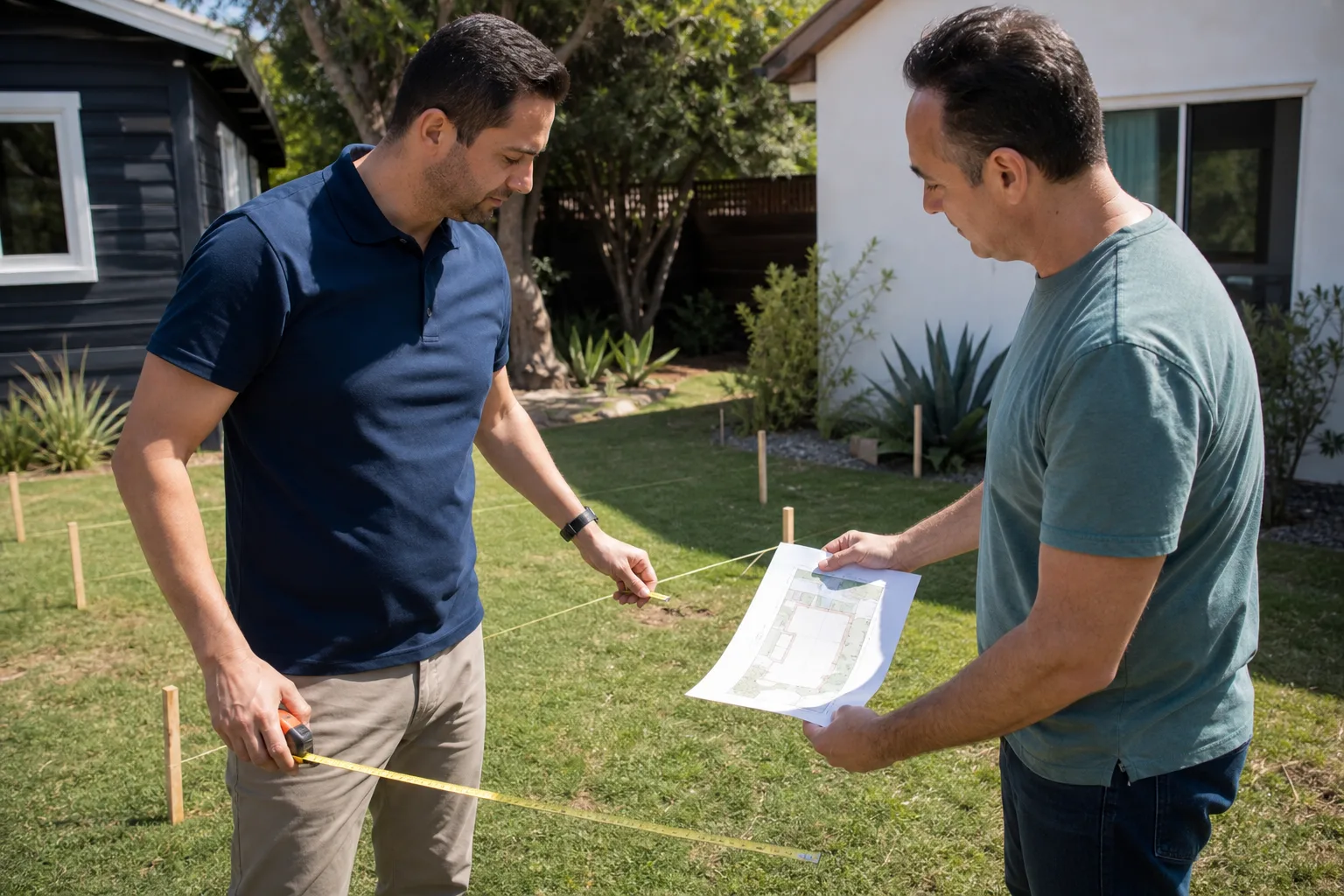
In Fort Worth, a detached ADU is a permitted structure that must meet the city’s zoning requirements for your specific lot. That includes setbacks, height limits, lot coverage ratios, and utility connection rules. A contractor who permits their own work understands these specific requirements and doesn’t treat them as surprises that appear mid-project. One practical way to test this: ask the contractor to explain the setback requirements for your specific neighborhood. If they give you a blank look or a generic answer, they haven’t done Fort Worth ADU work at the level you need.
Step 3: Understand Real Fort Worth ADU Pricing
Fort Worth ADU pricing in 2025 runs higher than most national averages because of two local factors: expansive clay soils that require engineered foundation work, and a permitting process that demands structural documentation many out-of-town contractors aren’t prepared to provide. Here’s what you should expect for realistic price ranges:
- Prefab ADU (Boxabl, Plant Prefab, Cover): $200 to $350 per square foot for the unit, plus $25,000 to $60,000 in site work, foundation, utility connections, and permits. A 400-square-foot prefab unit typically lands between $180,000 and $270,000 all-in.
- Stick-built detached ADU: $250 to $450 per square foot. A 600-square-foot one-bedroom ADU runs $240,000 to $380,000 depending on finishes, roof complexity, and site access.
- Garage conversion: $120 to $220 per square foot. A 400-square-foot garage conversion typically costs $75,000 to $140,000. This is the most affordable path to an ADU in Fort Worth because the foundation, framing, and roof already exist.
- Tuff Shed conversion to living space: Starts around $60,000 for the base structure plus conversion work, but you’ll need to verify the shed is rated for living-space conversion under Fort Worth code. Not all Tuff Shed models qualify without significant structural retrofitting.
If a Fort Worth contractor quotes under $80 per square foot for a detached ADU in 2025, something is being left out. Either the quote excludes site work, skips the permit fees, assumes you’ll pull permits as the homeowner, or the contractor doesn’t understand local requirements and will try to pass the cost to you later. Our experience building ADUs across Fort Worth neighborhoods like Ryan Place, Mistletoe Heights, and Fairmount has taught us that the final price almost never comes in below the $180 per square foot mark for a properly permitted, code-compliant detached unit.
Step 4: Read the Contract for Open-Ended Phrases
The language in your ADU contract determines whether the $250,000 number you agreed to stays $250,000 or quietly becomes $325,000. You’re looking for three categories of wording: fixed-price language, allowance language, and open-ended cost language. The first is your friend. The other two are how quotes turn into bills.
Here’s a plain-English breakdown:
- “Allowance” means the contractor is estimating a cost but not guaranteeing it. A $12,000 “appliance allowance” means if the appliances you pick cost $18,000, you pay the difference. That’s not inherently dishonest, but it’s not fixed pricing either. Ask for allowances to be itemized and set at realistic levels for the finishes you actually want.
- “As-needed” or “per actual cost” means the contractor will bill you for whatever the work actually costs, with no upper limit. This phrase is how a $40,000 site-work line item becomes $75,000 once the crew discovers your lot’s clay soil needs deeper piers than expected. Ask for a not-to-exceed cap on any line item that uses this language.
- “Change order” is a legitimate part of construction. The question is what triggers one. A change you request triggers one. A condition the contractor should have caught in site review doesn’t. Fort Worth’s expansive clay soils are well-documented. A contractor who has built ADUs in this market knows to budget for engineered foundations from day one.
- “Homeowner responsibility” items should be listed explicitly. This includes utility connection fees from Atmos Energy or Oncor, tree removal, fence relocation, and any HOA approval fees. If these aren’t in the contract, ask where they appear.
The simplest protection is this: ask the contractor to write “this is a fixed-price contract” at the top of the scope of work, and then go line by line through anything that isn’t fixed. At Sutton ADU Fort Worth, we deliver a written price before any work starts, and that price doesn’t change unless you ask for a change. That’s the standard you should expect from any contractor you hire, regardless of who you ultimately choose. Our ADU Builders in Fort Worth page explains our project approach in more detail.
Step 5: Ask How the Contractor Verifies Their Crew
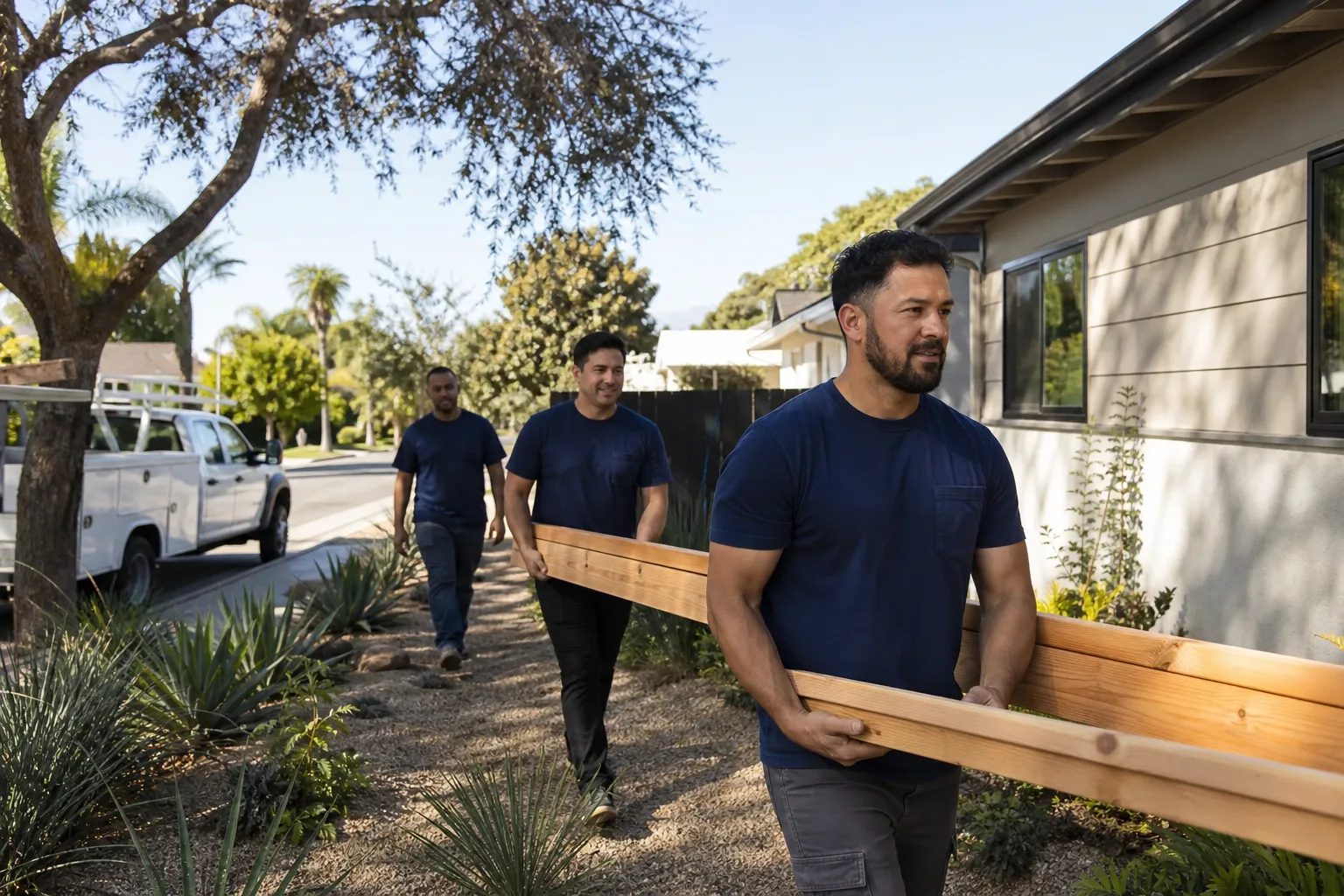
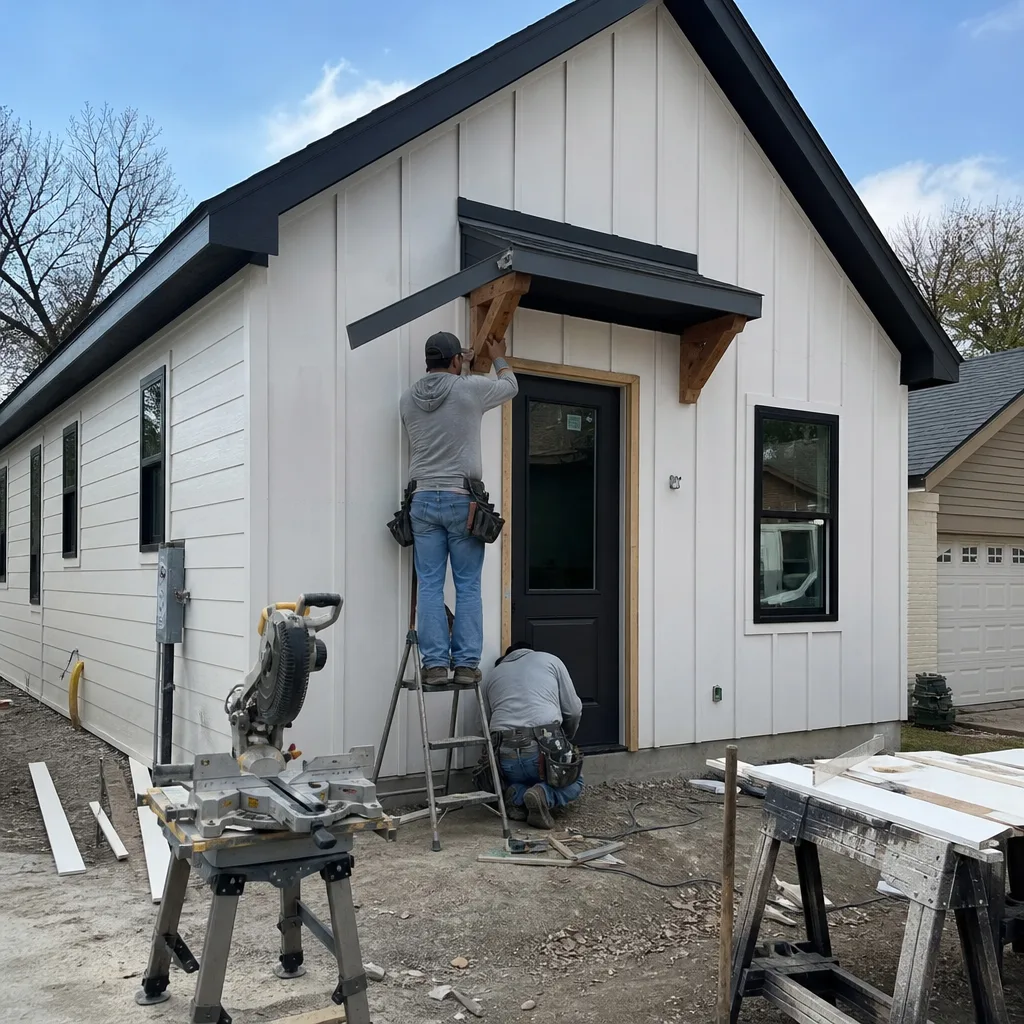
Here’s the uncomfortable truth most Fort Worth ADU guides ignore: the person who sells you the project is almost never the person doing the construction. You’ll meet the owner or sales representative at your kitchen table, and then a series of people you’ve never met will arrive at your property over the following months. Roofers, electricians, plumbers, framers, drywall installers, painters. Each one has access to your home, your family’s routines, and your property.
You have a right to know who those people are before they arrive. A legitimate Fort Worth ADU contractor will have a documented process for this. Ask these questions directly:
- “Do you run background checks on every person who comes to my property?” The answer should be an immediate, specific yes. If the contractor says “we vet our people” without being able to explain what that means, keep asking.
- “Will you send me the name and photo of each crew member before they arrive?” This is the standard we maintain through the Threshold Verified system. You should know who’s coming to your door before the doorbell rings.
- “Do your technicians wear uniforms and carry photo ID?” If yes, you have a simple check: match the ID to the name and photo you were sent. If they don’t match, don’t open the door. A legitimate crew won’t be offended by this. An illegitimate one will be.
- “Who is my point of contact during construction?” You should have one named person who answers your calls and messages. Not an answering service. Not a rotating cast of project managers. One person who knows your project.
We ask Fort Worth homeowners to think about this from the contractor’s perspective. Background checks cost money. Identity verification costs money. Photo badges cost money. A contractor who skips these steps is saving money by exposing you to unvetted people. The premium you pay for a contractor with documented crew verification is an insurance policy against the scenario that opens this guide: the unlicensed subcontractor you never met and never agreed to. When you work with our Sutton ADU Fort Worth home team, you get a name, a face, and a written promise before anyone steps foot on your property.
Step 6: Decide Between Prefab, Modular, and Stick-Built
Fort Worth homeowners now have ADU options that didn’t exist a decade ago. The choice between prefab, modular, and traditional stick-built framing affects your timeline, your cost, and your customization ceiling. Here’s how each path actually works in Fort Worth’s market:
- Prefab (Boxabl, Plant Prefab): Units are manufactured in a factory and delivered to your lot. Delivery costs in Fort Worth are manageable because major highways like I-35W, I-20, and Loop 820 provide direct access from manufacturing hubs. The factory-built approach means tighter quality control and faster on-site assembly, but you’re limited to the manufacturer’s floor plans and finish packages. Site prep still requires local Fort Worth foundation work and utility trenching.
- Modular: Built in sections at a factory, then assembled on-site. Modular ADUs offer more size flexibility than single-unit prefab and can include multiple rooms. The trade-off is that modular construction systems are less common in Texas than in the Northeast or West Coast, so local expertise matters more. Fewer Fort Worth contractors have deep modular experience, which narrows your contractor pool.
- Stick-built: Framed on your lot by local crews. Stick-built gives you complete design flexibility and the easiest path through Fort Worth’s permitting process, because local inspectors are familiar with traditional framing methods. It’s also the slowest option and the most weather-dependent. Fort Worth’s summer heat slows framing crews, and spring storms can delay exterior work for days at a time.
- Tuff Shed conversion: The most budget-friendly option, but with the most code caveats. A standard Tuff Shed is not built to residential living standards. Converting one to a legal ADU requires insulation, electrical, plumbing, and likely structural upgrades. The finished cost often lands close to a purpose-built ADU, which surprises homeowners who assumed the shed was the shortcut.
Our team has direct experience with Boxabl, Plant Prefab, and Tuff Shed conversion projects, plus James Hardie exterior cladding systems. That matters because a contractor who has actually worked with these product lines can tell you which one fits your specific lot constraints and budget. A contractor who has never touched a prefab unit might still take your money and learn on your project. That’s not a risk worth taking on a five-figure build.
Step 7: Spot Fort Worth-Specific Red Flags
Every market has its bad actors, and Fort Worth’s ADU boom has attracted contractors who see the demand but lack the expertise. Here are the red flags we tell homeowners to watch for, based on years of correcting the work that follows these promises:
- “You don’t need a permit for a detached structure under 200 square feet.” This is technically true for some storage sheds, but an ADU with electricity, plumbing, or living space doesn’t qualify for the exemption. A contractor who says this is trying to skip the permitting process, which means you’ll have an unpermitted structure when you try to sell your home or file an insurance claim.
- Pricing under $80 per square foot. As covered in the pricing section, this number doesn’t exist in Fort Worth’s 2025 market for a legal, permitted ADU. What does exist at that price is a contractor who hasn’t included site work, foundation engineering, utility connections, or permits. The bill comes later.
- No local Fort Worth project references. A contractor from Dallas, Houston, or out of state doesn’t know Fort Worth’s clay soil, its permitting quirks, or its inspector preferences. Ask for references from projects completed within 20 miles of your home.
- Cash-only discounts or pushing for large upfront payments. Texas law limits the deposit a contractor can collect before starting work. Anyone asking for more than 10-20% upfront or offering significant discounts for cash is a walking red flag.
- Refusing to provide a written fixed-price contract. If a contractor wants to work from a verbal agreement or a one-page estimate with no scope detail, walk away. A real ADU project has a written contract of 10+ pages covering scope, materials, timeline, payment schedule, and warranty terms.
- No physical Fort Worth address. A P.O. box in another city or no address at all suggests an operation that plans to be hard to find when problems arise. Visit the contractor’s office or ask for their registered business address.
None of these red flags are unique to Fort Worth in type, but we see them with enough frequency in this market to list them specifically. The TDLR complaint that opens this guide is the common thread: the homeowner who ignored these flags is the homeowner who ends up filing a complaint. For a deeper look at how a properly run ADU project should feel, see our Home Addition Contractor in Fort Worth guide.
What the Timeline Looks Like in Fort Worth
Understanding the realistic timeline prevents frustration and helps you spot contractors who promise the impossible. A properly permitted, code-compliant detached ADU in Fort Worth follows a predictable sequence:
- Design and site assessment: 4-8 weeks. This includes surveying your lot, confirming zoning, testing soil conditions, and finalizing the floor plan. Fort Worth’s expansive clay soils mean a geotechnical report is part of this phase, not an optional add-on.
- Permit submission and approval: 4-12 weeks. Fort Worth’s Development Services Department processes ADU permits on a timeline that varies with volume and project complexity. Detached ADUs with new utility connections take longer than garage conversions.
- Site preparation and foundation: 2-4 weeks. This includes demolition of any existing structures, grading, utility trenching, and pouring the engineered foundation. Fort Worth’s clay soil requires foundation designs that account for expansion and contraction cycles.
- Construction: 12-20 weeks for stick-built, 6-10 weeks for prefab after the foundation is ready. Weather is the wild card. Fort Worth spring storms and July/August heat both slow exterior work.
- Inspections and final approval: 2-4 weeks. Each inspection pass adds days. Each failure adds weeks. A contractor who knows Fort Worth inspectors and their expectations passes inspections faster.
- Skipping owner verification. Many Fort Worth homeowners assume a contractor’s website and social media presence equals legitimacy. Run the business name through the Texas Comptroller and check the owner’s name in the TDLR database. Five minutes of searching beats six months of litigation.
- Not naming the contractor on the COI. If the insurance certificate lists a business entity you’ve never heard of or doesn’t name you as an additional insured, you have no direct path to that policy when something goes wrong. Ask the insurance agent to add you before work begins.
- Ignoring the site-work line item. The unit itself is only part of the cost. Fort Worth clay soil foundation engineering, utility trenching, and driveway connections routinely add $30,000 to $60,000. A quote that buries these costs is a quote that will grow.
- Choosing the cheapest bid without reading the scope. A lower price is almost always a lower scope. Compare line items across bids, not just bottom lines. The same floor plan can carry a $60,000 price difference based on what’s included in the foundation allowance, fixture packages, and site work assumptions.
- Pulling permits as the homeowner. When you pull the permit, you become the legal builder. That means you’re responsible for meeting code, passing inspections, and correcting violations. Let the contractor carry that burden. It’s what you’re paying for.
- Not asking about warranty terms in writing. A verbal “we’ll take care of it” isn’t a warranty. Ask what happens if a roof leaks at month nine or the mini-split fails at month eleven. If the answer isn’t written into the contract, the answer is no.
The total from first conversation to move-in ready for a stick-built ADU typically lands between 8 and 14 months. Prefab units can compress that to 5-8 months. Anyone promising a complete detached ADU in under 4 months is either working without permits or making a promise they can’t keep. Our Room Addition Contractor in Fort Worth page breaks down timelines for smaller-scale projects, which move faster.
Common Mistakes to Avoid
When to Call a Professional
An ADU is a structure that will house people you care about. The structural engineering, electrical work, and plumbing are not the place to experiment with cost-cutting or weekend DIY. Call a professional when your project involves foundation work on Fort Worth clay, any electrical panel upgrade (which most ADUs require), gas line extension for a kitchen or heating, or any structural modification to an existing building. These are the moments where a mistake carries real consequences, and where a trained crew with documented expertise is worth every dollar. Sutton ADU Fort Worth offers free estimates in Fort Worth. Call (682) 255-2399 to schedule yours, and we’ll walk your property and give you a written price before any work begins.
Frequently Asked Questions
A finished detached ADU in Fort Worth typically costs $180,000 to $450,000, while a garage conversion runs $75,000 to $140,000. Prefab units like Boxabl or Plant Prefab come in at $180,000 to $270,000 including site work and permits. The spread reflects size, finishes, foundation engineering requirements, and whether you go stick-built or factory-built. Call (682) 255-2399 for a free estimate specific to your lot and floor plan.
Yes. Fort Worth requires permits for any ADU with electrical, plumbing, or residential living space, including garage conversions and detached structures. The only exemption is for basic storage sheds without utilities. Skipping the permit creates problems when you sell, insure, or refinance your home.
Check the contractor’s registration through the Fort Worth Development Services Department, then search the owner’s name in the TDLR database for any trade licenses or disciplinary history. Request a Certificate of Insurance directly from the agency and ask to be named as an additional insured. Ask for worker’s compensation coverage details before signing the contract. Call (682) 255-2399 if you want to ask us these questions directly.
Yes, garage conversions are one of the most common ADU paths in Fort Worth because the foundation, framing, and roof already exist. The catch is that older Fort Worth garages often lack the structural reinforcement, insulation, and utility infrastructure required for living space, so conversion costs can approach new-build pricing. A garage conversion typically runs $75,000 to $140,000 depending on the existing structure’s condition.
Expect 8 to 14 months from first conversation to move-in for a stick-built ADU in Fort Worth, and 5 to 8 months for a prefab unit. Permitting alone takes 4 to 12 weeks. Spring storms and summer heat both extend construction timelines, so check our Seasonal ADU Care for Fort Worth: Year-Round Homeowner’s Guide and plan accordingly. Anyone promising a complete ADU in under four months is cutting corners.
It shouldn’t, not if you have a written fixed-price contract that itemizes allowances and site work. The contractors who deliver lower initial quotes are often the ones whose price climbs mid-project when the foundation needs extra piers or the utility trench hits unexpected soil. Ask for a not-to-exceed cap on any line item that uses “as-needed” or “per actual cost” language. Sutton ADU Fort Worth delivers a written price before work starts, and that price holds unless you request a change.
The Bottom Line
Hiring an ADU contractor in Fort Worth comes down to verification. Verify the license, the insurance, the permitting responsibility, the contract language, and the people who will stand on your property. The contractor who makes verification easy is the contractor who has nothing to hide. The contractor who makes it difficult is showing you who they are before the first shovel hits dirt. Fort Worth has the space, the zoning flexibility, and the market demand to make an ADU one of the smartest investments you’ll ever make in your property. The right contractor makes the process feel like a settled, rooted decision rather than a rolling gamble. Ask the hard questions, demand the written answers, and don’t sign until you’re certain about every answer you received.
Written by Miles Hartwell, Owner at Sutton ADU Fort Worth, serving Fort Worth since 2006.