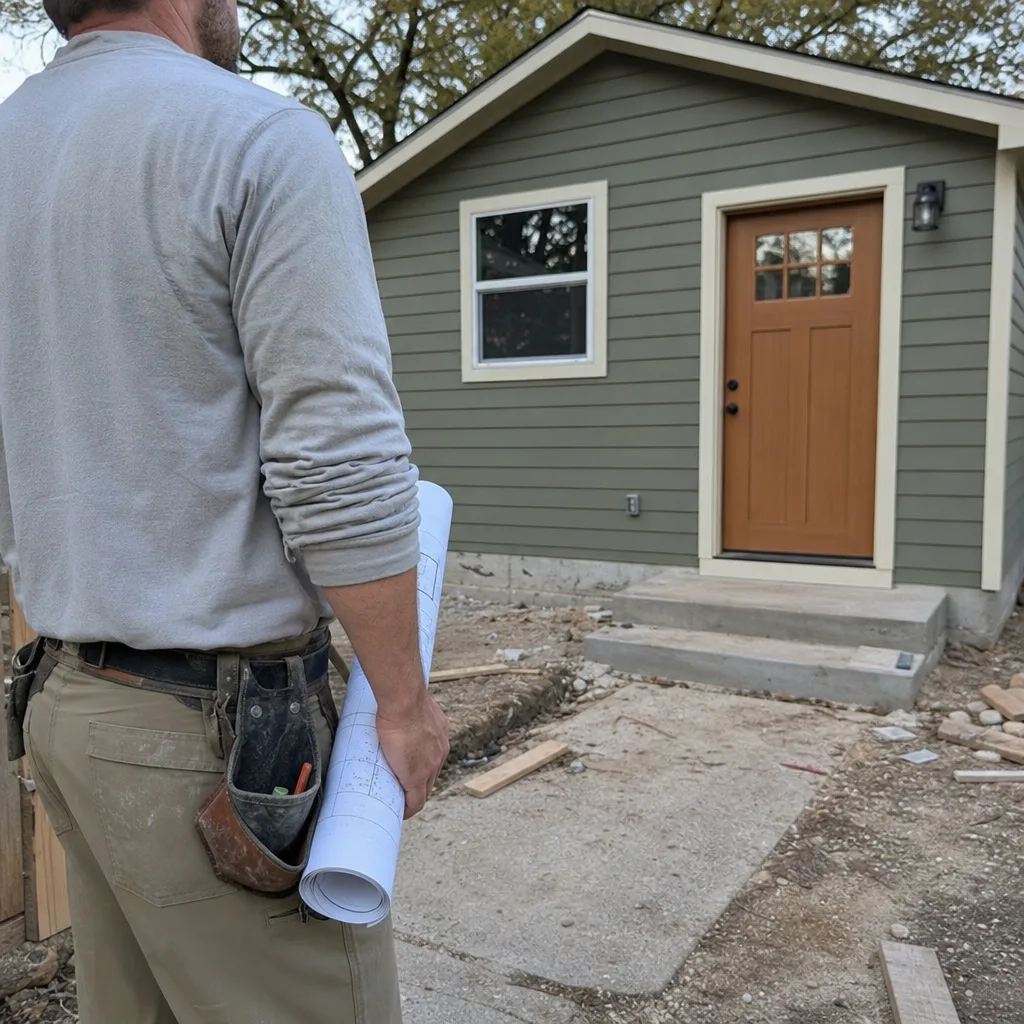
Last updated October 15, 2026
The Complete Guide to ADU in Fort Worth
Fort Worth permits accessory dwelling units on most single-family lots, yet fewer than 3% of eligible homeowners have built one. The reason isn’t cost or demand. It’s that nearly every ADU guide floating around online was written for California, Oregon, or Austin, where the rules bear almost no resemblance to what Fort Worth’s zoning code actually says. This guide fixes that. You’ll learn exactly where ADUs are allowed in Fort Worth, what they cost in this market specifically, how garage conversions differ from detached units under city code, what the inspection timeline actually looks like, and where the real money gets spent. For DIY vs Professional ADU: The Fort Worth Homeowner’s Decision Guide, see our companion post. We’re a Fort Worth ADU builder, and we’d rather you know too much than too little before you pick up the phone.
Quick Answer
An ADU in Fort Worth is a self-contained secondary dwelling on a single-family lot, permitted in most residential zoning districts under the city’s accessory dwelling unit ordinance. A detached ADU in Fort Worth typically costs $180,000 to $320,000 for a 400 to 800 square foot unit, while garage conversions run $80,000 to $150,000, and attached additions start around $120,000. The build process, from permit application to final inspection, usually takes 6 to 14 months depending on whether you go site-built or prefab.
Table of Contents
- Where ADUs Are Permitted in Fort Worth Zoning Districts
- What an ADU Actually Costs in Fort Worth in 2025-2026
- Detached ADUs, Garage Conversions, and Attached Additions: What the Code Says
- The Fort Worth Permit Process and Inspection Timeline, Step by Step
- How Texas Homestead Law and HOA Deed Restrictions Affect ADU Plans
- Prefab ADUs and the Fort Worth Market: What Works Here
- Common Mistakes to Avoid
- When to Call a Professional
- Frequently Asked Questions
Where ADUs Are Permitted in Fort Worth Zoning Districts
Fort Worth’s zoning ordinance allows accessory dwelling units in most residential districts, but “most” is doing real work in that sentence. The city uses a framework where ADUs are classified as either by-right or special exception, and which one applies to your lot depends on the zoning district printed on your property record.
In practical terms, here’s what that means. A setback is the required gap between your new structure and the property line. If your lot is zoned A-5, A-7.5, A-10, B, C, D, E, F, G, H, I, or J under Fort Worth’s single-family residential designations, you can generally pursue an ADU without a special hearing, provided you meet the dimensional standards: lot coverage limits, height limits, and the rear and side setbacks that apply to your specific district. Lots zoned for two-family residential, some historic districts, and certain planned development districts may require a special exception through the Board of Adjustment or the Zoning Commission. That process adds 60 to 120 days and a public hearing to your timeline.
We’ve worked in neighborhoods across Fort Worth, from Ryan Place to Wedgwood, and the single most common surprise we see is an owner assuming their lot qualifies by-right when a special exception applies. The second most common is an owner building without confirming lot coverage. Fort Worth caps total impervious coverage (structures plus driveways plus paved areas) at a percentage that varies by district, and adding a 600 square foot ADU can push you over the line if your lot is small or you already have a large patio or detached garage. You can check your zoning district through the city’s online zoning map in about five minutes, and we recommend doing that before you draw a single line.
What an ADU Actually Costs in Fort Worth in 2025-2026
National ADU cost figures are close to useless for Fort Worth homeowners. They’re averages that blend Seattle labor rates with Phoenix sprawl economics. Fort Worth has its own material supply chain dynamics, its own labor market, and its own foundation requirements driven by our expansive clay soils. Here’s what we’re seeing in this market right now.
Cost Ranges by ADU Type
- Detached ADU, site-built, 400-600 sq ft: $180,000 to $260,000
- Detached ADU, site-built, 601-800 sq ft: $220,000 to $320,000
- Garage conversion, 1-car: $80,000 to $120,000
- Garage conversion, 2-car: $110,000 to $150,000
- Attached addition with kitchenette, 300-500 sq ft: $120,000 to $220,000
- Prefab or modular ADU, delivered and installed: $160,000 to $280,000 depending on manufacturer and site prep
These ranges assume a Fort Worth lot with standard utility access, a poured slab foundation engineered for North Texas clay, and finishes that match a mid-range single-family home. If your lot has a significant grade change, if you need to extend the sewer lateral more than 20 feet, or if your electrical panel needs an upgrade from 100 amp to 200 amp service, expect to add $8,000 to $25,000 on top of these figures. We write these costs as line items, not surprises, and every homeowner gets a written price before any work begins.
Where the Money Goes
Foundation work in Fort Worth runs higher than national averages because our clay soils expand and contract with moisture, which means engineered slabs with deeper beams and, on some lots, pier and beam systems. A typical ADU foundation here costs $14,000 to $28,000. Utility connections are another line item people don’t budget for: water line extension, sewer connection, and electrical service can run $6,000 to $20,000 combined depending on distance from the main. Then there’s the structure itself, interior finishes, HVAC (a mini-split system runs $5,000 to $9,000), and the required permits and inspections, which in Fort Worth typically total $2,500 to $6,000 for an ADU.
Compare this against what you get back: a rentable unit that produces monthly income, or a place for aging parents that saves you a care facility bill. Our clients tend to think of the ADU as a 10- to 15-year asset, not a one-year renovation. That’s the right frame. But the numbers have to work on your specific lot, and the only way to know is a real site visit with a builder who knows Fort Worth soil conditions.
Detached ADUs, Garage Conversions, and Attached Additions: What the Code Says
Fort Worth municipal code distinguishes between three types of secondary dwelling configurations, and the distinction affects your setbacks, your parking requirements, and sometimes whether you need a special exception at all. Here’s the plain-English breakdown.
Detached ADU
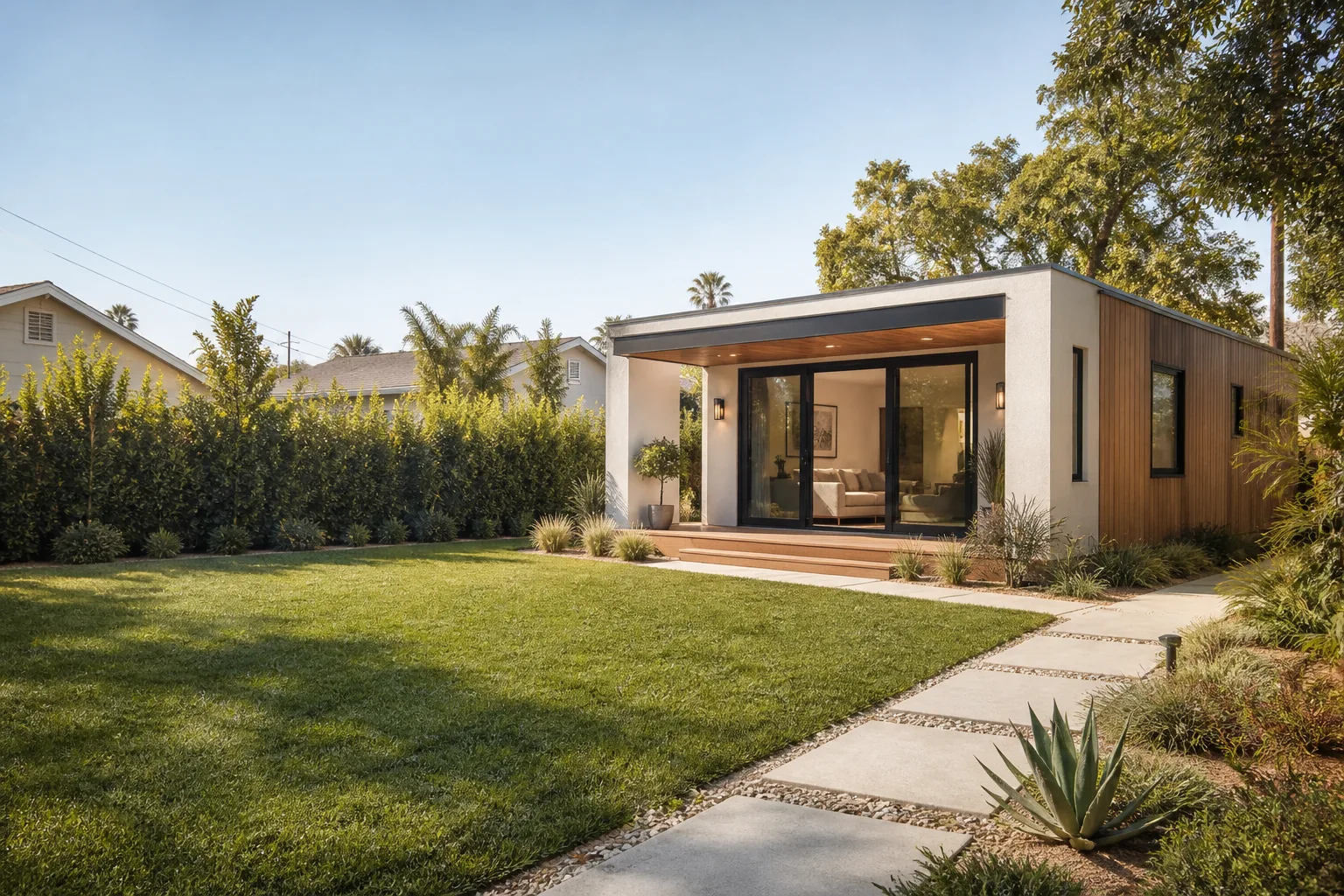
A detached ADU is a separate structure, usually in the rear yard, with its own foundation, its own kitchen, bathroom, and entrance. Under Fort Worth code, detached ADUs must sit behind the build-to line of the primary residence, meaning you can’t put one in front of your house or even flush with it in most districts. The rear setback is typically 5 to 10 feet depending on your zoning district. Height limits usually cap at 25 feet for a detached unit, which rules out a two-story ADU unless you get a variance. Square footage is generally capped at 50% of the primary dwelling’s living area or 800 square feet, whichever is less. This is the most flexible option for rental income, because tenants get total privacy and you keep your own space separate.
Garage Conversion
A garage conversion takes an existing attached or detached garage and turns it into living quarters. Fort Worth allows this in most districts, but there’s a catch that surprises people: if you convert a garage that was built to satisfy off-street parking requirements, you may need to provide a replacement parking space elsewhere on the lot. The city doesn’t always enforce this strictly, but it can appear during the permit review, and it’s better to plan for it than to stall mid-permit. Garage conversions are cheaper, as the cost table above shows, because the structure, roof, and slab already exist. You’re paying for insulation, drywall, plumbing, electrical, windows, and finishes, not for new framing and foundation work. The tradeoff is ceiling height, which is often 8 feet or less in older Fort Worth garages, and the fact that the footprint is fixed. You can’t make it bigger without a new foundation addition, at which point you’re into attached addition territory.
Attached Addition
An attached addition extends the footprint of the existing home and can be built as an ADU if it has a separate entrance, kitchen, and bath. This route is popular in Fort Worth neighborhoods with large side yards, like Tanglewood or Park Hill, where the property lines allow a wing extension. Attached additions trigger the same setback rules as a home addition, which in Fort Worth means side setbacks of 5 to 15 feet depending on district. The cost per square foot tends to run slightly lower than a detached ADU because you’re sharing one wall and often tying into existing HVAC and plumbing systems, but the total project can cost more if the addition is large. The key question for the homeowner: will the addition share utilities, or does the city require separate meters for the second dwelling? In Fort Worth, a true ADU with its own kitchen needs its own electrical subpanel at minimum, and in many cases its own water and sewer taps, which loop back to those utility line extension costs.
For a deeper comparison of these options, our ADU Builders in Fort Worth page walks through each project type with photos from local builds.
The Fort Worth Permit Process and Inspection Timeline, Step by Step
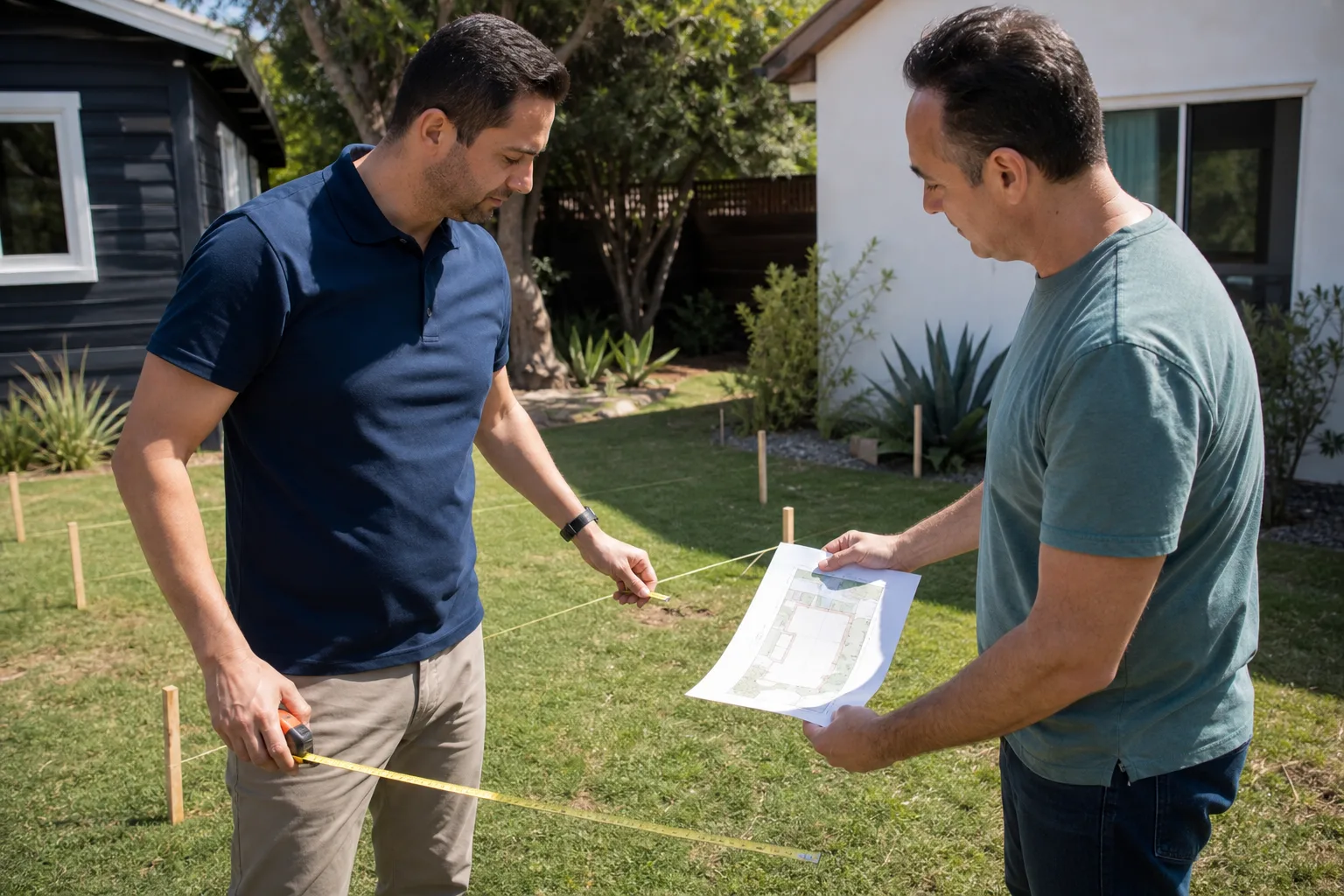
Here is the unvarnished reality of the Fort Worth permitting process for ADUs: it is slower and more sequential than most homeowners expect, but it is predictable if you know the sequence. Every ADU requires a building permit, and most require electrical, plumbing, and mechanical permits as sub-permits. Some lots need a site plan review if grading or drainage is involved. Here is the entire sequence, from first call to final inspection.
- Site evaluation and feasibility check (1-2 weeks): A builder or architect reviews your lot, zoning district, setbacks, lot coverage, and utility access. This is where we catch deal-breakers early, before you’ve spent money on drawings.
- Architectural and structural drawings (3-8 weeks): You’ll need stamped plans from a Texas-licensed architect or engineer. Prefab ADU manufacturers provide their own engineered plans, which can cut this phase to 1-2 weeks if the unit is pre-approved.
- Permit application submitted to Fort Worth Development Services (1-2 weeks to compile): The application includes the drawings, a site plan, energy compliance documentation, and the permit fee schedule. Fort Worth uses an online portal, and you’ll need your property’s legal description and parcel ID.
- Plan review (3-6 weeks, sometimes longer during peak season): City reviewers check zoning compliance, structural calculations, plumbing riser diagrams, and electrical load calculations. If they flag issues, you respond with revisions. Each round-trip adds 1-2 weeks.
- Permit issuance and construction start (1 week): Once the permit is issued, work can begin. For us, this is where the written price has already been locked, so the scope doesn’t drift.
- Foundation inspection (1 day): The city inspects formwork and steel before the slab pour. An inspector must sign off before concrete is placed.
- Rough-in inspections (1 week total, spread across 3-4 visits): Framing, plumbing, electrical, and mechanical each get a separate inspection. The order matters: framing first, then plumbing and electrical together if you schedule it that way, then mechanical.
- Insulation and drywall inspections (2-3 days): Fort Worth requires a thermal bypass inspection in some districts, focused on air sealing and insulation coverage.
- Final inspection and certificate of occupancy (1-2 days): The final sign-off covers everything from outlet placement to smoke detectors. For a rental ADU, the certificate of occupancy is the document that legally lets you lease the unit.
Total timeline from first call to move-in day is typically 6 to 14 months for a site-built ADU in Fort Worth, and 4 to 8 months for a prefab unit if the site work is straightforward. The biggest schedule killer is not the city; it’s revision cycles back and forth between contractor and plan reviewer. We submit complete packages the first time, with every page stamped and every detail accounted for, because every revision adds days to your timeline and months to your frustration. If you’re still choosing a builder, our guide on How to Hire a ADU Contractor in Fort Worth: A Step-by-Step Guide walks through vetting questions.
If you’re also considering a larger addition to the main house alongside the ADU, our Home Addition Contractor in Fort Worth page covers how to sequence both projects under one permit.
How Texas Homestead Law and HOA Deed Restrictions Affect ADU Plans
Two legal frameworks shape whether you can build an ADU on your Fort Worth lot, and neither one is optional. The first is city zoning, which we covered above. The second is private deed restrictions, which can override city permission entirely. Texas homestead law adds a financial consideration on top.
HOA and Deed Restrictions
If your property is in a neighborhood with a homeowners association or written deed restrictions, those private covenants can prohibit ADUs outright. They can also regulate them indirectly: minimum square footage for structures, architectural review requirements, or bans on accessory structures taller than a certain height. Fort Worth city code does not strip away private deed restrictions. In fact, the city will process your permit even if your HOA rules say no, because the city doesn’t enforce private covenants. That means you could get a city permit and still face a legal fight with your HOA. Check your deed restrictions before you file. We tell every client this in the first meeting, because nobody wants to discover a covenant violation after the slab is poured.
Some Fort Worth HOAs have begun updating their covenants to allow ADUs with conditions, especially in neighborhoods near TCU where demand for student and faculty housing runs high. If your HOA is silent on the issue, you have more flexibility, but a silent covenant is not the same as an explicit allowance. Get something in writing from the HOA board before you spend money on plans.
Texas Homestead Exemption
Texas homestead law protects your primary residence from most creditors and reduces your property tax burden through the homestead exemption. Adding an ADU does not eliminate your homestead exemption on the primary house, but the ADU portion of your property becomes separately assessed at market value. That means your property tax bill will rise. The increase varies by appraisal district and ADU value, but for a $250,000 ADU in Tarrant County, you can expect an additional $2,000 to $6,000 per year in property taxes, depending on your exemptions and the current tax rate. That’s not a reason to skip the ADU. It’s a number to put in your pro forma before you decide whether the rental income makes it worth it.
One more thing: if the ADU is rented out, the rental income is taxable at the federal level. Many Fort Worth homeowners build the ADU for a family member first and rent it later, which shifts the tax picture. We’re not accountants, and we’ll never pretend to be. But knowing the questions to ask your CPA is part of building responsibly.
Prefab ADUs and the Fort Worth Market: What Works Here
Prefab and modular ADU manufacturers have matured a lot in the last five years, and several of them now deliver to Texas. The appeal is real: faster build times, engineered consistency, and a fixed product price that eliminates construction change orders. But not every prefab product fits Fort Worth, and some don’t fit at all.
What Works in North Texas
Manufacturers like Dvele and Mighty Buildings build panels and modules engineered for seismic and climate resilience, which is fine for Texas, but the real question is code compliance. Texas has adopted the 2021 IRC with state amendments, and Fort Worth enforces it strictly. A prefab unit that meets California’s Title 24 energy standards will usually pass Texas code, but you need to confirm that the manufacturer has a Texas-compliant engineering package stamped by a licensed Texas engineer. Boxabl delivers a compact foldable unit that works well as a studio ADU on flat Fort Worth lots, but its steel chassis sits low to the ground, and on lots with drainage challenges you’ll need additional site grading. Plant Prefab offers custom panelized designs that adapt well to Fort Worth’s lot shapes and setback constraints, though lead times run longer.
We’ve installed these systems enough to know which ones hold up in North Texas summers. A poorly insulated prefab unit turns into an oven in July and August. Look for units with at least R-13 wall insulation and R-30 roof insulation, which is the practical minimum for comfort in Fort Worth, regardless of what the manufacturer’s marketing says.
Site Work Is Not Prefabricated
Here’s the thing most prefab ADU websites won’t tell you: the building arrives in panels or modules, but the foundation, utility connections, and site preparation happen on your lot, using Fort Worth labor rates and Fort Worth permitting processes. Our Sutton ADU Fort Worth home page explains this in more detail, but the short version is that about 40% of a prefab ADU’s total cost is site work that has nothing to do with the factory. Foundation, sewer, water, electrical, grading, and delivery crane access all happen locally. When you budget a prefab, budget the site work separately and honestly. In our experience, total cost for a prefab ADU in Fort Worth lands within 10-15% of a site-built unit of the same size, but you get the timeline advantage: 4 to 8 months instead of 6 to 14.
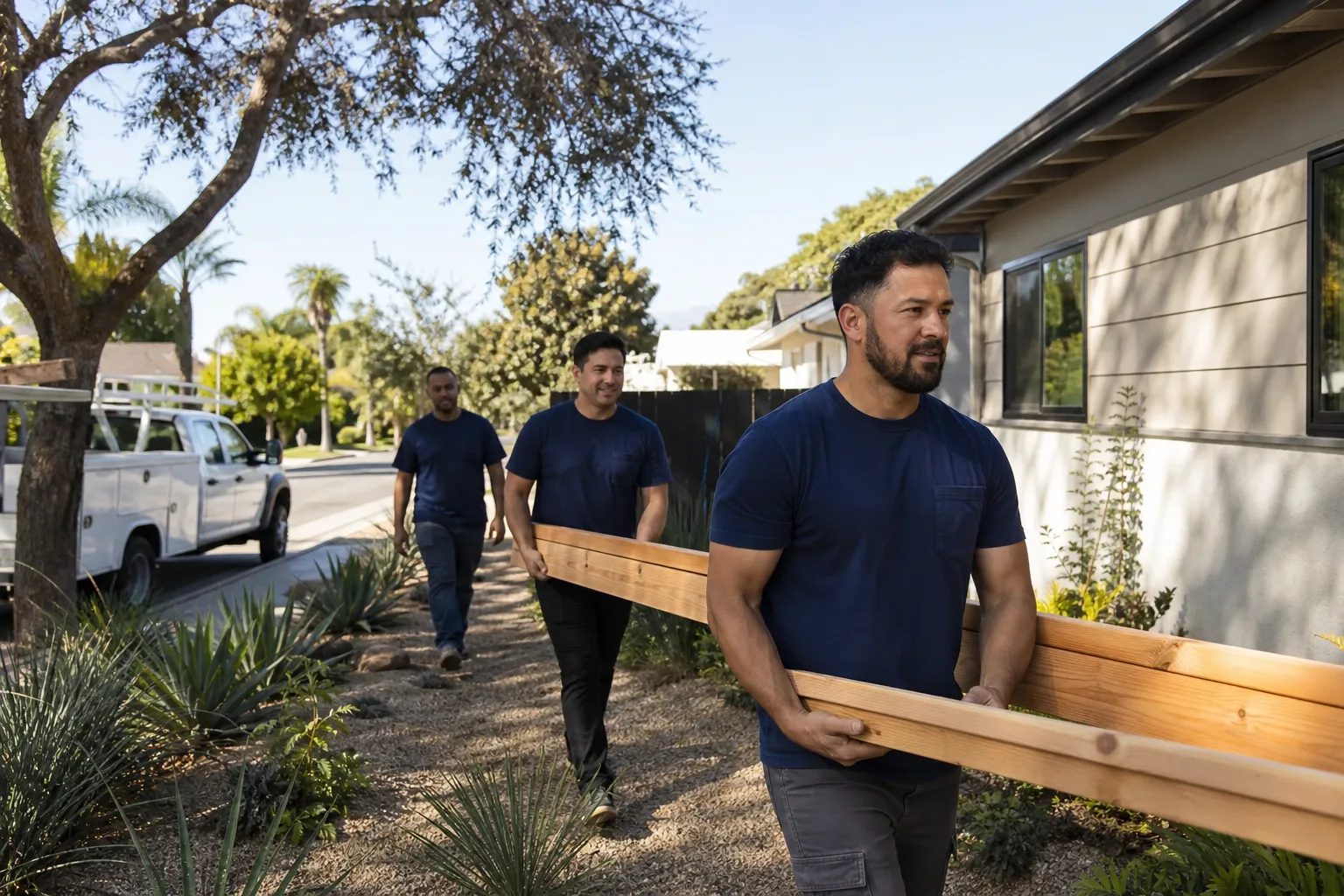
Prefab also changes the crew equation. The factory builds the modules, but someone has to receive the delivery, set the modules, connect the utilities, and finish the seams. That’s where the Threshold Standard matters: the people on your property are our people, background-checked and photo-badged, with their names and faces sent to you before they arrive. A prefab build doesn’t mean fewer strangers at your door. It means a different sequence of arrivals, and you deserve to know who every one of them is.
Common Mistakes to Avoid
- Skipping the zoning check before buying plans. You’d be surprised how many Fort Worth homeowners pay $3,000 to $8,000 for architectural drawings and then discover their lot doesn’t qualify by-right, or that their HOA bans ADUs. Five minutes on the city zoning map and one call to your HOA saves thousands.
- Budgeting from national averages. Fort Worth clay soils, tornado-wind design requirements, and local labor rates make those national numbers misleading. Use the local ranges in this guide as your starting point, then get a written estimate for your specific lot.
- Treating a garage conversion as “just drywall and flooring.” Under Fort Worth code, a conversion to living space requires insulation, egress windows, proper electrical, and often a replacement parking space. The cheapest quote usually means someone is skipping a required step, and you won’t find out until the inspection fails.
- Ignoring the lot coverage cap. Many Fort Worth lots built in the 1950s and 1960s are already close to the maximum impervious coverage limit. Adding a detached ADU without checking this first can trigger a variance requirement you didn’t plan for.
- Signing a contract where the price isn’t locked. Change orders are where construction budgets die. A vague estimate with “to be determined” line items is a blank check. We hand you a written price before any work begins, and that’s what governs the build.
- Skipping the property tax conversation. An ADU changes your Tarrant County appraisal. Talk to your CPA or the appraisal district before you break ground so the first tax bill doesn’t catch you off guard.
When to Call a Professional
You should call a professional the moment you start thinking about an ADU seriously enough to want a real number. That doesn’t mean a sales call. It means a site visit where someone walks your lot, checks your zoning, measures your setbacks, and tells you whether the project pencils out on your specific property. You need a professional the first time a plan reviewer asks for a structural calculation you don’t understand, the first time a slab needs to be engineered for North Texas expansive soils, and the first time your HOA sends back a covenant letter in legalese. This is not a DIY project with a Weekend Update. Sutton ADU Fort Worth offers free estimates in Fort Worth, and the price we quote is the price you get: written, itemized, and locked before a single tool is lifted.
Frequently Asked Questions
A detached ADU in Fort Worth typically costs $180,000 to $320,000 depending on size and finishes, while a garage conversion runs $80,000 to $150,000 and an attached addition starts around $120,000. These figures include permits, foundation work, utilities, and standard finishes, but exclude upgrades like premium appliances or custom millwork. Call (682) 255-2399 and we’ll give you a written, line-item price for your specific lot, free.
Most single-family lots in Fort Worth are zoned for ADUs by-right, but a meaningful minority require a special exception from the Board of Adjustment. Your zoning district, lot coverage, setbacks, and deed restrictions all determine eligibility. You can check your zoning district on the city’s online map today.
A site-built ADU in Fort Worth typically takes 6 to 14 months from permit application to final inspection, while a prefab unit runs 4 to 8 months if site work is straightforward. The Fort Worth permit review alone takes 3 to 6 weeks, and plan revisions can extend that.
Yes. The ADU is separately assessed by the Tarrant Appraisal District at market value, which means your property tax bill will rise by roughly $2,000 to $6,000 per year for a $250,000 unit. Your homestead exemption on the primary house remains intact, but the ADU itself is not exempt.
Yes. A kitchen with its own electrical circuits, water supply, and drain lines triggers separate plumbing and electrical sub-permits under Fort Worth code. The full permit package for an ADU typically totals $2,500 to $6,000 in city fees, not including drawings.
Not meaningfully. Prefab units from manufacturers like Boxabl, Dvele, and Mighty Buildings usually land within 10-15% of a site-built unit once you factor in Fort Worth site work, foundation, and utility connections. The real advantage is timeline: 4 to 8 months instead of 6 to 14. For an exact comparison on your lot, call (682) 255-2399 and we’ll walk you through the numbers.
The Bottom Line
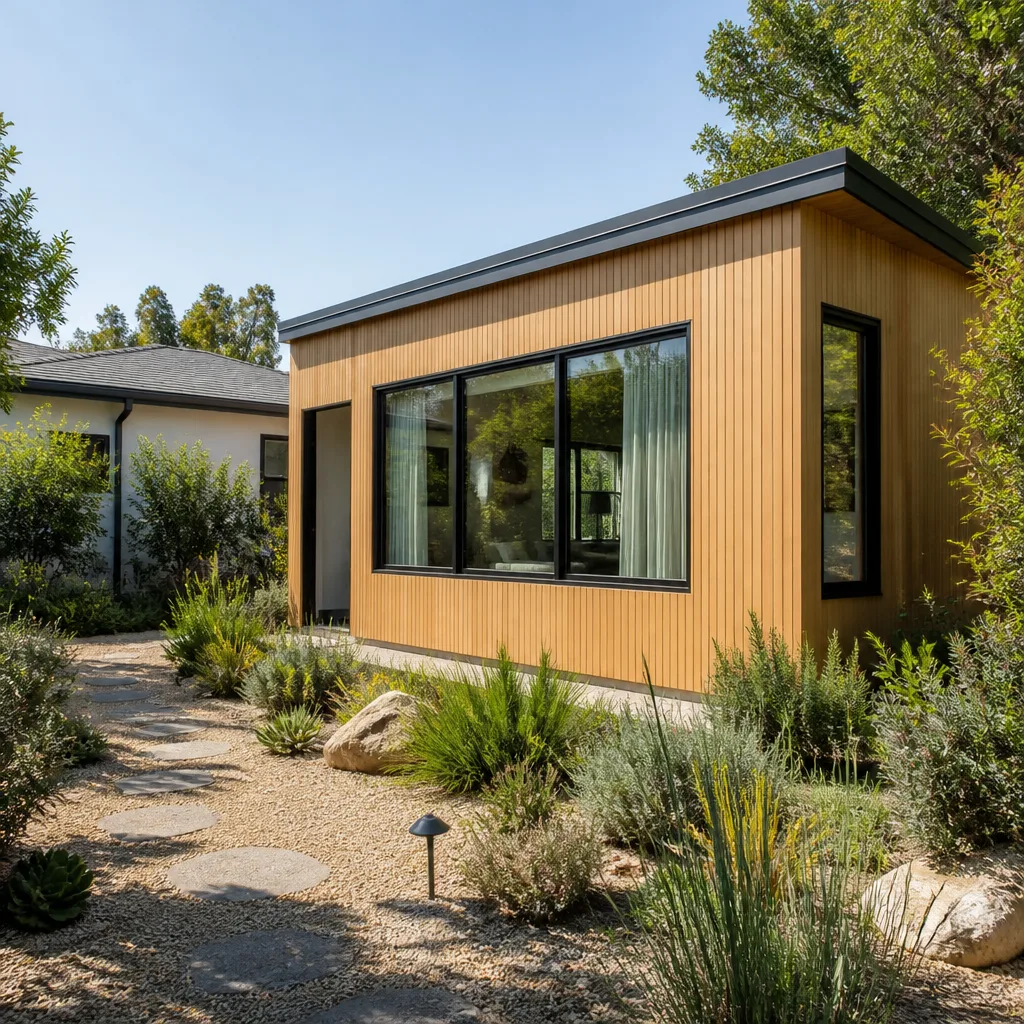
Fort Worth is a genuinely good ADU market, but only if you build by Fort Worth rules. The zoning allows ADUs on most lots by-right, the rental market around TCU and downtown supports rental income, and the long-term property value story is solid. Your job is to avoid the mistakes that sink projects: skipping the zoning and HOA check, budgeting from national averages, letting a contract stay vague on price, and settling for a builder who can’t tell you who’s coming to your door. Get your zoning checked, get your lot coverage measured, get a written price, and get to know your builder before the first truck rolls. The homeowners who do their homework first are the ones who love their ADU for decades. Browse more guides & resources to keep learning before you build. The ones who skip it call us later to fix what another builder left behind.
Written by Miles Hartwell, Owner at Sutton ADU Fort Worth, serving Fort Worth since 2006.